Thursday, November 17, 2011

Identity Crisis

Well, I went off the grid for a few days, only to return to concerted attempts to shut down the #Occupy encampments across the world. These efforts range from the civilly legal (as in Vancouver) to the heavy-handed & legally gray (in New York City) to the unconscionably brutal (in Berkeley, California). Though these developments threaten the very existence of movement, I've sufficient faith - however slight - that the protesters will not go gentle in that good night. I began typing up the following spiel late last week, and have completed it on the assumption that the Occupations will survive well beyond this week...

The greatest threat to any movement that is not fascist in nature is itself. The greatest threat to the #Occupy movement is not the conceited scorn of Reichwing TV pundits, nor the rubber bullets & billy-clubs of the Oakland police, but the yawning void where its ideological & strategic nucleus should be. By its desire to be omnivorously inclusive & inoffensive, the movement has voluntarily sacrificed almost all political radicality: it refuses grand statements, hamstrings direct engagement, and declines to make transformative demands. This timidity has left the movement exposed to an influential, charismatic element that will - for better or worse - come to define the movement itself.

While I've a grudging respect for the hacktivist swarm Anonymous, I can't say I particularly trust them. I don't trust acephalic crowds in general. "People like Coldplay and voted for the Nazis. You can't trust people." Especially people who've chosen, as their anarchosyndicalist hood ornament, the corporate depiction of a mercenary Papist who attempted to establish an English theocracy. Well thought out, indeed.

At the same time, I think the power & influence of Anonymous as a sociopolitical actor is vastly overstated. That's not gloating on my part: I'm sympathetic to many of Anonymous' operations and wish them greater success against bigots, child predators, and oppressive regimes. But despite their best efforts, Scientology, Bank of America, Koch Industries, Mahmoud Ahmadinejad, Robert Mugabe, and Bashar al-Assad are all going strong. Also, last month's abortive dust-up with barbarous Mexican drug cartel Los Zetas proved that Anonymous balks (sensibly) at crossing the line where Situationist prankterism ends and shit gets really, really real.

Still, where ever someone flips the bird to the Powers That Be, Anonymous will appear post-haste. Their stylized Guy Fawkes masks are the most recognizable non-textual symbol of the Occupy movement, inspiring numerous think pieces on the polysterene disguise. The masks serve to unify an operation that is polyglot, decentralized, and manifold in its provincial complaints - which is both beneficial and detrimental to the movement. Symbolically, the mask creates a sense of international solidarity amongst the protesters. But in a practical context, the masks encourage & enable deindividuation.

For those of you who haven't the time to peruse works of Philip Zimbardo, I'd point you to Derren Brown's recent special, The Game Show, a succinct & dismaying experiment in mob mentality. As Brown explains:
[Deindividuation] is what happens when people become anonymous members of a crowd, which allows them to behave in a way that goes against their moral code. It's a large part of what turns normal people into internet bullies, rioters, football hooligans, and encourages reality TV audiences to victimize contestants.
This deconstruction of a subject's sense of personal responsibility begins as the individual becomes physically subsumed in a large group, and is aggravated by even the simplest disguising of their personal features - say, a black hoodie, bandana mask, or the plastic semblance of Guy Fawkes.

Obviously, this poses a very big problem for those within the Occupy movement who want to keep their disobedience civil. By having tacitly joined forces with Anonymous, and for having allowed the porcelain-toned moustachioed trickster to become the movement archetype, Occupy has made a bargain that Faust would find foolishly short-sighted: Occupy have embraced the very element most likely to engage in the "irresponsible", "reckless", "anti-social" behavior that would cost the movement the majority-approval it so desperately craves. I'm not talking about the errant asshole who can be purged or pacified by some new-age group-hug intervention; I'm not even saying the loudest mouth wins the argument. I'm saying that within the movement is a subsect that can - autonomously, collectively, and suddenly - react in a manner at odds with group consensus.

Lest anyone fear I'm exaggerating the hooliganish potential of Anonymous in the context of popular protest, I refer you to this trailer for the upcoming documentary on hacktivism's reigning cabal which deliberately and repeatedly mixes & matches images of "orthodox" Fawkes-masked Anonymous members and Black Bloc anarcho-delinquents. Evidently, even to their ostensible supporters & media boosters, the two are interchangeable.

Now, I'm not saying that Anonymous' volatility & potential for hard resistance are a bad thing. As Disaster Notes explained earlier, it's still very early days for Occupy yet it's already minimizing its more radical ententes in favour of some latté-hipster version of Satyagraha. In light of recent developments, the movement's apparent commitment to moderation could very well prove suicidal. Several weeks ago, the Oakland PD's attack on protesters was a one-off aberration after six peaceful & dignified weeks, allowing Occupiers to feel smug with the relative ease of their success thus far:
While the cops may have the guns I think they’re starting to realize they don’t have the power - they’re on the wrong side of history. When they start seeing their neighbors, children and parents standing in the front lines of the OWS movement, their loyalties will shift and shift swiftly.
But now the riot gear's out, court injunctions are flying, and the streets are foggy with tear gas and pepper spray. It would behoove the #Occupy movement to remember that it's up against the full authoritarian might of oligarchs who start wars to boost their GDP, cheered by a complicit media and a frighteningly large portion of the selfish, consumerist public. Unleashing Anonymous & the Black Bloc may be a PR nightmare - Occupy's "nuclear option" - but it's an option the movement needs available to them.

The perennial exemplar of successful civil disobedience is Mohandas Gandhi's struggle for Indian independence, but what's often forgotten is that along the way there were not only arrests & usual brutality directed at protesters, but whole campaigns of violent harassment and murder. Not to mention that Gandhi's nonviolent efforts were reinforced & underscored by many acts of violent revolt against state authority. Consequently, neither side can claim victory by their efforts alone, nor could either have succeeded without the effective support of the other. The de facto slogan of every popular uprising is that famous quote apocryphally attributed to Gandhi:
First they ignore you, then they laugh at you, then they fight you, then you win.
It would appear that Occupy has graduated to the stage wherein they are being fought. As unpalatable as Anonymous & the Black Bloc may be to the more genteel members of the movement, it may serve them well to have comrades who are more than willing to fight back.

Thursday, November 10, 2011

Now Showing: Tragedy! Coming Soon: Farce!

I realize it's a bit cheap of me to take pot-shots at the Occupy movement from the comfort of my boho-Tokyo bunker, so it was instructive to read Disaster Notes' cautiously pessimistic perspective from inside Occupy Austin. Not that I take any particular joy in knowing that the Occupations are as meekly reformist & restrictively managerial as I suspected. If you too are concerned that the ossified moralism of the Occupation's milquetoast middle-mass threatens the very "diversity of tactics" they claim to embrace, then Disaster Notes' full critique of General Assemblies is required reading.

In parallel, the dubiously-monikered Alphonse Van Worden attacks the current formulation of Occupation demands, neutered of their inflammatory potential, now mere eunuchs attending to the upkeep of the status quo:
That the demands conspicuously reject proposed mention of humanity’s rights, democracy, justice, and politely refuse any language that might bring to mind the ruling class’ lawlessness, barbarism and mercilessness, tends to nudge the discourse in the most dangerous direction, toward the legitimisation and indeed inevtiabilisation of reaction and toward faciliating the project of containing this revolt in the guise (flimsy enough, and usually disavowed) of securing some concrete gains while the getting is good.

Now at the start, these demands were proposed alongside a list of demands for an end to the state’s violence and terrorising and lawlesness and debt amnesty. That these didn’t make the cut is very signficant, and shows how “compromise” can transform a radical agenda not into a reformist one but into a reactionary gain for the ruling class.
On an immediate, practical, and modest scale, all of this suggests that perhaps the most appropriate slogan for the Occupiers is - with minor amendment to an existing favourite - "Citizens United will never be defeated!"

Wednesday, November 09, 2011

Neither a Conquest, Nor a Vocation

Almost two months have passed since the inception of Occupy Wall Street, which is more than enough time for everyone to take sides according to whether or not they sympathize with anti-corporate collectivism. Thus far, public opinion (though hardly unanimous) is more supportive of OWS than its Old Testament-meets-Wall Street libertarian dopplegängers, the Tea Party. This is meaningful because OWS and the Tea Party cannot be arbitrarily substituted for one another. True, they're both nominally anti-establishment populist uprisings, but that's as revealing as remarking that Jim Jarmusch and Chris Columbus are both successful caucasoid filmmakers from Ohio. Only the most facile & disingenuous among the commentariat pretend there's meaningful similarity between OWS and the Tea Party - a comparison so paper-thin that it can be debunked in about nine bullet-points augmented by flashy graphics.

Objectively, OWS is far easier to sympathize with than the Tea Party, and not simply because the former has refused the latter's embarrassing reliance on Nazi similes and racist imagery. The Occupiers themselves sympathize with the unemployed, the indebted, the working poor, and struggling families around the world, whereas the Tea Party sympathize with precisely no one. Their philosophy is equal parts Horatio Alger & avarice; they've infamously bayed for the blood of the incarcerated & the infirm; and the bootstrap-pulling pugnacity of the "We Are the 53%" blog reads like a suicide pact with the free market, inadvertantly highlighting the very tragic inequities that OWS seeks to correct.

So at the risk of surrendering to these Fountainhead-cases enslaved by Stockholm Syndrome to capitalist rapacity, why can't I offer my full endorsement to the #Occupy movement?

So far, I've been conspicuously silent about Occupy Wall Street, both online and off. After all, it's difficult to debate tactics & policy when there's little evidence or exercise of either: the very term "movement" implies momentum and direction, neither of which OWS has. The fraternal occupations that have sprouted around America & across the Atlantic are growth, for sure, but less snowballing locomotion than an entropic clustering of mass. The greater the Occupiers' numbers (or the greater the appearance of their numbers), the safer & more attractive it is for others to join their ranks. The Japanese have a saying: the more people running a red light, the less there is to fear. (Evidently, the Japanese have been to Baltimore.)

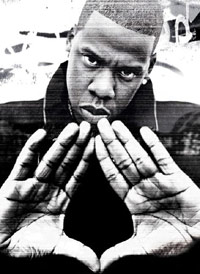
For all the attention & swelling attendance, I suspect the reason OWS has yet to win the majority's support is because it appears as a closed operation. It doesn't matter how inclusive the message or sentiment is when the Occupation is conducted via theatrical arcana and insular code: anyone who doesn't understand the symbolism of wiggling fingers, doesn't know what a "human microphone" is, or doesn't understand why the Occupiers keep throwing up Jay-Z's hand-sign is definitively outside the movement. I understand that creating rituals & codes are integral to a group's cohesion & identity. It's also what cults do precisely because of the divisive, exclusionary function those rituals & codes serve. Stephen Colbert's "field report" on Occupy Wall Street demonstrated this: relatively straightforward questions, refracted through the liturgical jargon of the "movement," became an impenetrable fog of Newspeak that failed to address such simple concerns as what's on the agenda.

Colbert too noted that they "seem like a cult."

Dogged adherence to process is proof of both an abiding civility and an intolerance for radicalism. For a "movement" that doesn't want to recreate the flaws of corporate hegemony, they've taken very quickly to restrictive & stifling discursive codes. In fact, this legislative orthodoxy explains the lack of any specific, articulable demands: as a heterogeneous assembly, the Occupiers refuse to presume any one demand would be adequately representative of, or beneficial to, each of the participants. Tasks are delegated, but representation never exceeds the level of the individual. They've even formed caucuses to promote "marginalized voices" within the "movement." As though the plutocrats give a shit about the diversity of their serfs. Patient acknowledgment of every demographic peculiarity looks good on the recruitment pamphlet, but it's arboreal taxonomy at the expense of the forest. If no collective action can presume to demonstrate the communal will, then the Occupy "movement" is merely a motley form of group therapy, the scattershot yawp of recession-scarred consumers.

When Colbert asked (with uncharacteristic earnestness) how he could be part of Occupy Wall Street, Justin Wedes replied, "You need to come down to the park, Stephen... you need to make your voice heard." Well, to stand & be counted is only an effective political act in a representative democracy, which America absolutely is not. (To say nothing of the likes of Harper, Cameron, Sarkozy, Berlusconi, Putin, or whoever the Japanese Prime Minister is today.) Has the "movement" already left no room for invention, adaptation, or a more aggressive engagement against capitalism? To wit, the Occupiers have issued a blanket condemnation not of corporations as malignant entities, but of the defacement or destruction of corporate property - reifying the very system the Occupiers claim to challenge!

I understand that it's too much to ask that someone had a readymade wholesale ideology with which to replace capitalism. But if we make no demands, then we can expect to make no progress either. What's essential is the exercise of imagination beyond what is expedient, practical, or indeed attainable. If we refuse to take "no" for an answer, then we have to ask questions that cannot be answered thusly. Naturally, we don't want our goals reappropriated & assimilated by capitalism as it reforms & resurrects itself in response to the current crisis. But this, Howard Zinn would remind us, is a dilemma that leftists has faced before:
It is hard to say how many Socialists saw clearly how useful reform was to capitalism, but in 1912, a left-wing Socialist from Conneticut, Robert LaMonte... suggested that progressives would work for reforms, but Socialists must make only "impossible demands," which would reveal the limitations of the reformers. (A People's History of the United States, p.354)
That is, of course, assuming that Occupy Wall Street are sufficiently radical or ambitious to want something other than merely a kinder, cuddlier form of global capitalism.

Tuesday, October 25, 2011

Another Other

Today, walking home across western Tokyo, I strode past a pentagenarian Japanese man who was speaking heatedly with his elder friend on a quiet residential corner when suddenly, the man wheeled around, pointed at me and began barking, "Jew! Jew! Jew!"

This took me aback, not only because I've neither seen nor heard of such open antisemitism in Japan, but especially because I'm not Jewish.

What a schmuck.

Monday, October 24, 2011

Making a Killing

Death, it's been noted, is no surprise. And on a planet packed with 123 people per square mile, the numbers dropping by the day are dizzying. Still, it feels like I wake every other day to find some globally-important figure has slipped - or been shoved off - this mortal coil. A Saudi prince here, an asshole billionaire there. But I was thoroughly unprepared to begin Friday being gawked at by Qaddafi's droopy kabuki corpse-maw. Put me right off the strawberry yogurt I was eating for breakfast.

Surveying the online reaction, I was pleased to see the relative restraint across social media, as braying gaiety over Qaddafi's death was kept to a minimum. Given that Qaddafi was directly, provably responsible for more deaths & acts of international terrorism (cf. the Abu Salim massacre, Pan Am flights 103 and 73, UTA Flight 772, the 1986 La Belle bombing) than Osama Bin Laden was, I'd like to think that everyone had sobered up since the bloodlusty celebrations of Bin Laden's murder. Oh, I'd like to think that, but let's not be naïve - fewer people remember, and fewer still care, about Qaddafi's towering bodycount.

What jubilant chest-thumping there was came overwhelmingly from the liberal media - that is, the meager 10% of the media that actually is liberal. Most visibly, Keith Olbermann and Jon Stewart attacked Republicans for refusing President Obama any credit for Qaddafi's demise. Of course, Olbermann & Stewart are correct that when, for example, Marco Rubio applauds the British & French for leading the charge into Libya, the GOP are playing politics by cynical omission, rather than giving credit where it is, in fact, due. But for men who built careers lambasting the illegal brutality of the last administration, Olbermann & Stewart - not to mention their acolytes - are unnervingly comfortable with the fact that their Nobel Laureate President's greatest legacy may very well be, in Stewart's own words, "his ability to rain targeted death from the sky." I can only imagine the righteous tongue-lashing Olbermann & Stewart would have given Bush when he signed Executive Order 13477, which restored the Libyan government's immunity from pending & future terrorism-related lawsuits. But in the mafioso logic of American exceptionalism, there's always room for another murder, as long as our guy is pulling the trigger.

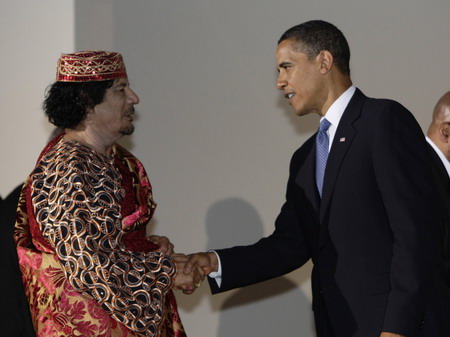
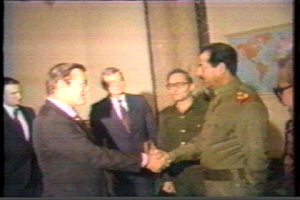
It's this smug, fickle partisanship that makes our elected leaders so depressingly fungible. Meet the new boss...

Same as the old boss.

Friday, October 14, 2011

Déja-Vu Times Two

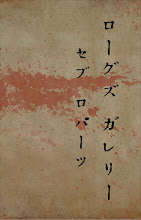
Both of the following albums were released in 1969, one in March, the other in November.


Care to guess which one came first? Here's a hint: one was a meticulously constructed masterpiece of elegiac beauty, and the other an anonymously cookie-cutter rehash of sub-Sly Stone funk with a snare sound thin enough to give your eardrum papercuts.

Also, listening to good ol' Bullhead earlier today, I'd forgotten how bald a ripoff of "It's Shoved" was Nirvana's "Milk It". Still, Grohl was about the only drummer whose "bigness" could match - even occasionally exceed - Dale Crover's.

Wednesday, October 12, 2011

Post-Alarm Call

In this world, the one thing that's never in short supply is outrage. An endless parade of idiocy & atrocity is never further away than your TV set, and is sometimes as close as outside your window. This is honestly among the reasons for my recent "sabbatical": between the Libyan civil war; the ongoing atrocities in Syria; the latest terrorist attack in Mogadishu; fresh unrest in Egypt; the Monsoon-induced flooding that has claimed hundreds of lives in Pakistan, Thailand, and Vietnam; the ascension of the latest feckless whipping-boy to the Japanese Prime Minister's seat; Rick Perry's impression of a yo-yo; and, I dunno, Beyoncé plagiarizing avant-garde European choreography, I was stricken by total outrage-option-paralysis. So many things to be angry about, so little time!

In context of the true horrors listed above, that the theatrical reaction to Steve Jobs' death finally drew me back to my keyboard proves it's always the little straws that break the camel's back. I find some small comfort in knowing that I'm not alone.

But between every shiny, bloody distraction, it's too easy to forget that in much of the world, the dull struggle of daily life is still a struggle. Yesterday marked the seven-month anniversary of the March 11 disaster here in Japan. Months may as well be millennia in the 24-hour hypecycle, so even the domestic Japanese media has turned their attention away from those still stricken in Tohoku, as Takao Yamada angrily noted in the Mainichi on Monday:
Of utmost urgency now are the evacuation of children, decontamination, and the installation of becquerel monitors to measure radiation levels in food. But meanwhile, in Tokyo, we're talking about economic growth and the export of nuclear technology, as if what's going on in Fukushima is somehow irrelevant to us. That, I believe, is simply wrong.
To that end, I'm currently attempting to assemble a short radio documentary about the recovery effort in Tohoku.

This is where I need your help.

Since I'm pitching the documentary to a Canadian broadcaster, the piece needs to focus on Canadian citizens who live & work in Iwate, Miyagi, and Fukushima prefectures - those places hardest hit by the catastrophe. I want to focus not only on the disaster itself, but also its long-term & still-felt effects, the reconstruction & return to something like "normality", and governmental response to the disaster. That last notion could be, I think, the most instructive on how to proceed in Tohoku and future crises: not only are the Japanese generally dissatisfied with how their own government has reacted, there's plenty of anecdotal evidence that Canadian citizens felt more or less abandoned by their own government during a moment of desperate need. It's easy to see why, given that the bulk of the Canadian government's support to Japan was not monetary, or even military, but "moral".

So far, though, I've had little luck in finding anyone willing to speak about their experiences. If any of you reading this, through however many degrees of separation, know a Canuck in northern Japan who might be interested in sharing their experiences, please have them contact me by the e-mail address in the upper-right of this blog (under my profile pic). I'd be most grateful for their conversation.

In the meantime, it warrants mention that a friend & I organized a noise-improv gig back in March to benefit friends of ours up north. A recording of that show is available as a paid download, with all proceeds continuing to Red Cross Japan & other local charities involved in the recovery effort. As an album, it doesn't make for particularly easy listening, but these days, very little in Japan comes easily.

Sunday, October 09, 2011

We Are All Big Brother

As my existence in meatspace has elaborated & unfolded into an every-wider array of activities & obligations, I've felt less guilty for letting this space lapse into occasional torpor. There's always some guilt, given that I know there are a few kind individuals on the other side of the internet who actually pay attention to, think about, and even respond to my self-indulgent wortschwall. I honestly enjoy their participation and so feel neglectful, even ungrateful, whenever my side of the conversation slips into silence.

Some of my friends - real friends, not "friends" or Friends™ - ask why it's been so long since I last posted regularly on this blog, to which I can only reply, "Because I'm talking to you right fucking now!" Point taken, they suggest that perhaps I sign up for Twitter or Tumblr and start "microblogging" if full essays are too burdensome. But I find that thinking & conversing in bite-sized nuggets leads to a kind of mental constipation. Besides, I don't have a cellphone (the ultimate act of roguish delinquency here in Japan) to enable such incessant content-regurgitation.

So reality took precedence over my online presence for the past couple of months. A significant factor was that my band's current effort to release a record had turned into a blunder-plagued clusterfuck. (You know you're in trouble when your contact at the record-pressing plant is an accountant, not a technician.) But the bulk of my time offline has been on the road: my band has played more shows over the preceding month than we did all of last year. However, it wasn't simply that incessant touring kept me away from the computer and that explains my absence; there was a particular phenomenon recurrent on the road that made me want as much distance from cyberspace as I could get.

Over the past two years in Japan, Twitter has gone from marginal novelty to ubiquitous modus vivendi: the estimated number of Japanese "tweeters" exploded from a mere 200,000 in January '09 to over 16 million by August '10. Japan holds the current record of 6,939 "tweets-per-second" and sends around 14% of all "tweets" despite comprising only 8% of Twitter's user base.

This can produce some peculiar social dynamics in the "real" world. I've lost count of how often I find myself sat at a table, surrounded by friends, utterly ignored as they, every one of 'em, thumb-tap away on their Twitter accounts to tell thousands of anonymous voyeurs what a kick-ass time we're all having "together."

But that's simply a dull annoyance. What I find disturbing is, thanks to the Japanese fondness for interminate & omnivorous tweeting, I've been assimilated into the Twitterverse without even trying. This past July, I was chatting with some acquaintances after a show in Nagoya. In the midst of the usual catch-up chit-chat, one of them asked me, "So how did you like your lunch? It looked super-American!"

I didn't quite understand. "Super-American?"

"Yeah, you know - your wife prepared you a lunchbox with pizza and a green apple. That's a totally American thing to eat for lunch; Japanese would never eat pizza for lunch!"

My initial offense at being mistaken for an American was very quickly overcome by befuddled panic: how did they, a relative stranger, know what I'd eaten for lunch in such detail? Yes, I had eaten pizza & a green apple that my wife had stuffed into tupperware for me, but I'd done so sat under a tree in a rest area 120 miles away from Nagoya in the company of only my band's bassist...

Then it hit me. "Ken put a picture of my lunch on Twitter, didn't he?"

This was only first of what have become regular intrusions on my quotidian activities that I'd like to think were autonomous & anonymous. Last week, I arrive in Nara after an overnight drive to discover that a fellow traveler had shared a snapshot of my slumbering form with his 1,500 Twitter followers. This isn't to say that on-the-road naps & snacks are embarrassing in & of themselves, but it's upsetting that even such boring & inconsequential activities cannot escape the all-seeing eye of the electronic multitude.

The obsequious cliché is that if you've nothing to hide, you've nothing to fear, but the nefarious implication therein is that if you did have something to hide, you wouldn't be able to. The flipside of the superficial "empowerment" of social media's self-expressive potential is that it creates a volunteer surveillance state. There is no need for informants, spies, or state-sponsored treachery when citizens opt-in to the Panopticon - a truth sadly demonstrated by how the Iranian government turned the 2009 "Twitter Revolution" against itself in its crackdown upon self-documenting dissidents.

Insofar as "rights" are merely privileges bestowed by the state upon its subjects, privilege cannot exist except in contrast with its opposite, penury. As Jean Baudrillard argued in The Consumer Society, "rights" become legally sanctified only at the point that they become recognizable by their punctuated & selective absence:
This whole phenomenon, which seems to express a general individual and collective advance, rewarded in the end with embodiment in institutions, is ambiguous in its meaning and one might, as it were, see it as representing quite the opposite: there is no right to space until there no longer is space for everyone, and until space and silence are the privilege of some at the expense of others. Just as there was no `right to property' until there was no longer land for everyone and there was no right to work until work became, within the framework of the division of labour, an exchangeable commodity, i.e. one which no longer belonged specifically to individuals.
This is certainly why arguments about the "right to privacy" have become more commonplace & heated concomitant with the rise of the internet & global telecommunications. As opposed to privacy of physical property (the long-enshrined fundament of liberal democracy), privacy of deed & thought are of greater value & concern the more impossible they become under the ever-widening purview of the self-imposed surveillance state.

To the extent that I expose myself online, I may be justifiably subject to ridicule, argument, censure, or acclaim much the same as I may be for picking a fight in a convenience store, being a drunken lech at a wedding reception, or helping an old lady cross the street. We're judged by our public performance, online and off. What has changed is that I - we - no longer have control over which aspects of our lives are subject to public scrutiny, because even if I choose not to broadcast a certain deed or thought across the internet, I cannot stop my friends/"friends"/Friends™ from doing just that.

Friday, October 07, 2011

iCame, iSaw, iConquered

Come December, I'll be curious to see whose death ends up earning more year-in-review ink: that of Osama Bin Laden or Steve Jobs. For now, I just feel bad that Bert Jansch was robbed of his last moment in the spotlight.

The only thing I feel about Jobs' sudden passing is surprise at how quickly it followed his resignation as Apple's CEO. Perhaps this is another instance of how intimately entwined are sense of purpose and will to live. Jack Layton, for example, took the New Democratic Party of Canada from a marginal parliamentary presence to the official opposition in a single election and was dead within a couple of months. Even T.E. Lawrence - a man whose feats of endurance & military daring read like pulp fantasy - was scarcely two months into his retirement when he met an ignominious end in a minor traffic accident.

Beyond that pseudo-philosophical chinstroke... so what? Can't say I particularly care. But judged by the online tsunami of farcical grief, I am starkly in the minority. So maudlin & wracked is the tenor of the bereaved I'd have thought that all these people were personal friends of Steve Jobs, that he'd brought them chicken soup on a cold November night, that he'd awarded their kids college scholarships, that he'd given sight to their blinded-by-moonshine great aunt.

But no, they are not a one his friend. They aren't Steve Jobs' acquaintances, they're his customers, his consumers.

Lest we forget that Apple is a corporate behemoth whose liquidity exceeds that of even the world's largest national economy. Lest we forget that Apple is a technocratic Goliath which dodges corporate taxes and whose idea of "healthcare coverage" extends to suicide-prevention nets but barely any further. Unlike his oft-maligned doppleganger, Steve Jobs is not a philanthropist - he's a corporate padrino whose brilliance lies less in innovation than elaboration & refinement - making borrowed ideas better. Apple's very first personal computers (the Lisa and the Macintosh) were little more than liberal imitations of the Xerox Alto. Similarly, Jobs did not invent a GUI platform to (re-)distribute digitized music, but he did figure out how to monetize one.

The true genius of Jobs was his aestheticization of appliances. He transformed utilitarian machines into the fully syntactic symbols of a lifestyle; his public-relations alchemy made technological amenities into elite totems. Between his products & his customers, Jobs fostered not just a relation but a relationship - a transubstantiation presented literally in those anthropomorphic "I'm a Mac" TV ads.

At least the UK got to watch the guys from Peep Show make smug pricks of themselves.

Anyway, this explains why Jobs' death is a big deal beyond the business section. A man like Philo T. Farnsworth arguably had a more revolutionary effect on daily life, but Steve Jobs was a man with whom people felt they had a personal relationship, a friend who had enriched their lives & enabled them to unleash their expressive potential. It's no exaggeration to say Jobs' death has elicited a despair whose scale and substance are equivalent to - perhaps even greater than - the passing of the Pope. Within a mere hour of the news, floral tributes were piling up outside Apple stores the world over. Social media was more choked with endless inspirational quotes than a Deepak Chopra book. The grief was so sensational it would've been considered too stagy for a Broadway musical.

Against this backdrop, the latest essay on Adam Curtis' blog made for some serendipitous reading: in his endless trawl of audio-visual archives, Curtis has managed to trace the evolution of demonstrative emotion on TV. Within barely a generation between the '50s and '70s, spilling one's guts on air went from being anathema - "shameful agony" - to the necessary signifier of human authenticity. This sentimental overflow has become a carved-in-stone commandment not only of broadcast media, but of western social relations in general. However, Curtis warns that this hysterical style of emotional "authenticity" may actually be anything but:
There is a creeping sense of someone pretending to have the emotions that are expected of them. And in this way hiding their true feelings even further below the surface. Or maybe the truth is even more disturbing - that there are lots of things that people live through and experience that they just don't have emotions about.
As irrational psychic ephemera, emotions are difficult to understand and even harder to reproduce convincingly - particularly positive, sympathetic emotions. This is why tearful confessions & expectorating fist-fights became mainstays of daytime television far earlier than the joyful hug-orgies & triumphal backslapping of more recent shows like The Amazing Race or American Idol. So how did gushing exuberance become part of the public's expressive mode? Curtis points to the rise of "self-help" and collaborative craft shows like Trading Spaces and its British counterpart, Changing Rooms:
I think the man that really brought the hug into British television in a big way was the producer Peter Bazalgette. His genius was to spot that the idea of transforming yourself as a person could be intimately linked to transforming the things around you - starting with the rooms in your house.

I think the first real hugs of these kind began in the series Changing Rooms in the mid 90s.

The original revolutionary idea had been that by changing yourself emotionally as a person you would then change society. Bazalgette created an easier and quicker variation. By simply changing the physical things around you - you could then change your inner feelings and became a better and more expressive human being.

Wallpaper as redemption.
Steve Jobs understood this perfectly. By emphasizing his products' artful design, and by casting them as tools of creative composition, Jobs enabled his consumers to feel they were more fully-realized, expressive individuals thanks to him.

What I find disturbing is that, by surrounding themselves with beautiful expensive objects that encourage a melodramatic solipsism, people are encouraged to construct & occupy their own private fantasy wherein the crueler aspects of reality are not allowed. No one wants to feel bad. No one wants to struggle with criticism, dissent, violence, or acrimony. This relentlessly positive self-regard creates the illusion of a cozy but false consensus: by engaging only with the familiar & agreeable, we diminish our ability to cope with difference. Think different, but not so different that it unsettles you.

This is why there is no such thing as a "Dislike" button.

Thursday, October 06, 2011

It Lives!

About to haul this donkey-cart of ill-begotten thoughts back onto the trail and keep moving. Please excuse the cobwebs.