Showing posts with label Bad Ideas. Show all posts

Friday, January 13, 2012

Paper Napkin Chicken Scratch

Errant observations and imprecise opinions hastily scribbled over the course of three weeks bouncing between several countries...

It takes most directors and screenwriters three-ish films to arrive at either their apogee or the plateau along which they'll comfortably cruise for the rest of their careers. Taxi Driver was Scorsese's fourth film and Paul Schrader's second script. Blue Velvet was David Lynch's fourth effort as writer/director. By the release of The Royal Tenenbaums, you knew a Wes Anderson film would be wealthy eccentrics shot in diorama-style mise-en-scène over an old Kinks song. It didn't even take until Eternal Sunshine to realize that all of Charlie Kaufman's films are basically Annie Hall if Woody Allen had grown up reading French post-structuralists instead of German psychoanalysts.

J.J. Abrams' films follow a reliable formula: one part Spielberg, one part lens flare, and one part daddy issues. (Some would argue, therefore, the proper formulation is two parts Spielberg to one part lens flare.)

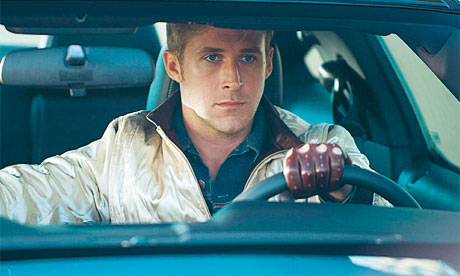
Drive is a terrible goddamned movie - the kind of faux-arthouse poppycock that portends to work that style-into-substance alchemy when it's merely a spitwad of smug artifice transubstantiating up its own ass. The pacing would put Jim Jarmusch to sleep, there's as much teal-and-orange colour correction as a Michael Bay movie, and the characters are so stock they're listed on the NASDAQ. (It takes all of two lines before Albert Brooks' jowly Italian mobster says "Wuzzamattawichoo?") Man of the Moment Ryan Gosling spends about 15 seconds of the film acting, and the other hour-forty-minutes-and-twenty-five-seconds playing a mannequin with a fake Brooklyn accent whose "principled" refusal to carry a gun is kind of undercut by the drownings, stabbings, and beatings he delivers unflinchingly throughout the film.

My wife and I are utterly baffled by Ryan Gosling's apparently universal appeal. His much-heralded sexiness eludes us ("He just looks like he's from rural Ontario!" says my wife) and we've yet to see any acting chops above the standard of, say, a guest appearance in an HBO series. Also, his phony Noo Yawk accent just pisses me off. I addressed this specific complaint in two separate conversations with two friends, each a young, cosmopolitan French woman. Both immediately cited Gosling's tenure on the Mickey Mouse Club as the possible source of his aberrant accent. Ah, but that was shot in Florida! If Gosling had effortlessly sponged up the local dialect, he'd sound more like Hank Hill or (if he was really overachieving) Tony Montana. But no, he sounds like a truck driver on the BQE, so how can his accent be anything but fake? To this, both of my friends - separated by three days and 380 miles, totally unaware of each other's reaction - quietly shrugged and said, "Well, he might just be quite stupid."

Do they think Gosling is an idiot because he's a blond pretty-boy Disney alum? Because he's an actor? Or, indeed, because he sounds like a grease-monkey from Gowanus? Whatever the reason, let it be known: sophisticated, worldly French women think Ryan Gosling is a dumb-ass!

Overinflated New Yorker also happens to be Jon Stewart's go-to accent for impersonating morons, con artists, and garden-variety assholes. A canny choice on his part: tough & streetwise though it may be, the New York accent doesn't particularly appeal to many people outside of New York. Still, it isn't as ugly as the native Baltimorean accent, which sounds like a hillbilly crack-baby. Come to think of it, almost every accent is saddled with negative stereotypes. Received Pronunciation is the accent of the learned, the elite, but also the cosmically evil. In the UK, Brummies are idiots and Scousers are thieves. In the States, southerners are gregarious racists, Bostonians are either moneyed pricks or thuggish drunks, and mid-westerners (and by extension Canadians) are benevolent folks so simple they border on Autistic.

As much as I've love to tour its splendid whiskey distilleries, I don't think I'll ever get back to Scotland. My wife says the accent - despite being intermittently incomprehensible - poses a very real threat to our marriage.

Lots of people have a pet accent, one they find ineffably sexy & sensual. Not me: I might find a woman of another mother tongue alluring, but that has more to do with the woman than how she blends her vowels. At least that's what I thought until I saw Marion Cotillard in Les Petits Mouchoirs, swearing a blue streak like she was Linda Blair in waterwings. I can't begin to explain why, but woo lawd was that hot. Of course, I find French women generally fascinating: their faces are like fountain-pen caricatures and their hair is like choreography. The Golden Ratio - thought to be integral to our perception of beauty - seems to elude French features more often than not, which has the unfortunate effect of making many French men look like big-nosed, unshaven pimps. But it also makes the women so much more interesting to look at than their geometrically-regular, Teutonic neighbours.

Of course, it's inaccurate & unfair to suggest that Germans meet some mathematical ideal of physical perfection; that's only half of 'em. The other half look like the mustard algae staining the bottom of the gene pool.

There was a billboard in the Munich train station for a large commercial bank - I think it was Sparkasse - that posed the question, "Which bank is doing what's right for Germany?" in a friendly, white, sans-serif font. Next to the text was the image of a platinum-blonde, blue-eyed young girl, hands planted firmly on hips, eyes fixed sportively on the middle distance. Now then... I understand that as EU leaders (especially German chancellor Angela Merkel) attempt to balance the wildly discrepant economic health of its constituent countries, mutual mistrust and resurgent nationalism is rampant across the continent. But I wouldn't have guessed that a commercial bank in King-of-the-Hill Deutschland would appeal so baldly to some latent Aryan arrogance.

However, if you're intent on discussing Nazi architecture, then only do it after a minimum two mugs of mulled wine so your vocal chords are warmed up and your inhibitions have been properly shellacked. After all, buildings so bellicose & humourless that they look like clenched fists deserve to be discussed only in equally belligerent terms.

Monday, November 21, 2011

What Lack Dooms a Movement?

Is it imagination? Foresight? Self-understanding? Some combination of all of the above? Roll the tape!


First, let's jump to around the 22:20 mark to hear 1960s commune member Molly Hollenbach describe the bold, egalitarian social experiment in her own words:
We didn't use the word "system" but we very much thought of the whole group, of ourselves as connected - that there was a group sense, a group feeling. That was our whole purpose: to be fully connected to each other and to have this group sense of the organism of the many who act as one. ...It would be like a dance, where we're creating a new kind of society, freeing each person to be fully themselves in the group. But we're all affecting each other at all times, like an organism of many who act as one.
Now let's skip ahead again to about 54:15 to hear what happened to these hierarchically-flat proto-societies:
[The communes] all failed. Most lasted no more than three years, some for less than six months, and what tore them all apart was the very thing that was supposed to have been banished: power. The commune members discovered that some people were more free than others. Strong personalities came to dominate the weaker members of the group, but the rules of the self-organizing system refused to allow any organized opposition to this oppression.
Molly Hollenbach elaborates:
...The very rules that kind of set up this egalitarian group resulted in the opposite of the dream. They resulted in creating a hierarchical structure in which some could be dominant over others... because everyone is not equally powerful in their voice against one other person.
This returns us to that Baudrillardian place wherein desire and power are interchangeable, and therefore desire has no place in the schema of power. The personal is the political, but not in the sense usually meant.

But before we disappear up the simulacrum of our own post-structuralist ass, what does this mean for the Occupy movement? Well... how about this?


Ergo, may I now suggest that we stop applauding the movement merely for making us feel good about ourselves and finally focus on the more concrete issue of achieving results?

Thursday, November 10, 2011

Now Showing: Tragedy! Coming Soon: Farce!

I realize it's a bit cheap of me to take pot-shots at the Occupy movement from the comfort of my boho-Tokyo bunker, so it was instructive to read Disaster Notes' cautiously pessimistic perspective from inside Occupy Austin. Not that I take any particular joy in knowing that the Occupations are as meekly reformist & restrictively managerial as I suspected. If you too are concerned that the ossified moralism of the Occupation's milquetoast middle-mass threatens the very "diversity of tactics" they claim to embrace, then Disaster Notes' full critique of General Assemblies is required reading.

In parallel, the dubiously-monikered Alphonse Van Worden attacks the current formulation of Occupation demands, neutered of their inflammatory potential, now mere eunuchs attending to the upkeep of the status quo:
That the demands conspicuously reject proposed mention of humanity’s rights, democracy, justice, and politely refuse any language that might bring to mind the ruling class’ lawlessness, barbarism and mercilessness, tends to nudge the discourse in the most dangerous direction, toward the legitimisation and indeed inevtiabilisation of reaction and toward faciliating the project of containing this revolt in the guise (flimsy enough, and usually disavowed) of securing some concrete gains while the getting is good.

Now at the start, these demands were proposed alongside a list of demands for an end to the state’s violence and terrorising and lawlesness and debt amnesty. That these didn’t make the cut is very signficant, and shows how “compromise” can transform a radical agenda not into a reformist one but into a reactionary gain for the ruling class.
On an immediate, practical, and modest scale, all of this suggests that perhaps the most appropriate slogan for the Occupiers is - with minor amendment to an existing favourite - "Citizens United will never be defeated!"

Wednesday, November 09, 2011

Neither a Conquest, Nor a Vocation

Almost two months have passed since the inception of Occupy Wall Street, which is more than enough time for everyone to take sides according to whether or not they sympathize with anti-corporate collectivism. Thus far, public opinion (though hardly unanimous) is more supportive of OWS than its Old Testament-meets-Wall Street libertarian dopplegängers, the Tea Party. This is meaningful because OWS and the Tea Party cannot be arbitrarily substituted for one another. True, they're both nominally anti-establishment populist uprisings, but that's as revealing as remarking that Jim Jarmusch and Chris Columbus are both successful caucasoid filmmakers from Ohio. Only the most facile & disingenuous among the commentariat pretend there's meaningful similarity between OWS and the Tea Party - a comparison so paper-thin that it can be debunked in about nine bullet-points augmented by flashy graphics.

Objectively, OWS is far easier to sympathize with than the Tea Party, and not simply because the former has refused the latter's embarrassing reliance on Nazi similes and racist imagery. The Occupiers themselves sympathize with the unemployed, the indebted, the working poor, and struggling families around the world, whereas the Tea Party sympathize with precisely no one. Their philosophy is equal parts Horatio Alger & avarice; they've infamously bayed for the blood of the incarcerated & the infirm; and the bootstrap-pulling pugnacity of the "We Are the 53%" blog reads like a suicide pact with the free market, inadvertantly highlighting the very tragic inequities that OWS seeks to correct.

So at the risk of surrendering to these Fountainhead-cases enslaved by Stockholm Syndrome to capitalist rapacity, why can't I offer my full endorsement to the #Occupy movement?

So far, I've been conspicuously silent about Occupy Wall Street, both online and off. After all, it's difficult to debate tactics & policy when there's little evidence or exercise of either: the very term "movement" implies momentum and direction, neither of which OWS has. The fraternal occupations that have sprouted around America & across the Atlantic are growth, for sure, but less snowballing locomotion than an entropic clustering of mass. The greater the Occupiers' numbers (or the greater the appearance of their numbers), the safer & more attractive it is for others to join their ranks. The Japanese have a saying: the more people running a red light, the less there is to fear. (Evidently, the Japanese have been to Baltimore.)

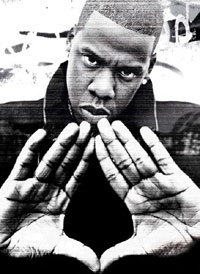
For all the attention & swelling attendance, I suspect the reason OWS has yet to win the majority's support is because it appears as a closed operation. It doesn't matter how inclusive the message or sentiment is when the Occupation is conducted via theatrical arcana and insular code: anyone who doesn't understand the symbolism of wiggling fingers, doesn't know what a "human microphone" is, or doesn't understand why the Occupiers keep throwing up Jay-Z's hand-sign is definitively outside the movement. I understand that creating rituals & codes are integral to a group's cohesion & identity. It's also what cults do precisely because of the divisive, exclusionary function those rituals & codes serve. Stephen Colbert's "field report" on Occupy Wall Street demonstrated this: relatively straightforward questions, refracted through the liturgical jargon of the "movement," became an impenetrable fog of Newspeak that failed to address such simple concerns as what's on the agenda.

Colbert too noted that they "seem like a cult."

Dogged adherence to process is proof of both an abiding civility and an intolerance for radicalism. For a "movement" that doesn't want to recreate the flaws of corporate hegemony, they've taken very quickly to restrictive & stifling discursive codes. In fact, this legislative orthodoxy explains the lack of any specific, articulable demands: as a heterogeneous assembly, the Occupiers refuse to presume any one demand would be adequately representative of, or beneficial to, each of the participants. Tasks are delegated, but representation never exceeds the level of the individual. They've even formed caucuses to promote "marginalized voices" within the "movement." As though the plutocrats give a shit about the diversity of their serfs. Patient acknowledgment of every demographic peculiarity looks good on the recruitment pamphlet, but it's arboreal taxonomy at the expense of the forest. If no collective action can presume to demonstrate the communal will, then the Occupy "movement" is merely a motley form of group therapy, the scattershot yawp of recession-scarred consumers.

When Colbert asked (with uncharacteristic earnestness) how he could be part of Occupy Wall Street, Justin Wedes replied, "You need to come down to the park, Stephen... you need to make your voice heard." Well, to stand & be counted is only an effective political act in a representative democracy, which America absolutely is not. (To say nothing of the likes of Harper, Cameron, Sarkozy, Berlusconi, Putin, or whoever the Japanese Prime Minister is today.) Has the "movement" already left no room for invention, adaptation, or a more aggressive engagement against capitalism? To wit, the Occupiers have issued a blanket condemnation not of corporations as malignant entities, but of the defacement or destruction of corporate property - reifying the very system the Occupiers claim to challenge!

I understand that it's too much to ask that someone had a readymade wholesale ideology with which to replace capitalism. But if we make no demands, then we can expect to make no progress either. What's essential is the exercise of imagination beyond what is expedient, practical, or indeed attainable. If we refuse to take "no" for an answer, then we have to ask questions that cannot be answered thusly. Naturally, we don't want our goals reappropriated & assimilated by capitalism as it reforms & resurrects itself in response to the current crisis. But this, Howard Zinn would remind us, is a dilemma that leftists has faced before:
It is hard to say how many Socialists saw clearly how useful reform was to capitalism, but in 1912, a left-wing Socialist from Conneticut, Robert LaMonte... suggested that progressives would work for reforms, but Socialists must make only "impossible demands," which would reveal the limitations of the reformers. (A People's History of the United States, p.354)
That is, of course, assuming that Occupy Wall Street are sufficiently radical or ambitious to want something other than merely a kinder, cuddlier form of global capitalism.

Thursday, July 14, 2011

Looking For a Spectrum Within a Singularity

Since Ariel Pink loudly shat himself onstage earlier this year, the hipoisie have turned their attention to his former collaborator (and philosophy prof - bonus points!) John Maus. It came as no surprise that Pitchfork yawped and I yawned at Maus' latest release for more or less the same reasons: coyly blurring the borders between "Top 40 cheese [and] ironic cool"; using his academic stature to silhouette otherwise vague & swampy songwriting; and an album title that sounds like a try-hard undergrad thesis that would prompt derisive laughter before being suffocated in red ink.

Like so many of his '80s-pop-pilfering peers, Maus' reviews are peppered with allusions - which is unavoidable, given how openly derivative Maus' music is. For example, both the song & video for his "Believer" single are basically Spectrum's "How You Satisfy Me" if Pete Kember had handed vocal duties off to Ian McCulloch. But as Adam Harper has pointed out, Maus is not only apologetic but proud of resurrecting bygone sounds:
I don't see this as a returning, I see this as a palette that we have to work with. These sounds are part of the vernacular. I resist this idea that we somehow move on to 'better' sounds. It's not about nostalgia or some kind of remembering, at least not consciously for me; it's what the work necessitates.

...I think it's supremely contemporary to use these so called 'nostalgic' effects, in the sense of the contemporary being out of joint with the moment in some way.
Which begs the question of when the contemporary has been anything other than "out of joint." This is one of problems I have with the hauntology "movement" (I suppose "stasis" would be a more appropriate term): it's indistinguishable from stock post-modernism in its cherry-picked anachronism, and suggests that the march of history was, until recently, a linear narrative untroubled by cataclysm, disruption, sudden exits, and unexpected entrances. Time is more wrinkled than Rupert Murdoch's brow; history is a slapdash patchwork of unmatched epochs; the contemporary has always been out of joint. The difference is that now we've the time, access, and materials to retreat from the future's shock-&-awe into the warm embrace of nostalgia.

But I agree wholeheartedly that we don't necessarily "move on to 'better' sounds" and that the past bequeaths artifacts & ideas that "warrant exploration right now, here, today." But Maus is being too generous in describing '80s synth-pop as a "palette." Imagining an Alesis drum machine & Yamaha DX-7 constitute a "palette" is as coarse and reductive as remembering the 1950s as America's Golden Age while conveniently forgetting segregation, patriarchy, the Korean War, and McCarthyism. It's not a palette, it's a colour.

If Maus and others wished to be heard as anything other than nostalgic tribute acts, they'll have to far less conservative in their pillage of the past. There have been musicians (e.g. Public Enemy or Amon Tobin) whose music has been constructed solely of samples, of existent material, of second-hand semiotics, yet has sounded ferociously and utterly contemporary. This is because they imposed no limits upon their source material: if it sounded good, it was fair game. Panning for gold across every decade and genre, then melting it down into a single white-hot mass - that is what made their music so unmistakably immediate: a total implosion of temporality. However, once too much attention or emphasis is put upon any particular source of antiquated inspiration, the trap of retro-referentiality has sunken its teeth into you.

Man, I'd better post something about music I enjoy soon, otherwise everyone's going to think my sole preoccupation is shitting on other people's enthusiasm.

Friday, October 15, 2010

Seize the Meme!

For once in my damn life, I appear to have nailed the zeitgeist: the "sell-out" debates of yore are back in full swing. And about a decade too late, if the current cultural climate is as sapped & shit-stained as it appears. Oh, and for all those poptimists who endorse crowdsourcing and believe equally in the integrity of democracy and market forces: welcome to your logical extreme! Choke on it, you beige-minded wretches.

Thursday, August 05, 2010

Don't Call It a Comeback

I get why The Arcade Fire are popular. Compositional adequacy; stylized histrionics; ethnic unaesthetization (read: being really white); vapidly populist gestures; arena-ready shout-along choruses. They're the beige middle point at which everyone's Venn diagram intersects, appealing in the same way that McDonald's french fries are: a very convincing facsimile of an enjoyable, nourishing experience that in fact is slowly rotting you from the inside out.

To put it mildly, I've always fucking hated The Arcade Fire. They're responsible for much of what I find repugnant & regressive about the state of contemporary "indie" music. Aside from legitimating the thin-windpiped kicked-turkey warble as a singing style, The Funeral as a subcultural Damascene moment cemented the supremacy of emotive peacockery & sartorial savvy over composition & ingenuity. Obviously, that's not to say the display of genuine emotion in music is bad full-stop; almost any audience would elect honest expression over clinical technique. But really meaning it is a tired Get Out Of Jail Free card for people without anything to say musically. It also drops the bar to such limbo-champion lows that, compared to The Arcade Fire's oikish anthems, middlebrow avant-pseuds like The Dirty Projectors can legitimately be called "progressive" or "daring".

Fer chrissakes, The Arcade Fire's new album is called, and about, The Suburbs - sociocultural territory so well-trodden (by everyone from Jonathan Richman and Penelope Spheeris to Eric Bogosian and The Kids In The Hall) that it needs to be repaved. In fact, bashing suburbia for its well-to-do WASPiness is so tired a trope that it's no longer even accurate: America's suburbs are in fact becoming more ethically diverse and poorer than its metropolitan centres.

(And I presume The Arcade Fire are indeed talking about North American suburbs, given that bourgeois sprawl peppered with above-ground pools and Buicks never really appeared anywhere else.)

None of this has stopped the greater part of the music press from wetting themselves in excitement over the new album. I should've put money on the predication I made to some friends that Pitchfork - who over the years have invested a considerable amount of their brand authority in The Arcade Fire - would give The Suburbs "nothing less than an 8.3 but no more than an 8.9!" Where's a bookie when you need one?

I find consolation in the somewhat-muted grumblings of fellow naysayers like Mike Barthel, who expertly skewered The Arcade Fire's disproportionate sense of struggle against repression:
The insistence among large swaths of the voting public that they are in some vague way oppressed is one of the cancers of American politics, and the fact that this music meant for the emotional state of a high school sophomore has resonated so widely is incredibly depressing.
A number of people have said Barthel is taking the record too literally, sung as it is "from the persepective" of suburban-dwelling teens. This, however, assumes that it's fine for teenagers growing up in relatively problem-free (if somewhat sterile) environments to be self-pitying little shits who privilege their own measly inconveniences over the actual problems of far-less-fortunate people whom they scarcely - if ever - encounter.

And if indeed The Suburbs is the ventriloquised ennui of adolescents, isn't it a bit sad, or disturbing, or both that a band of adults identifies so intimately with such unripened narcissism?

Thursday, June 10, 2010

Mad-Libs With Norwegian Black Metal

I realize it may be gauche to repost something I myself wrote, but I feel like the point is valuable enough not to be left sulking at the ass-end of a comment thread...

I did read Abebe's piece on Pitchfork RE: the NYT/M.I.A. fracas, and it was indeed pretty good. Though the whole cloak metaphor was thoroughly ground into glue. And as much as I'd like "to not act like she's speaking for anything beyond her own messy self," such dubious hair-splitting lets people apologise for incredibly dangerous politics/artists/aesthetics. Let's replace "M.I.A." with "Burzum" and "militarized underclass" with "white-supremacist pagan theocracy" and see how quick people are to "swallow the music and spit out the cloak" - and whether or not embracing the medium while rejecting the message seems acceptable in the first place.

Besides, Maya Aruplragasam herself insists that her listeners don't make such distinctions. Pity for her fans that are busily crafting the narrative (as ventriloquised by Simon Reynolds):
"of course pop stars talk drivel about politics, of course they're all about empty gestures and sensationalism and pointless provocation. That's what makes it pop, what makes it good pop actually. It's pop music, what did you expect?"

Sunday, March 14, 2010

Is it spelled "poorism" or "pourism"?

Update in the Indie Bono-ism department: Swedish songbird Lykke Li has jumped on the bandwagon to Uganda. Evidently, what the world needs now is yet more fashionable white people going slumming on their fans' dime. At least one ugly angle has been wrenched out of this con job - donations towards the trip (organized by the noble folks at Invisible Children) are no longer going through a website in which Pitchfork editor Chris Kaskie is an investor. One less eschelon in this Ponzi scheme.

To reiterate: by all means, lend whatever support you can to Invisible Children, but do so directly instead of investing in this ridiculous indie rockstar Make-A-Wish field trip.

Tuesday, November 17, 2009

Hydrochloric Shaved Weirds

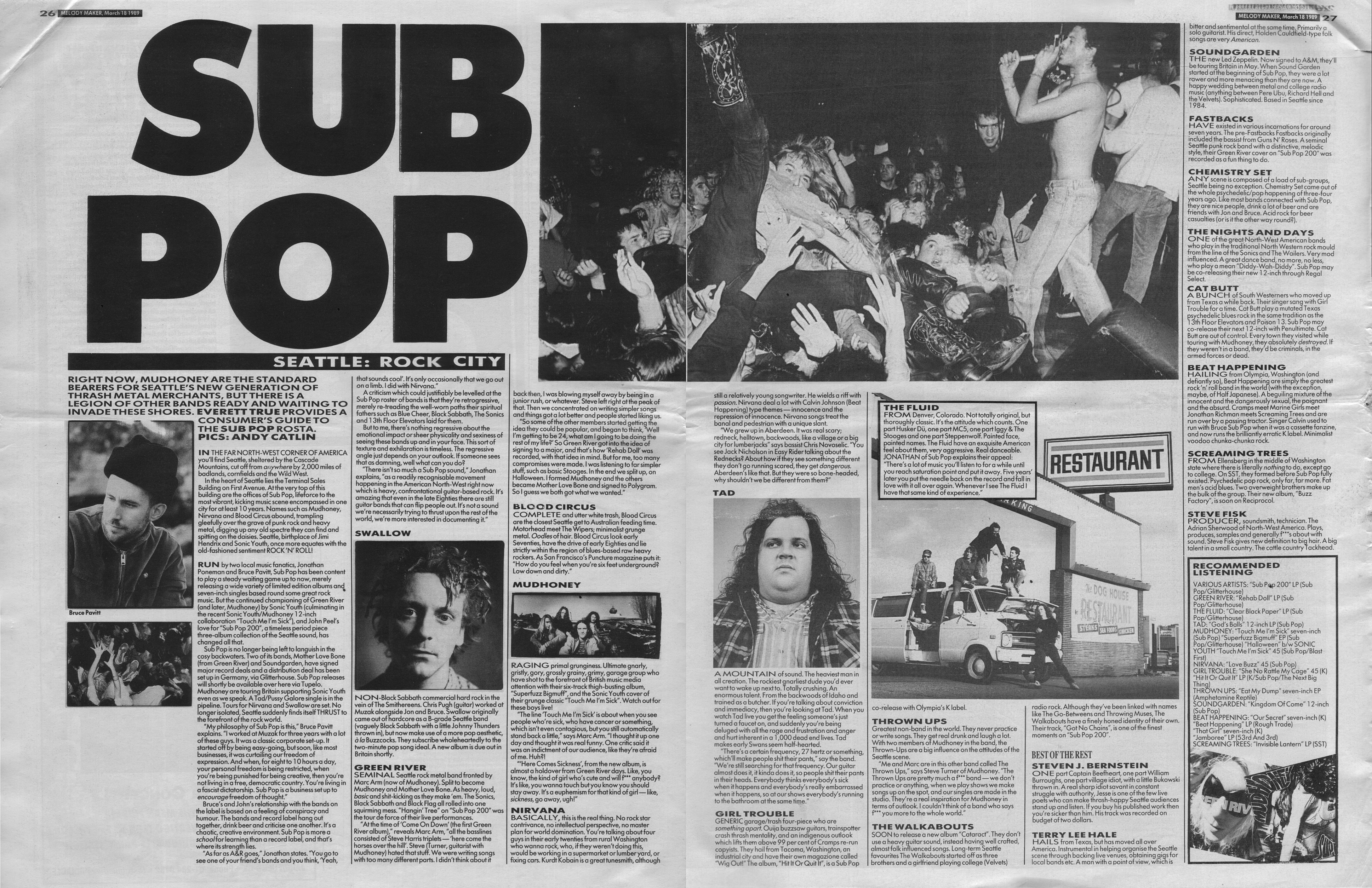
This taxonomy of face fuzz has gotten out of hand - as any good beard does, I suppose. But it's balancing the equation from the wrong side: what do we learn of any recognizable subset by, first, isolating them, second, cherry-picking a shared stylistic flourish, and, third, coming to the conclusion that they're a recognizable subset? This is like scanning promo shots of the '89 Sub Pop roster and feigning surprise that the musicians share a fondness for flannel and ripped denim.

If anything, we should seize upon a certain type of facial topiary, find who sports it across various genres, and then ruminate about what the common thread may be. For instance...

THE WILD MAN

Name: Warren Ellis of the Bad Seeds and the Dirty Three
Genre: Dark Americana; roots rock

Name: Pharaoh Sanders
Genre: Avant-garde jazz

Name: Joe Preston of Thrones and Harvey Milk
Genre: Stoner rock; doom; drone

THE ABE LINCOLN

Name: Mos Def
Genre: Conscious/backpacker hip-hop

Name: Thijs van Leer of Focus
Genre: Prog ne plus ultra

Name: Rjyan Kidwell, a.k.a. CEX
Genre: IDM; glitch-hop; noise

THE CHOPS

Name: Anton Newcombe of the Brian Jonestown Massacre
Genre: Psychedelic rock

Name: Sly Stone
Genre: Funk; soul

Name: Glenn Danzig
Genre: Heavy metal; horror punk

THE FU MANCHU

Name: Holger Czukay of Can
Genre: Krautrock; electronic; techno

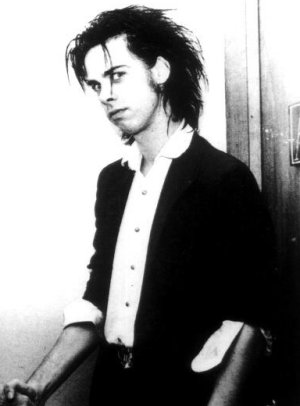
Name: Nick Cave
Genre: Dark Americana; post punk; gothic folk

Name: Glenn Hughes of The Village People
Genre: Disco

Not that facial hair should be interpreted as anything other than a snapshot of an artist, since it changes & evolves over time. I myself have sported all of the above (except the dreadful Abe Lincoln) at some point over the past year alone; Nick Cave was clean-shaven his whole career until Grinderman debuted three years ago; and Robert Fripp, who currently looks like your asshole Tory-supporting grandfather, once rocked the most righteous afro-and-sideburns combo this side of Sly Stone.

This quicksilver quality is, of course, also applicable to hairdos, as illustrated by both David Bowie's career and the Black Flag Haircut Continuum.

Sunday, October 25, 2009

And All Hardcore Fiends Will Die By Me

Not entirely timely, given the past number of days were eaten up by a brief escape from the metro region, but...


I've already had my say about this "grey vampire" nonsense, so all that remains is to dedicate the mixes below to the architects of this ignis fatuus "new orthodoxy."

Still, mind you... I wonder, reading such smug & protective excuses & egotism, if those paralyzed by prolepsis aren't simply exhausting themselves defending bad ideas.

Click on the titles to download.

Righteous Maelstrom (The Autumn Edition)

1. Brian Eno - "No One Receiving"
2. The Flaming Lips - "Convinced of the Hex"
3. Pissed Jeans - "Half Idiot"
4. Wu-Tang Clan - "Shame On a Nigga"
5. Arthur "Big Boy" Crudup - "I'm Gonna Dig Myself a Hole"
6. Big Flame - "Every Conversation"
7. The Jesus Lizard - "Mouthbreather"
8. The Jimi Hendrix Experience - "If 6 Was 9"
9. The Jesus & Mary Chain - "Suck"
10. The Billy Nayer Show - "Only I Can Save the World"
11. Grouper - "Disengaged"
12. Flipper - "Living For the Depression"
13. Busta Rhymes - "Woo Ha!! Got You All In Check"
14. XTC - "Outside World"
15. The Mothers of Invention - "Who Are the Brain Police?"
16. NoMeansNo - "I Am Wrong"

Righteous Maelstrom (The Fall Edition)

1. The Fall - "The Man Whose Head Expanded"
2. The Fall - "Fantastic Life"
3. The Fall - "Mere Pseud Mag. Ed."
4. The Fall - "What You Need"
5. The Fall - "Slates, Slags, Etc." Live
6. The Fall - "Recipe For Fascism"
7. The Fall - "Who Makes the Nazis?"
8. The Fall - "Gut of the Quantifier"
9. The Fall - "New Puritan" Peel Session

Saturday, October 10, 2009

Sniping (3)

K-Punk's "new orthodoxy" translated into layspeak:
I don't give a fuck how wrong I may be, and I don't give a fuck how vague or amoebic my ambitions may be - I will be Napoleon for a day if only at my own desk!
K-Punk's slide towards self-righteous incoherence has already been noted by myself and others, but what's shocking at this point is that, in seeking "to impose a new orthodoxy in the way that the right did," K-Punk is actually pulling pages from Karl Rove's playbook. Banishing all discourse except sycophantic acquiescence; equating "nuancing" a position with abandoning it; accusing critics of giving comfort to the enemy (or at least of conforming to the enemy's prescriptive narrative); maligning the libidos of those unwilling to charge headlong & blindly into battle... at this rate, it'll won't be long before K-Punk blows Ads Without Products' cover and Dominic Fox accidentally shoots Owen Hatherly in the face.

What's beyond surprising, utterly perplexing in fact, is that anyone would want "to impose a new orthodoxy in the way that the right did." The ultimate result of neoliberal capitalism's utter domination of the past decade has been bloody fucking disaster - not just for the "little people", leftists, and Iraqis, but for the Masters of the Universe as well. The right's politics weren't so much politics as moronic bumper-stickers plastered on a vehicle fueled by psychopathic greed & an insatiable lust for power, which doesn't offer much of a long-term strategy once every house of congress, parliament, and boardroom has been occupied. Given how badly this chapter of our civlization is ending, why should we put our trust in the bulldozer militancy & smoggy philosophizing of a handful of Joy Division fans?

Much as K-Punk may wonder on the "libidindal impulses" of we who'd ask a theorist to bother defending their own ideas before lending them our full faith, I wonder about said impulses of a leftist who'd rather headbutt everyone into submission or sulk in the corner than articulate a position. The more he prattles on about the "punkish demystification" the militant dysphoria enables, the more he sounds like some prat at a rave in denial that the pill he popped was just Tylenol, and the more I wonder if he's just trying to punk us.

Wednesday, September 02, 2009

Vampires Suck

No, this has nothing to do with the ongoing effort to tar-and-feather anyone with a contrary opinion as a metaphysical leech. This has to do with something my wife brought back from vacation.

People often worry about the various diseases we might contract or carry while en route aeronautically - everything from the common cold to swine flu. Scarcely a thought is given to the more pernicious afflictions of the mind we pick up along the way. I, for one, came back from an American wedding a few months ago convinced that super-sized portions were a step towards the palace of wisdom along the path of excess. Then I recalled that Jim Morrison was a half-wit lush, that I didn't want to die of a coronary by age 30, and that a half-dozen gyoza with a side of veggies is a perfectly delectable meal.

Meanwhile, my wife returned from her recent Occidental excursion enthralled by all things pallid and bloodsucking. It started simply enough when a friend passed her one of the Twilight books as a "beach read"; this very quickly crescendoed into an obsession with the popular HBO show True Blood, which is currently staining her corneas nightly as her video nightcap of choice.

Lest my wife appear a trend-swallowing idiot - she's not. As she admits, Twilight is the tripe you read when you go on vacation to a town whose lone "bookstore" is a Sheetz truckstop, and True Blood has attained the ubiquity (also enjoyed by The Sopranos or The Wire) that strong-arms you into watching at least an episode if only to be a part of your friends' conversation.

Now, Twilight is a teen Harlequin novel written by a sex-negative Mormon who hadn't even cracked Dracula when she first sat down to type her way into the wallets & hearts of hormonally-charged naifs across the heartland, so fuck that. That shit ain't even worth dignifying by discussion.

True Blood, meanwhile, is a bloody disappointment.

Yet it started so well: TV auteur Alan Ball hauls everyone's favourite libertine ghouls out of their coffins to reenact the civil rights struggle in all its heated mayhem, within the sweaty, haunted salmagundi of Louisiana. And that title sequence by Digital Kitchen is bitchin' (even if it has all the overt button-pushing & film stock/colour filter fuckery of a mid-'90s music video). The initial four minutes of the series set the scene most compellingly: as talking heads prattle about the "vampire rights" amendment on TV in the background, two all-American idiots almost provoke a convenience store massacre by a good ol' boy (complete with camo & trucker cap) who just happens to be a vampire.

I was to embarrassed to admit that maybe I was going to enjoy this: a show where people just happen sometimes to be vampires! After all, if the show intended to capture the myriad shades of the civil rights struggle, it would have to portray vampires as no less socially omnifarious & ambivalent as real people: rednecks, slackers, business people, parents, and whatnot. Hey, I want to see what kind of a dentist a vampire would make, and besides, it's hardly a leap of imagination to posit lawyers, lobbyists, and certain members of the state department as predatory bloodsuckers.

But no sooner than the star spook, Bill, appears does the show devolve into a dull retread of the cardboard-cutout characteristics worn threadbare by a century of literary & filmic flagellation: leather-bound & pasty lotharios who stare icily from beneath furrowed brows and speak with the affected elegance of a first-year drama student wallowing through a lifeless recitation of Hamlet's soliloquy. There's also apparently a law that requires vampires to listen to no music other than glossy remixes of "Tainted Love" and Nitzer Ebb. What, no Joy Division?


If True Blood's conceptual audacity was to craft a titillating analogy for the civil rights struggle, its vanilla vampires present a problem deeper than driving away seen-it-all audience members: hoary stereotypes, paper-thin & laughably caricatured, grappling for social acceptance & legal equity. In other words, if the show were stripped of its horror story facade and made a literal retelling of the civil rights movement, it would be portraying African-Americans as jitterbugging, watermelon-eating, "yessuh massa," shuck 'n' jiving buffoons. As the top-billed ghoul, Bill is afforded the screentime to develop a more nuanced social context: his efforts to conduct himself as any other rational citizen are met with suspicion by most, enmity by the ignorant, opprobium by the authorities, and even accusations of treachery by his own people (similar to being called an "Oreo"). But Bill is alone in a crowd of cadaverous lechers in black leather trenchcoats & dog collars with an enthusiasm for industrial-tinged rocktronica. How uninspired. How embarrassing.

As a parting thought, does it strike anyone else that there's a larger metaphor nestled in this? Hmm... a new arrival that once bore the promise of shifting paradigms and elevating the discourse to a higher plane of sophistication reveals itself to be little more than the moth-eaten status quo. What does that remind you of?


Just sayin'...

Monday, August 10, 2009

Kill 'Em All


That's it, I'm done with music. Searching for stimulating new sounds is the psycho-emotional equivalent of putting your life savings on a bar-b-q to see if dollar bills are still printed on flammable paper.

Witness the above: "Lust For Life" by the Sco band Girls - such deliberately slack, unskilled hobbyists that they can't be bothered to come up with a name that isn't face-punchingly dull, back-engineering the home-fi stylings of every boring white motherfucker with a 4-track from the last 20 years, all while coyly attempting to goldbrick that brass ring by blatantly lifting the hook from the most inescapable indie-bedwetter hit of the Noughties and jacking the name from one of the best-known, best-loved, and bad-ass rock songs of all fucking time.

These gluttons stand at the all-U-can-eat buffet of art history, with every giant upon whose shoulders to stand kneeling before them, and instead of giving us a crumb of even minor novelty - let alone gesamtkunstwerk - they regurgitate the most unambitiously reductive, faux-insouciant trifles, all Shits 'N' Giggles (hold the giggles).

Yeah, I'm looking at all y'all: Vivian Girls, Dum Dum Girls, and even non-girl-name bands like Wavves, Smith Westerns, and Crocodiles. You too, Pictureplane - pilfering dance-pop as opposed to indie-schlock doesn't mean you're not a filching vulture.

Okay. Fine. Round up these smug cultural orphans, these pandering dilettantes, and lock 'em in the basement while you burn the building down.

Friday, July 17, 2009

Ghouls In Tweed Jackets

"Highly respected" cultural theorists tossing around pentasyllabic abstract nouns or not - cashing in on celebrity death is still cashing in on celebrity death, you smug opportunists.

Monday, July 13, 2009

A New Coat of Paint On An Old Perversion

Nestled within the flesh of Christopher Weingarten's virtuosic rant on the decline of music criticism, a particularly chewy bit of gristle was the truth - accept it, however grudgingly! - that several-thousand-word homilies aren't necessary to show appropriate enthusiasm for music/film/literature/[insert cultural commodity]. A skillful wordsmith can indeed convince someone to seek out (or avoid) a work of art in a mere 140 characters.

If career writers & critics are legitimately fearing for their survival amongst the twit-plague, then what the fuck are the rest of us hobbyists and amateurs doing wasting our time clacking away all this self-indulgent twaddle? In a world where people can pass judgment on Shaquille O'Neal's choice of breakfast as he reports on the masticatory process in real-time, is there any attention left for lengthy diatribes that pass their expiration date while being written?

Life is what happens while you're blogging about it, so I accept that a number of posts I've been working on are already irredeemably irrelevant. For example, I'm going to follow up Ads Without Products' withering "K-Punk's New Clothes" piece, but since that fracas is already (gasp!) several weeks old, I doubt anyone will even bother reading it. So it goes.

Similarly, I'd begun crafting a article inspired by another of AWP's posts - about the libidinal link between sex and violence, specifically when the two are wrapped in a sweaty embrace with global Big Finance - back in fucking October of last year. Then a record, the holidays, moving across the planet and re-rooting intervened, so here we are a full nine months after the fact. Mooted! In the interest of keeping your interest, I'm including two topical playlists I made for a mix-tape swap this past spring; click on the titles below to download. And not wanting to let any labour (however late) go to waste, here's what I was writing at the time...

Talking about the globalisploitation flick Boarding Gate, AWP wrote:
The first-thought thing to say about films like this, that wrap financial activity in sex and violence, is that they are allegories of the violence that works off-stage in the real world to keep the business running. A simple furniture import-export business is really a front for murder-for-hire and heroin dealing etc etc etc. ...And every sexual act is tinged with the aftertaste of violence and ill-gotten gains.
Which, to be sure, is a romantic exaggeration. Despite whatever mirages may manifest in the mirror, I doubt very many hedge fund managers actually sustain the violent portents of of Mr. Blonde while nailing guileful femme fatales like Asia Argento. "Somehow," AWP wrote, "the world wants investment banking to be a task populated by the feral, the oversexed, the trigger-pullers. But it is not."

But not for lack of trying! If the world of cut-throat young Turks swashbuckling across the seas of int'l finance is a mere tenth as amoral, decadent, and libidinally propelled as films like Wall Street, Boiler Room, 25th Hour, Glengarry Glen Ross, or American Psycho would have us believe... then the keys to the kingdom have been handed to some of the most debased sociopaths ever to roam the earth. This is in keeping with the stories I've heard from folks who've worked within any proximity to a stock exchange. One friend, who used to work at a record store in the basement of the TSX, lost track of the number of times he'd walked into a stairwell or bathroom to find brokers bumping blow or speed, engaged in an act of self-love, or indeed getting each other off. (The gender of either party was of secondary importance to frictional expertise. How socially progressive of them!)

And science supports this view of hormonally-imbalanced psychos snorting lines off the back of our portfolio: Harvard researchers found a literal link between men with elevated levels of testosterone and men who'd willfully gamble away money on a coin toss, enthralled by the sheer fuckoffness of chance. The deeply disturbing next step is to consider, in tandem, that testosterone insufficiently counterbalanced by serotonin is a biochemical hallmark of serial killers. Granted, most notorious murderers are too emotionally unstable to play the clean-cut professional as well as Ted Bundy, but the neurology suggests that a monster like Patrick Bateman is less unimaginable than inevitable.

A lot of talk about the (now obviously & woefully ineffective) bailout has argued that it amounts to a bloodless coup by a fraternity of financial oligarchs. The fatted calf being sacrificed on the economic altar isn't merely taxpayers' money, but democracy itself. The difference between state-corporatism (fascism) & state-capitalism (despotic "communism") and contemporary America is that the locus of the masses' libido is not Dear Leader, but the "free-market" economy. As David Sitora wrote:
We have become a country that has one national religion: presidentialism. That's the religion that says the president is an all-powerful deity - and the Oval Office is a position that is the only one that matters. That this outlook is fundamentally undemocratic and offensive to the principles of our Founding Fathers seems completely forgotten. We have embraced czarism with the zeal of cult worshipers - and now this zeal has global economic forces at its back.

We are trying to economically compete with anti-democratic forces that can make financial decisions without any public input at all. As we saw with the debate over the bailout bill, the transnational corporate elite tell us our democracy and its careful deliberations are hurting our ability to make quick decisions in this global market - and therefore that democracy must be subverted to the will of capitalism.
A noted war criminal once intoned that "power is the greatest aphrodisiac." Hideous though it may be to contemplate, this appears to be vomit-inducingly true - especially when expressed via one degree of displacement through cash-grabs, imperial incursions, sexual debasement, or some obscene confluence of any of the above. No wonder Republican & Tory sex scandals are always the most titillating.

Blood/Lust

1. Black Flag - "Slip It In"
2. The Birthday Party - "Fears of Gun"
3. Jane's Addiction - "Ted... Just Admit It"
4. The Billy Nayer Show - "Billy's"
5. Melvins - "Boris"
6. Messer Chups - "I'm Psycho Bitch"
7. Dudley Nightshade - "All the Colours of the Dark" (Instrumental)
8. Sex - "I Had to Rape Her"
9. Lil Wayne - "Mrs. Officer"
10. Brainbombs - "Lipstick On My Dick"
11. Flying Lotus - "SexSlaveShip"
12. Oxbow - "Stallkicker"
13. David Lynch & John Neff - "Go Get Some"
14. Sonic Youth - "Lights Out"

Songs the Recession Taught Us

1. The Flying Lizards - "Money (That's What I Want)"
2. Madlib - "Pyramids (Change)"
3. The Steve Miller Band - "Take the Money and Run"
4. Mos Def - "Fake Bonanza"
5. Guns 'N' Roses - "Double-Talkin' Jive"
6. Ennio Morricone - "Money Orgy"
7. Tricky - "Money Greedy"
8. The Fall - "Middle Class Revolt!"
9. Hilton Sutton - "I Will Destroy Them Economically"
10. Soul Coughing - "Collapse"
11. The Birthday Party - "Guilt Parade"
12. The Jesus Lizard - "Countless Backs of Sad Losers"
13. Frank Zappa & the Mothers of Invention - "Can't Afford No Shoes"
14. Enzo Scoppa - "Recesso"
15. Harvey Milk - "A Maelstrom of Bad Decisions"
16. Johnny Greenwood - "Future Markets"
17. Wu-Tang Clan - "C.R.E.A.M."
18. Pissed Jeans - "I've Still Got You (Ice Cream)"

Sunday, June 21, 2009

What Lessons Not To Learn From Iran

Between the increasing horror in the streets and the clampdown on broadcast media, trying to make heads or tails of the post-"election" chaos in Iran is no mean feat. Needless to say, there've been a lot of bunk conclusions drawn and errant dots connected, so let's take a moment to cut the crap out of the discourse.

Myth: Islam and Democracy are incompatible
This is an understandable fear, given that the line in the sand appears to pit democracy squarely against conservative Shi'ites. Moussavi himself has expressed concern that his nation's faith may be fundamentally antipathetic to democracy. Obviously, Islam is not the enemy of democracy: conservative Islam is the enemy of democracy, much in the same way that any intransigent orthodoxy is the enemy of democracy. No matter which monotheistic mania, putting anyone with an unshakable belief in a supreme being in charge of a country is a bad bloody idea, to which the United States is a living testament. Let's also not forget how prominent strident nationalism is amongst Ahmadinejad's rhetoric and supporters. Nationalism, fascism, capitalism (including state capitalism), religious fundamentalism - pick your -ism and odds are it ain't particularly nonsectarian.

Uh, yeah, well - we did that already, remember? And look what it got us last time: twenty-six years of a garish & irresponsible puppet dictator who was dramatically deposed by the original Mr. Fire-And-Brimstone-Upon-America, Ayatollah Khomeini, whose ascent readied the US (to one extent or another) for the rise of Khomeini's Occidental doppelganger Ronald Reagan (and we know how that worked out). Leaving the fate of Iran in the hands of its own people - whether they're clutching ballots or Molotov cocktails - at least allows the country a chance of escaping either an appointed despot or clerical strongman.

Lousy Analogy: Iranians and Republicans in a photo finish at the Oppression Olympics
Are we fucking joking. Speaking of learning the wrong lesson, apparently Republicans have decided that they lost the last election not because they're cryptofascistic spooks, but because they aren't millenarian/imperialist/batshit enough: aside from attempting to resurrect the ol' Cold War standby of Socialist boogeyman and whipping neo-Nazis into a bloodlustful froth, the Republicans are comparing their minority status to being disenfranchised, clubbed, tear-gassed, and shot by Ahmadinejad's thugs. Jon Stewart extended the analogy to its logical conclusion:
And I wonder if the lack of choice in the congressional cafeteria isn't just a little bit like Auschwitz.
But hey, to be fair, perhaps this is actually a kind of political performance art, a metapolitically ironic gesture on the part of the Republicans that manages to both undermine a Democratically elected leader at home, while bolstering a tyrannical theocracy abroad. That'd be heavy, bro.

Thursday, April 23, 2009

Another Door Closed

Well, that's another band I can write off being excited about: the Horrors have gone from wanting to be the Birthday Party to wanting to be Deerhunter. I can't stretch my jaw wide enough to accommodate the accompanying yawn.

Monday, April 06, 2009

So It Goes

There is a lesson to be learned from the following 1-2 punch from the otherwise-excellent Ktismatics. Here is the first post, dated February 5, 2009:
I’ve launched a new blog called Ecliptics.

This new blog will feature the work and personal observations of writers, filmmakers, musicians, activists, theorists, and...
So on and so forth. The noblest of intentions executed on an ambitious but feasible scale. Along comes the very next post on Ktismatics, dated March 23, 2009:
I’m finished with the Ecliptics blog. Hey, it seemed like a good idea at the time.
I dare you to find me a truer allegory or more succinct encapsulation of the internet as a whole.

Monday, March 23, 2009

Truffles & Trivia

Christ, has it really been three weeks since I threw anything up here? Amazing how life gets in the way of mucking about in cyberspace.

So, in the interest of giving cause to occasionally check this site, here's a handful of memetic tchotchkes - great for ice-breakers or the local pub's quiz night - to tide y'all over under the next batch of big-think claptrap. (Which, I promise, is coming swiftly down the pike. I'm just faffing about with word-choice at this point.)

* * *
Two major plane crashes within twelve hours, the latest in an alarming line of aviationary disasters. My set-theory specialist housemate reassured me that the meager probability of getting in a place crash (around 1 in 4.2 million) is the same whenever I set foot on an aircraft. Of course, he had to go on to explain how compound probability would support my jittery suspicion that, yes, I am more likely to die with each flight I take. Thanks, math!

* * *
Via the always-delightful Things Magazine, here's a remarkable collection of photos that suggests China was more livable amid the early-'80s aftermath of the Gang of Four. Shanghai wasn't always a garbage-strewn clusterfuck? And there was once depth and translucence in the skies over Guangzhou? Scenes of natural splendor uncluttered by artificial lights and souvenir vendors? The mind reels.

Meanwhile, the recent Takanashi Yutaka photography exhibition provided an interesting White Lodge/Black Lodge converse to the above Flickr set. A series of bar interiors - also shot in 1983 - from within the warren of Shinjuku's Golden Gai suggests that relatively little has changed in Tokyo over the past twenty-five years. In claustrophobic bars with thematically unified decor, gel-haired rockers and chain-smoking ojisan mingle with heavily made-up gals sporting vinyl Puma shoulder-bags. Throw a couple of cellphones into the frame and the pics could have been taken last night.


* * *
Okay, I get obsessive about stuff I dig - that's why I bothered watching this hokey preview of Twin Peaks' second season. Remember what it was like in the days before user-generated content and constant connectivity? How quaint Alan Thicke's smug tour-guide persona and ABC's proprietary impassivity seem now... But far more shocking than the presumed lack of media literacy circa 1990 is the very existence of something called Cop Rock. Yeah, that other show mentioned in the opening credits. What, pray tell, is Cop Rock?


That's right: from deep within the furrowed grey matter of Steve Bochco, he who cut his teeth on Columbo and achieved nigh-unmatched TV notoriety for creating both Hill Street Blues and NYPD Blue, comes a pre-ironic musical cop show - complete with every embarrassing, epoch-anchored production gag & genre trope the late '80s had to offer! I'll wager that this here li'l ditty (complete with caricatured "negro drug dealers") about how snorting blow is within the constitutional rights of rich white folks is a reasonable indicator of the show's genesis.

No, this is not some tangential sight-gag from the scathingly self-aware 30 Rock; this show happened for real. But then again, I thought Mad Money was a contextual one-liner created by Arrested Development. Goes to show you never can tell...