Showing posts with label People. Show all posts

Monday, February 13, 2012

The Dead Hear No Eulogies

So Whitney Houston dies and suddenly everyone gives a shit about the foghorn-voiced cokehead who gifted us with the only vocal performance more oppressive than Celine Dion's Titanic theme. How sadly predictable; how pathetically mawkish. Why does everyone rush to recall their Edenic first impression of a once-formidable talent once that person has crashed, burned, and kicked the bucket? Is it the public's way of absolving their own guilt for having used the fallen celebrity as a feeble punchline for the final decade-plus of their life? Despite the fact that some of us had problems - both aesthetic and political - with the woman from the very start?

Please. I really like some of Michael Jackson's records and I still didn't give a shit when he died, for reasons I'll let Kat Williams elaborate upon. Oh, and dig the bonus swipe at the cadaver du jour.

Wednesday, February 08, 2012

Misplaced Indignation Again?

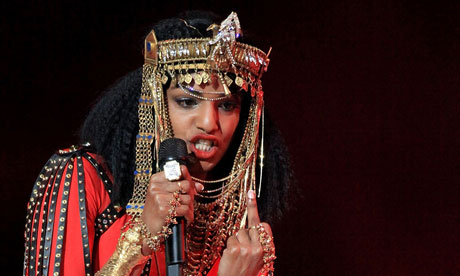
Am I obliged to comment on M.I.A.'s "finger malfunction" because my most popular post ever - by a factor of over four times its closest competitor - is my 2010 takedown of her pop-provocateur persona? Because, like, I've got shit to do besides rehash two-year-old quarrels of stage-managed mischief.

But fine, let's get into it, if only because it'll be easy. Turning first to the finger itself: really? Really! Have we backslid into such petty puritanism that flipping the bird is cause for a proper conniption fit, as opposed to the single most overused & hackneyed gesture of juvenile waggery that packs all the symbolic punch of overcooked rice noodles? She doesn't even do it well! Look at her hunched shoulders, look at how tightly drawn in her arms are: a meek & defensive posture, like a toddler who's committed to misbehave deliberately just to piss off the parents. Pathetic. This is how you give someone the finger:

Boom! Ain't no equivocatin' when you're telling someone to fuck off.

Now, with regard to M.I.A. as riotous pop shit-kicker, a lame, recycled flip of the middle finger is merely the latest in her continued reliance upon lame, recycled gestures. The chorus of her latest single is a monotone bleat of "Live fast, die young" and it doesn't get more threadbare & depleted than that hoary countercultural trope. Hopefully, M.I.A. has accepted (as most of us have) that she's utterly inept at articulating a political position so we needn't reexamine precisely why her identity-derived political aesthetic is bullshit. Of course, she still covets the currency of being branded a "political artist," but she can shoot every one of her music videos within safe distance of a "conflict region" from now on, and everyone will understand it's empty & opportunistic provocation, like Madonna fornicating with Black Jesus and burning crosses.

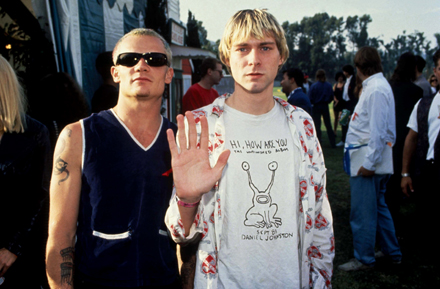
Which returns us to the stock defense of M.I.A.: the provocation itself was the point. As I explained before, I'd have no problem with such an excuse - heck, I might even become a fan - if M.I.A. was able to transgress the form or process of "being a pop star," but she isn't. (In fact, no one has been - not even Lady Gaga, I'd argue - since Kurt Cobain.) Because M.I.A.'s transgressions are limited to the realm of content, she is - at the risk of repeating myself - doomed to one of several failures:
  1. The provocation fails to provoke. Congrats, you're boring.
  2. The provocation succeeds, at the expense of banalising the provocative.
  3. The provocation succeeds to the point of returning the threat to the provocateur, who stands by the ever-present escape hatch of "not meaning it."
And if anything is symptomatic of art's sickly & moribund state in the post-modern era, it's an absence of meaning.

Friday, January 13, 2012

Paper Napkin Chicken Scratch

Errant observations and imprecise opinions hastily scribbled over the course of three weeks bouncing between several countries...

It takes most directors and screenwriters three-ish films to arrive at either their apogee or the plateau along which they'll comfortably cruise for the rest of their careers. Taxi Driver was Scorsese's fourth film and Paul Schrader's second script. Blue Velvet was David Lynch's fourth effort as writer/director. By the release of The Royal Tenenbaums, you knew a Wes Anderson film would be wealthy eccentrics shot in diorama-style mise-en-scène over an old Kinks song. It didn't even take until Eternal Sunshine to realize that all of Charlie Kaufman's films are basically Annie Hall if Woody Allen had grown up reading French post-structuralists instead of German psychoanalysts.

J.J. Abrams' films follow a reliable formula: one part Spielberg, one part lens flare, and one part daddy issues. (Some would argue, therefore, the proper formulation is two parts Spielberg to one part lens flare.)

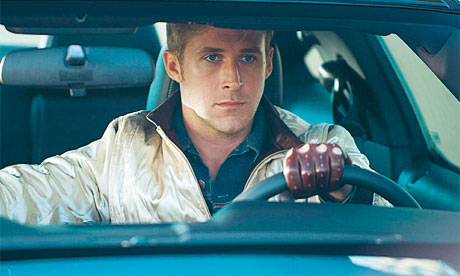
Drive is a terrible goddamned movie - the kind of faux-arthouse poppycock that portends to work that style-into-substance alchemy when it's merely a spitwad of smug artifice transubstantiating up its own ass. The pacing would put Jim Jarmusch to sleep, there's as much teal-and-orange colour correction as a Michael Bay movie, and the characters are so stock they're listed on the NASDAQ. (It takes all of two lines before Albert Brooks' jowly Italian mobster says "Wuzzamattawichoo?") Man of the Moment Ryan Gosling spends about 15 seconds of the film acting, and the other hour-forty-minutes-and-twenty-five-seconds playing a mannequin with a fake Brooklyn accent whose "principled" refusal to carry a gun is kind of undercut by the drownings, stabbings, and beatings he delivers unflinchingly throughout the film.

My wife and I are utterly baffled by Ryan Gosling's apparently universal appeal. His much-heralded sexiness eludes us ("He just looks like he's from rural Ontario!" says my wife) and we've yet to see any acting chops above the standard of, say, a guest appearance in an HBO series. Also, his phony Noo Yawk accent just pisses me off. I addressed this specific complaint in two separate conversations with two friends, each a young, cosmopolitan French woman. Both immediately cited Gosling's tenure on the Mickey Mouse Club as the possible source of his aberrant accent. Ah, but that was shot in Florida! If Gosling had effortlessly sponged up the local dialect, he'd sound more like Hank Hill or (if he was really overachieving) Tony Montana. But no, he sounds like a truck driver on the BQE, so how can his accent be anything but fake? To this, both of my friends - separated by three days and 380 miles, totally unaware of each other's reaction - quietly shrugged and said, "Well, he might just be quite stupid."

Do they think Gosling is an idiot because he's a blond pretty-boy Disney alum? Because he's an actor? Or, indeed, because he sounds like a grease-monkey from Gowanus? Whatever the reason, let it be known: sophisticated, worldly French women think Ryan Gosling is a dumb-ass!

Overinflated New Yorker also happens to be Jon Stewart's go-to accent for impersonating morons, con artists, and garden-variety assholes. A canny choice on his part: tough & streetwise though it may be, the New York accent doesn't particularly appeal to many people outside of New York. Still, it isn't as ugly as the native Baltimorean accent, which sounds like a hillbilly crack-baby. Come to think of it, almost every accent is saddled with negative stereotypes. Received Pronunciation is the accent of the learned, the elite, but also the cosmically evil. In the UK, Brummies are idiots and Scousers are thieves. In the States, southerners are gregarious racists, Bostonians are either moneyed pricks or thuggish drunks, and mid-westerners (and by extension Canadians) are benevolent folks so simple they border on Autistic.

As much as I've love to tour its splendid whiskey distilleries, I don't think I'll ever get back to Scotland. My wife says the accent - despite being intermittently incomprehensible - poses a very real threat to our marriage.

Lots of people have a pet accent, one they find ineffably sexy & sensual. Not me: I might find a woman of another mother tongue alluring, but that has more to do with the woman than how she blends her vowels. At least that's what I thought until I saw Marion Cotillard in Les Petits Mouchoirs, swearing a blue streak like she was Linda Blair in waterwings. I can't begin to explain why, but woo lawd was that hot. Of course, I find French women generally fascinating: their faces are like fountain-pen caricatures and their hair is like choreography. The Golden Ratio - thought to be integral to our perception of beauty - seems to elude French features more often than not, which has the unfortunate effect of making many French men look like big-nosed, unshaven pimps. But it also makes the women so much more interesting to look at than their geometrically-regular, Teutonic neighbours.

Of course, it's inaccurate & unfair to suggest that Germans meet some mathematical ideal of physical perfection; that's only half of 'em. The other half look like the mustard algae staining the bottom of the gene pool.

There was a billboard in the Munich train station for a large commercial bank - I think it was Sparkasse - that posed the question, "Which bank is doing what's right for Germany?" in a friendly, white, sans-serif font. Next to the text was the image of a platinum-blonde, blue-eyed young girl, hands planted firmly on hips, eyes fixed sportively on the middle distance. Now then... I understand that as EU leaders (especially German chancellor Angela Merkel) attempt to balance the wildly discrepant economic health of its constituent countries, mutual mistrust and resurgent nationalism is rampant across the continent. But I wouldn't have guessed that a commercial bank in King-of-the-Hill Deutschland would appeal so baldly to some latent Aryan arrogance.

However, if you're intent on discussing Nazi architecture, then only do it after a minimum two mugs of mulled wine so your vocal chords are warmed up and your inhibitions have been properly shellacked. After all, buildings so bellicose & humourless that they look like clenched fists deserve to be discussed only in equally belligerent terms.

Monday, December 19, 2011

Like Flies

Well, the second-craziest despot to rule a third-world autocracy has become the newest member in Ozymandias' Infernal Big Band. That is, he's dead. Neither will he be missed, nor will anyone hesitate to celebrate his demotion to mere worm-meal as Jong-Il's death is unencumbered by gruesome criminal circumstance. Good ol' fashioned natural causes as opposed to, say, occupational hazard.

That being said, given that no one has the slightest notion what North Korea's contingency plan was once Dear Leader slipped this mortal coil, I'm suddenly very happy to be exiting the Orient for the next few weeks...

Monday, November 21, 2011

What Lack Dooms a Movement?

Is it imagination? Foresight? Self-understanding? Some combination of all of the above? Roll the tape!


First, let's jump to around the 22:20 mark to hear 1960s commune member Molly Hollenbach describe the bold, egalitarian social experiment in her own words:
We didn't use the word "system" but we very much thought of the whole group, of ourselves as connected - that there was a group sense, a group feeling. That was our whole purpose: to be fully connected to each other and to have this group sense of the organism of the many who act as one. ...It would be like a dance, where we're creating a new kind of society, freeing each person to be fully themselves in the group. But we're all affecting each other at all times, like an organism of many who act as one.
Now let's skip ahead again to about 54:15 to hear what happened to these hierarchically-flat proto-societies:
[The communes] all failed. Most lasted no more than three years, some for less than six months, and what tore them all apart was the very thing that was supposed to have been banished: power. The commune members discovered that some people were more free than others. Strong personalities came to dominate the weaker members of the group, but the rules of the self-organizing system refused to allow any organized opposition to this oppression.
Molly Hollenbach elaborates:
...The very rules that kind of set up this egalitarian group resulted in the opposite of the dream. They resulted in creating a hierarchical structure in which some could be dominant over others... because everyone is not equally powerful in their voice against one other person.
This returns us to that Baudrillardian place wherein desire and power are interchangeable, and therefore desire has no place in the schema of power. The personal is the political, but not in the sense usually meant.

But before we disappear up the simulacrum of our own post-structuralist ass, what does this mean for the Occupy movement? Well... how about this?


Ergo, may I now suggest that we stop applauding the movement merely for making us feel good about ourselves and finally focus on the more concrete issue of achieving results?

Thursday, November 10, 2011

Now Showing: Tragedy! Coming Soon: Farce!

I realize it's a bit cheap of me to take pot-shots at the Occupy movement from the comfort of my boho-Tokyo bunker, so it was instructive to read Disaster Notes' cautiously pessimistic perspective from inside Occupy Austin. Not that I take any particular joy in knowing that the Occupations are as meekly reformist & restrictively managerial as I suspected. If you too are concerned that the ossified moralism of the Occupation's milquetoast middle-mass threatens the very "diversity of tactics" they claim to embrace, then Disaster Notes' full critique of General Assemblies is required reading.

In parallel, the dubiously-monikered Alphonse Van Worden attacks the current formulation of Occupation demands, neutered of their inflammatory potential, now mere eunuchs attending to the upkeep of the status quo:
That the demands conspicuously reject proposed mention of humanity’s rights, democracy, justice, and politely refuse any language that might bring to mind the ruling class’ lawlessness, barbarism and mercilessness, tends to nudge the discourse in the most dangerous direction, toward the legitimisation and indeed inevtiabilisation of reaction and toward faciliating the project of containing this revolt in the guise (flimsy enough, and usually disavowed) of securing some concrete gains while the getting is good.

Now at the start, these demands were proposed alongside a list of demands for an end to the state’s violence and terrorising and lawlesness and debt amnesty. That these didn’t make the cut is very signficant, and shows how “compromise” can transform a radical agenda not into a reformist one but into a reactionary gain for the ruling class.
On an immediate, practical, and modest scale, all of this suggests that perhaps the most appropriate slogan for the Occupiers is - with minor amendment to an existing favourite - "Citizens United will never be defeated!"

Friday, October 07, 2011

iCame, iSaw, iConquered

Come December, I'll be curious to see whose death ends up earning more year-in-review ink: that of Osama Bin Laden or Steve Jobs. For now, I just feel bad that Bert Jansch was robbed of his last moment in the spotlight.

The only thing I feel about Jobs' sudden passing is surprise at how quickly it followed his resignation as Apple's CEO. Perhaps this is another instance of how intimately entwined are sense of purpose and will to live. Jack Layton, for example, took the New Democratic Party of Canada from a marginal parliamentary presence to the official opposition in a single election and was dead within a couple of months. Even T.E. Lawrence - a man whose feats of endurance & military daring read like pulp fantasy - was scarcely two months into his retirement when he met an ignominious end in a minor traffic accident.

Beyond that pseudo-philosophical chinstroke... so what? Can't say I particularly care. But judged by the online tsunami of farcical grief, I am starkly in the minority. So maudlin & wracked is the tenor of the bereaved I'd have thought that all these people were personal friends of Steve Jobs, that he'd brought them chicken soup on a cold November night, that he'd awarded their kids college scholarships, that he'd given sight to their blinded-by-moonshine great aunt.

But no, they are not a one his friend. They aren't Steve Jobs' acquaintances, they're his customers, his consumers.

Lest we forget that Apple is a corporate behemoth whose liquidity exceeds that of even the world's largest national economy. Lest we forget that Apple is a technocratic Goliath which dodges corporate taxes and whose idea of "healthcare coverage" extends to suicide-prevention nets but barely any further. Unlike his oft-maligned doppleganger, Steve Jobs is not a philanthropist - he's a corporate padrino whose brilliance lies less in innovation than elaboration & refinement - making borrowed ideas better. Apple's very first personal computers (the Lisa and the Macintosh) were little more than liberal imitations of the Xerox Alto. Similarly, Jobs did not invent a GUI platform to (re-)distribute digitized music, but he did figure out how to monetize one.

The true genius of Jobs was his aestheticization of appliances. He transformed utilitarian machines into the fully syntactic symbols of a lifestyle; his public-relations alchemy made technological amenities into elite totems. Between his products & his customers, Jobs fostered not just a relation but a relationship - a transubstantiation presented literally in those anthropomorphic "I'm a Mac" TV ads.

At least the UK got to watch the guys from Peep Show make smug pricks of themselves.

Anyway, this explains why Jobs' death is a big deal beyond the business section. A man like Philo T. Farnsworth arguably had a more revolutionary effect on daily life, but Steve Jobs was a man with whom people felt they had a personal relationship, a friend who had enriched their lives & enabled them to unleash their expressive potential. It's no exaggeration to say Jobs' death has elicited a despair whose scale and substance are equivalent to - perhaps even greater than - the passing of the Pope. Within a mere hour of the news, floral tributes were piling up outside Apple stores the world over. Social media was more choked with endless inspirational quotes than a Deepak Chopra book. The grief was so sensational it would've been considered too stagy for a Broadway musical.

Against this backdrop, the latest essay on Adam Curtis' blog made for some serendipitous reading: in his endless trawl of audio-visual archives, Curtis has managed to trace the evolution of demonstrative emotion on TV. Within barely a generation between the '50s and '70s, spilling one's guts on air went from being anathema - "shameful agony" - to the necessary signifier of human authenticity. This sentimental overflow has become a carved-in-stone commandment not only of broadcast media, but of western social relations in general. However, Curtis warns that this hysterical style of emotional "authenticity" may actually be anything but:
There is a creeping sense of someone pretending to have the emotions that are expected of them. And in this way hiding their true feelings even further below the surface. Or maybe the truth is even more disturbing - that there are lots of things that people live through and experience that they just don't have emotions about.
As irrational psychic ephemera, emotions are difficult to understand and even harder to reproduce convincingly - particularly positive, sympathetic emotions. This is why tearful confessions & expectorating fist-fights became mainstays of daytime television far earlier than the joyful hug-orgies & triumphal backslapping of more recent shows like The Amazing Race or American Idol. So how did gushing exuberance become part of the public's expressive mode? Curtis points to the rise of "self-help" and collaborative craft shows like Trading Spaces and its British counterpart, Changing Rooms:
I think the man that really brought the hug into British television in a big way was the producer Peter Bazalgette. His genius was to spot that the idea of transforming yourself as a person could be intimately linked to transforming the things around you - starting with the rooms in your house.

I think the first real hugs of these kind began in the series Changing Rooms in the mid 90s.

The original revolutionary idea had been that by changing yourself emotionally as a person you would then change society. Bazalgette created an easier and quicker variation. By simply changing the physical things around you - you could then change your inner feelings and became a better and more expressive human being.

Wallpaper as redemption.
Steve Jobs understood this perfectly. By emphasizing his products' artful design, and by casting them as tools of creative composition, Jobs enabled his consumers to feel they were more fully-realized, expressive individuals thanks to him.

What I find disturbing is that, by surrounding themselves with beautiful expensive objects that encourage a melodramatic solipsism, people are encouraged to construct & occupy their own private fantasy wherein the crueler aspects of reality are not allowed. No one wants to feel bad. No one wants to struggle with criticism, dissent, violence, or acrimony. This relentlessly positive self-regard creates the illusion of a cozy but false consensus: by engaging only with the familiar & agreeable, we diminish our ability to cope with difference. Think different, but not so different that it unsettles you.

This is why there is no such thing as a "Dislike" button.

Tuesday, August 23, 2011

Adieu to the Bon Jack

A sad day for Canada as the country loses its finest politician & a genuinely decent human being aside: rest in peace, Jack Layton.

Meanwhile, Muammar Gaddafi: still not fucking dead. Where indeed is the justice in this cockamamie punchline of a world.

Friday, July 22, 2011

In Collusion With Virgin Trains

Everyone laughs at that perennially-quoted quip from The Big Lebowski - you know the one, The Dude's weary reprimand that "You're not wrong, Walter, you're just an asshole." Everyone laughs. But a few among us wish Walter would've shot back at Lebowski: "Yeah? So?"

A happy-49th tip of my hat to six-string strangler, sound engineer, and celebrated food blogger Steve Albini, a man whose initials might as well be embroidered on my own bag of tricks. May cultural politesse continue to tremble in his presence.

Saturday, July 02, 2011

Phoning It In

The overwrought pageantry that passes for political punditry is so hackneyed & calculated, it's a wonder anyone pretends to be surprised anymore. Everyone so desperately admires & awaits a Howard Beale or Barry Champlain moment, forgetting (or ignoring) how expertly stage-managed & corralled by corporate interests those fictional "mavericks" were. Thus audience & broadcaster alike have managed to turn yet another non-event - Glenn Beck's exit from the Fox News network - into frothing political scopophilia.

Personally, I could give a fuck, not the least because I live outside America and have no TV or radio. More importantly, Beck himself is not special: his is a role to be filled by whatever appropriately attention-hungry ex-cokehead lunges hardest towards the microphone. But, as I explained last month in an e-mail to a friend, I'd had an appalling premonition about Beck's next step:
Beck can get the fuck off the air already. The only thing I'm worried about now is that, for his next act, he'll undergo some histrionic "crisis of faith" in the conservative movement and refashion himself into a pseudo-libertarian leftist and everyone will eat that shit right up. Don't think it can't happen! Ariana Huffington pulled off that stunt with startling efficacy (though I believe she's far more sincere than Beck has ever been).
But surely such a mawkish turn would be so transparent & tacky, no one would fall for it, right? I mean, come on. Yet, yet, yet, as I click across to Crooks & Liars this morning, what do I see atop the front page?
Beck on Republicans: 'I hate them'
Well, stomp on frogs 'n' shove a crowbar up mah nose! Who'da fucking thunk it. As good forgive-and-forget liberals, we should presently, if prudently, embrace the Fox News rodeo clown, not only for his dubious disillusionment with both mainstream political parties, but because Beck is (now) solidly against extraordinary rendition:
"Ghost planes - we're picking people up in the middle of the night. We're saying talk to us or we're going to drop you off over in Egypt. That's insane... We don't stand for anything."
Beck is unconvinced of the efficacy of state-sponsored kidnapping & torture (for which legal repercussions have just been forever swept off the table). Welcome to the club, buddy! Everyone against zapping civilians' scrotii with car batteries gets a gold star! If you disapprove of kidnapping, you get a cookie! How about this: as long as we're doling out special credit for shit you're supposed to do, can I get extra sprinkles on my sundae given that I've resisted the temptation to chainsaw off my neighbour's head & fuck his wife?

Sunday, June 26, 2011

Just One More Thing...

Generally, I'm suspicious of people who are diligent in cataloging the birthdays & deaths of the better-known among us. It betrays an insipid nostalgia and a cloying, desperate hope that they themselves will one day be remembered fondly & eulogized flatteringly. Death: get over it, eh? But at the risk of hypocrisy, I can't allow this to slip by unnoticed...

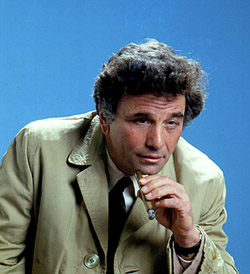
Fare thee well, Peter Falk. I can't convey with any dignity or elegance how much I genuinely fucking love Columbo. I've not been so mortified since Patrick McGoohan's passing.

Saturday, May 21, 2011

Oh Noooooooo-ah!

Even if not one single other soul vanishes today from this earth, this proves that the Rapture has indeed come. Give God the ol' figure-4 leg-lock for us, Randy!

Monday, March 21, 2011

The Drift


If Japanese streets are emptier than usual, it's more likely because of the sodden weather than fears of irradiation. Cabin-feverish though we may be, today's national holiday couldn't be better timed. Those of us lucky enough to live outside of eastern Tohoku are depeleted from a week of incessant dread - a hangover minus the happy hedonism that usually precedes the headache.

By now, the excesses of mass-media Cassandras appear obvious even to audiences abroad. The irascible Charlie Brooker did a marvelously caustic take-down of last week's sensationalism. Confessing to some cognitive dissonance from the barrage of conflicting analysis & reportage, Brooker succinctly nailed why all anchors & analysts ought to be taken with a metric ton of salt:
Like most of us, I've no idea whether the fear is exaggerated or not. All I know is that I'm having advanced atomic theory explained to me by people who, last week, were struggling to describe the colour of Kate Middleton's dress.
The chief concern remains assisting the stricken in Tohoku, but throughout the rest of the country, life has largely picked up where it left off ten days ago. From where I sit in central Tokyo, the most immediate threat to my well-being is the precipitous rise in coffee prices.

And so Japan has fallen below the fold. Fair enough that the eyes of the world have drifted elsewhere. Sectarian violence continues in Côte D'Ivoire, the West continues its feeble bet-hedging regarding the democratic uprising in Bahrain, and then of course there's that other oil-rich autocracy descending into blood-swamp anarchy: Libya. Having been a second-banana boogieman for forty years, Qaddafi is finally the world's top-billed despot. If the wanton slaughter of his own citizens wasn't enough to turn news network talking heads, then NATO nations' swift assault on Libya guarantees round-the-clock coverage. After all, when was the last time the French took the lead militarily? That itself is news-worthy.

The speed with which France attacked Libya while fleeing Japan seems paradoxical, but it's all part of Sarkozy's renewed effort to appear authoritative in the run-up to next year's election. Sarkozy's credibility hinges upon his actions in Libya: not only was Foreign Minister Michele Alliot-Marie forced to resign after vocally supporting the since-deposed Tunisian regime, Qaddafi's son is now claiming to have contributed to Sarkozy's 2007 election campaign.

Furthermore, the French government was "stung by criticism they were slow to react to the crises in Egypt and Tunisia." Not only did this ensure military dick-swinging that would be lauded as bold & assertive, it explains why French citizens were the first to be evacuated from Japan following the hydra-headed disasters of March 11. Sarkozy could afford to be ambivalent towards the tumult in Tunisia and Egypt, but he would not survive being perceived as indifferent to French citizens caught in one of the greatest natural disasters in recorded history. However, now the evacuation seems premature and even the aerial assault upon Libya has been called "impromptu." Instead of swift-thinking and determined, Sarkozy risks appearing like (in The Economist's words) he is "policymaking by impulse and improvisation."

Meanwhile, as the newshounds sniff out new scents, a different kind of drift may be occurring in Japan: intercultural estrangement. This is arguably the first Japanese disaster with international consequences since the Second World War, a side-effect of which will be a warp in Japanese-foreigner relations. As countless others and I have noted many times, Japan is arguably the most homogeneous & xenophobic of developed nations (which is really saying something). As such, it's a delicate high-wire act for both Japanese and foreigners to engage each other's culture without retreating to unflattering stereotypes. The foreign community simply isn't large enough to stake its own turf unapologetically, and the Japanese have to tolerate - however grudgingly - those among them who are different.

So it does neither side much good when foreigners collectively lose their cool and stampede the exits like laggard rats. The libidinous pessimism of western media has been perhaps the biggest push out of Japan:
The heightened sense of fear may be due to foreigners consuming an "unfiltered diet" of panic-stricken Western news and worries that the domestic news isn't trustworthy.
Unfortunately, this media-spawned panic spreads virally from foreigners to the Japanese too. After all, when 3,000 Chinese from Tohoku alone have gone home, and the embassies of Japan's major allies - France, Germany, and America - are all encouraging their citizens to evacuate, of course the Japanese are going to wonder what decisive information foreigners are privy to that they're not. Widespread mistrust of the government's candor has persisted since they took several hours to issue a statement after the first explosion at the Fukushima Daiichi nuclear plant, leaving a vacuum the collective imagination filled with all manner of apocalyptic fantasy.

One of my Japanese bandmates told me tonight that I've become the canary-in-the-coal-mine for our circle of friends. During the peak of last week's confusion, he received a phone call from a friend outside of Tokyo:
"You're alright? Is your girlfriend okay?"
"Yeah, we're both fine."
"And Kentaro? Satoshi?"
"Yeah, they're fine too."
"What about Seb? Is Seb still in Tokyo?"
"Uh, yeah."
"Whew! Well, then, we've got nothing to worry about!"
It's nice to know that I'm thought of as a solid judge of circumstance. But the quickly-decamping foreigner has fast become such a stereotype that it's earned its own ignominious bilingual nickname: the "bye-jin". Clearly, the expat community suffers a considerable deficit in credibility. Ergo, another friend has wisely made his cataclysmal barometer a group of old ladies at his local community center - all with long memories and life experience to match. Once they begin to get rattled, it might be time to get the fuck out of Dodge.

But for now, abandoning a country in its darkest hour does not leave much in the way of goodwill. I wonder how little those that have left really have invested in their lives here, and I can't imagine their Japanese friends will be terribly impressed with their fitful selfishness. If actions speak louder than words, then the point at which someone tucks tail and runs speaks with a megawatt bullhorn. The one possible benefit is that those of us who've stuck it, who've neither headed home nor even withdrawn to some western Honshu hotel, could earn some extra respect from the locals for our solidarity & stoicism.

Who knows. Depending on how this whole episode finishes, our stoicism might very well end up being stupidity & sloth.

Wednesday, October 06, 2010

A Messenger Who Shoots Back

One of the most oft-quoted lines from The Big Lebowski is The Dude's last-ditch retort to Walter: "You're not wrong, Walter, you're just an asshole." Lord knows I've been slapped with that rejoinder many a time. Just this weekend, a friend and I were arguing, basically, over whether or not such a thing as "black music" exists, and he said, "Look, I know what you're saying, and I can't quite disagree with it, but goddamn I want to punch you in the fucking face!"

But I digress. What's really fascinating about The Dude's retort is how dramatically its sense is changed by reversing the sentence structure: "You're an asshole, but you're not wrong." It's no longer a statement of bare tolerance of some dunderhead's invective; it's grudging acquiescence to the fact that someone thoroughly unlikeable has made an incontestable argument. It's a less-condescending version of the old "broken clock" saw, and - to me - not a bad rhetorical position to be in at all.

Steve Albini is a man whose whole public persona hinges on being this asshole-who's-not-wrong. He's clearly unconcerned with whether or not people "like" him, though he's rarely been prone to the kind of cartoonish abuse Tesco Vee used to heap upon the world at large. So it should come as no surprise that I woke up today to find see the following headlines around the interwebs:
Etc. etc. etc. It's not that Albini thinks Sonic Youth are a shitty band or a bunch of poseurs. ("I still consider them friends and their music has its own integrity.") Rather, Albini thinks that, by signing with a major label, Sonic Youth "became a foot soldier for [mainstream] culture's encroachment into my neck of the woods by acting as scouts." Sonic Youth lowered the drawbridge for the commercial huns and led to "a corruption of a perfectly valid, well-oiled music scene."

There's already been some considerable discussion here about Sonic Youth's "curatorial" stance, and ultimately I think they played that role well. Other bands who crossed over (e.g. Nirvana) made token gestures towards their underground peers by wearing T-shirts or name-dropping in interviews, but few were as urgent in championing music's margins as Sonic Youth. Had they not signed to Geffen, some other band would've torn a wormhole between the under- and above-ground; the commercial incursion into indie music would happen sooner or later. I think Sonic Youth understood this and worked to foster a more faithful relationship between the audience and underground music, a relationship that could've easily been superficial, fickle, and fleeting. As I wrote before:
The problem, then, is not of revolutionary intent or lack thereof, but of what if the revolution succeeds? As pure as it may be then to wipe one's hands, declare the job done, and ride off into the sunset, this leaves the freshly razed ground at the mercy of tyrants & thugs - be it Stalin or the Universal Music Group. Not to forfeit what was fought for requires the victors to become stewards of the movement - in artistic terms, curators. Though this role is frequently disdained for plasticising new forms and jealously protecting legacies, good curators use their seniority to support & shepherd younger artists flush with potential. Even if popular taste swings away, a safe haven for bold thinkers & iconoclasts will have been carved out, with nothing ceded for the sake of fame or money.
Where I think Albini is absolutely right in his criticism is that Sonic Youth "[took] a lot of people who didn't have aspirations or ambitions and encouraged them to be part of the mainstream music industry." In the sleeve photos for Goo (SY's first album for Geffen) and the video for "Kool Thing", the band adopted the glam-trash strut and Ray Ban-shaded thousand-yard stare of marquee-topping Rock Stars. It was clearly an ironic goof, laughing at the hilarity that a band once described as "pigfucker rock" were being ushered into the megawatt glare of mainstream success. But Albini identified the dangerous ambiguity of this stance in an interview last year:
If you see it as somewhat of an irony that someone from your background would be in the mainstream, you’re more inclined to participate in it. My experience has been that the more comfortable that outsiders get saying and doing stupid shit, the more the ironic distance narrows. And the ironic distance eventually narrows to a point of nothing. Then you have this sort of ascendancy where something from the underground, by ironically adopting the mannerisms of the mainstream, becomes the mainstream.

And there’s an ironic defense that people use who want to maintain some perspective on themselves of being outside of mainstream culture that allows them to do crass, gross, grasping things with the idea that “it’s O.K. because it’s me doing it because I’m doing it for all the right reasons. I’m doing it for our team” as it were. That’s the point when the ironic distance narrows and the person becomes the thing he was previously a parody of.
The immediate rebuttal that pretty much everyone has slung at Albini is that he engineered some of "alternative" rock's major-backed breakthrough albums, both good (PJ Harvey's Rid of Me) and bad (Bush's Razorblade Suitcase). Pitchfork writer Ryan Dombal snickers, "Perhaps he never cashed those checks?" But this cuts right to the heart of why Albini qualifies himself as an engineer, not a producer. Whereas a producer coaxes & sculpt the music to elicit a desired emotional response, an engineer must simply document a band with maximum fidelity. Any engineer worth their fee will have a workmanlike, time-to-make-the-donuts approach, because they are a technician, not an artist. Whether or not the band is any good (let alone "cool") is not Albini's problem. He isn't there to fuss over lyrics, make the chorus "pop", or tighten the drummer up with Beat Detective; he's there to capture a band's performance as transparently & truthfully as possible. If the chorus ain't catchy, if the tempo wobbles a few b.p.m., if the guitarist's tone is like an electric baloney sandwich pumped through a 10" thrift-store Squire amp, that's on the band, not Albini.

Thursday, July 29, 2010

Double Je

Here's an anecdote I've been repeating often this week - I can't quite understand why it's been relevant to the various conversations in which it's come up, but funny enough...

A little over two years ago, I was visiting a friend in Lille, a Dutch-flavoured French city near the Belgian border. In the mood for some fine Flemish cooking (yes, there is such a thing), we wound our way down tiny countryside roads to a restaurant that couldn't have been more European: wrought-iron furniture on the patio! Wood & mortar structure! Implements & spoils of the harvest hung cadaverous from the ceiling! Dozens of exquisite ales whose delicate bouquets & subtle flavours swamp together after the fifth pint! Marvelous. I ate my own weight in dairy & meat that night.

Anyway, because this was a building of antiquarian peasant construction, the toilets were out and around the side. (Reassuring that Rule No. 1 has always been "don't shit where you eat.") Circling back towards the front entrance, a young couple passed me on their way out and almost gave themselves whiplash doing a double-take. Slowing their walk to a foot-dragging limp, they began whispering with beehive-loud sibilance, all the while staring back at me. I did my best to ignore them, until the man blurted out Tourettishly, "Kreestov Wil-ahm!"

"Excuse me?" I had no idea what had just been shouted at me. Was this some strange Ch'ti invitation to fisticuffs? "Kreestov Wil-ahm?" he repeated, more hesitantly. The women chimed in: "Aren't you Christophe Willem?"

Ah, a name! Mistaken identity. "No, sorry." They looked unnervingly skeptical. "You're really not Christophe Willem? C'mon, we promise we won't make a fuss. You're him, right?"

Dangerous territory: I looked like someone worth making a fuss over. What kind of fuss? Would I suddenly be set upon by the local S.W.A.T. team, like that unpleasant incident in Seattle? Was I about to get paparazzo'd and then accused of using my likeness to curry undeserved favour? Who the fuck do they think I am?

Keep in mind this entire exchange was taking place in French, adding a veneer of semantic surreality. "Look, I'm just come Canadian guy visiting friends. I don't know who you think I am." The couple deflated, apparently convinced by the nasal vowels of my affected Quebecois accent. "Oh... well, he's this French singer - god, you look just like him! You haven't heard his music?" They broke into an awkward disco stomp, as though arrhythmic caucasian hip-swiveling would make everything clear.
C'est comme ça, qu'est-ce que je peux, c'est comme ça...
I was unmoved.

Back inside, I was still slightly baffled by what had just happened. Taking my seat across from my friends, I waited for a moment's pause in the conversation to ask them: who is Christophe Willem? Their faces blanked as they flicked through their cranial card catalogue. Suddenly the penny dropped, they gasped and pointed at me like a bodysnatcher gone red-alert.

"Putain, c'est étrange!" Evidently, I did very much look like this Christophe Willem chap, a young performer who had won the 2006 French version of Pop Idol and had since become one of the country's biggest stars. Well done indeed.

But I wanted proof that the resemblance was strong enough to turn heads in a random restaurant parking lot. Back at my friend's apartment, we fired up YouTube and searched for the hit single that had been sung at me (yes, at, not "to") by the dancing duo. Ah, there it was - entitled "Double Je", or "Double I" appropriately enough. Let's have a look...

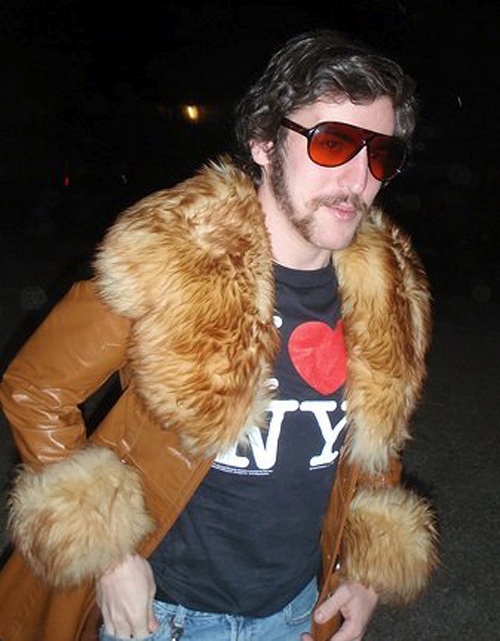
Fucking hell, it's me! Okay, my glasses are round-framed and I don't half-ass the facial hair whenever I stop shaving, but otherwise... The abominable posture, the Pete Townsend beak, the limp-greasy mop of hair, even the ratty-ass military-green hoodie. I am he and he is me and goo goo ga-fucking-joob.

But the son-of-a-bitch sings in a stratospheric falsetto that would make the Bee Gees sound like baritones. Atop shit disco! Goddamn, this was even worse than all those times drunk salarymen in Tokyo pubs called me "Harry Potter." Couldn't I get mistaken for someone cool? Please?

Yes I can. Now that my hair is greying and I've sloughed off any youthful gloss, I'm compared almost exclusively to my favourite Beatle. (George fans, mad respect; everyone else, get stuffed!) Quite nice to be told you resemble one of the great musical revolutionaries of the 20th century - at least far better than resembling either a cotton-candy French twerp or a fictional teenage wizard.

Shortly thereafter, l'affaire Willem inspired one of my better songs of 2008, "Dinner With My Doppleganger". Yes, I realize it's misspelled. Yes, I should proofread my tracklistings before the record goes to press. So be it. Although Willem really only provoked the title; the song itself is more a meditation about my hypothetical "evil twin," whose yin is my yang and whose vice is my virtue, and the disappointment that we'd be more or less indistinguishable from each other. Not that you'd necessarily glean all that from the lyrics. If, however, you can guess the two songs of which this track is a conscious hybrid, congrats, you get a free copy of my latest album. And a cookie.

Friday, April 23, 2010

Why I Won't Live In New York

No, no, no, not this time. Irresistible as it is to swing at fashion victims, dilettantes, subcultural sycophants, narcissists, obsessive self-documentarians, trust-fund-diapered fauxhemians, post-modernist dullards, nostalgia-wracked romantics, obscurantist one-upsmen, and practitioners of a sad, perfunctory hedonism... I'm not doing that today. After all, you can find all manner of these loathsome parasitic specimen in any urban locus larger than 100,000 people. Yes, there are dense concentrations of them in the Big Apple, but where aren't they in the western world now? Baltimore? Winnipeg? Blackpool? Maybe Dundee...

No, I fear what mutation New York would trigger within me over an extended period. Time seems to be unusually cruel towards New Yorkers (especially adoptive ones) who neither succeed nor have the good sense to leave. This spiritual deformity stems partly from the incessant shoulder-bumping between classes. Outside of police states, nowhere else is so little heat generated by the constant friction between the poor & the powerful, thanks to a détente predicated upon two paradoxical conceits:
  1. The ruling class are, and shall forever be, the ruling class. Kiss the ring, bitch!
  2. The American Dream: any schlub on the street can capitalize on his/her potential to become one of the ruling class. Horatio Alger, suck my dust!
Thus, whether you're looking up or down the socioeconomic ladder, those you see at the other end serve as evidence of these axioms. Of course, both are false and highly corrosive to dignity & compassion. But most pathetic is when someone past the crest of their youth & enthusiasm clings so desperately to the second factoid - someone who never got the brass ring, the corner office, the record deal, the sitcom pitch, the movie rights, the solo exhibition still despondently dry-humping the striated husk of their adolescent ambition because they never realized, as George Carlin did, "it's called the American Dream because you have to be asleep to believe it." It reminds me, most witheringly, of Armando Iannucci's reality check to the aged & developmentally arrested:
The past is a distant yacht. What you haven't done now, you'll never get done. Possibility is a private party to which you are no longer invited.
You see, over at Ads Without Products, some poor schmuck who happens to share a name with one of British blogdom's most esteemed thinkers felt the need not only to make his own existence known, but to claim dominion over his name in- and outside his own idiom and to request the offending post be removed. Perhaps his argument would have been better made if he hadn't tried crassly to Google-bomb himself, with what appears to be a 10-year-old Russian peasant's grasp of the English language.

(AWP sensibly did not remove the post, especially given that Mark Fisher stumbled upon it five months after the fact.)

This behavior is all too typical of folks over 40 I've met who've tried to take a bite out of the Big Apple and were themselves chewed up & spit out. They ooze a clammy insistence of their own importance, their self-promotional monologues pinballing schizophrenically between their achievements, their (poorly feigned) comfort with obscurity, and David Icke-class theories of how their rivals/corporate America/"the fuckers" have conspired to suffocate their career. They're often depressingly humourless, hyper-sensitive, and pepper their speech with more profanity than a sailor on shore leave. Consequently, they're unreasonably hard to follow in conversation (and even moreso in written missives).

This isn't to say that they haven't produced works worthy of admiration, or that they can be very pleasant & interesting people. But ceaseless nagging by the sad resentment that I never got my due isn't a fate I'd wish on anyone - least of all upon myself.

Speaking of assholes in New York City... allow me to dogpile atop the South Park/Mohammed controversy by basically reiterating what Jon Stewart said last night. If the threats of violence came from some shadowy fundamentalist cabal overseas, okay, Trey Parker & Matt Stone should probably lay aside any planned North African or Middle Eastern excursions, but that's where the danger would end. But these threats came from some baker's-dozen of lunatics based in Manhattan - where, mere miles from Ground Zero, they can praise Bin Laden, celebrate the anniversary of 9/11, and make intimidating pronouncements against South Park because they, the fundamentalist shitbirds, enjoy protection under the First motherfuckin' Amendment. And yet, with the full wrath of a vengeful god behind them, these self-righteous cowards haven't even the strength of their own convictions, offering some mewling mitigation that they were "helpfully" pointing to the historical precedent of Theo Van Gogh to "warn" Parker & Stone.

Quoth Mr. Stewart, to all those who would threaten violence based upon religious or political ideology: Go fuck yourselves. Two times.

Sunday, April 11, 2010

Making Jesters Into Kings

Readers my own age may vaguely recall the name Jesse Camp. Folks older likely won't, since they had better things to do in the late '90s than watch daytime basic cable; folks younger won't because they hadn't yet been trained to care about the culture machine's wet farts. So, to put us all on the same page: a recap.

The 1990s were tumultuous times for MTV. After its Faustian dalliance with the semi-disinterested, ironically-distanced grunge/alternative audience, the network (like everyone else) was desperate to fill the Kurt Cobain-shaped hole left in the popular consciousness. Various ugly, ill-fitting hats were tried on: ska, electronica, swing. Before long, this pre-millenial tension & post-modernist introspection congealed into catharsis through wanton aggression, and self-parodic celebration of artifice through unmitigated consumption - manifested respectively by "nü-metal" bands and the resurgence of prefab boy bands & pop princesses.

MTV had hit the jackpot. Acts like Limp Bizkit and Slipknot allowed the network to court a nominally hostile & overwhelmingly male audience that fancied itself "transgressive" and "anti-establishment"; meanwhile, the legion bleached-blond teases from Florida captured the hearts of tweens, teen girls, middle-American prudes, and pedophiles alike. Best of all, MTV could pit these two camps against each other, a culture war between the minions of Light and Darkness for the soul of America with all the depth & stagecraft of pro wrestling.

The true masterstroke, though, was when MTV fully embraced the dawning information age's ethos of interactivity. A forum was crafted upon which the epic battle of the saccharine V. the sinister could unfold in realtime, with each side's footsoldiers beating back the other via telephonic vote. It was called Total Request Live.

Total Request Live (or TRL, as it rebranded itself in text-and-Twitter-era Newspeak) was the last of MTV's programs that dealt explicitly with music to become a pop-cultural touchstone. Ironically, its success also ushered in the "reality TV" format that ultimately eclipsed it in the mid-Aughts. TRL's emphasis on audience participation (both at home & in the studio) conditioned viewers to be entertained by - and want to be - shrieking, inarticulate narcissists pulled right off the street.

The most important erasure of the line separating MTV's on-air personalities & its audience came in 1998, with the inaugural Wanna Be a VJ? contest. Participants were pulled from the throng surrounding MTV's Time Square studio and vetted according to their music knowledge & on-screen charisma. Whereas candidates for MTV's first "reality" flagship The Real World were selected exclusively by the show's producers, the VJ-wannabes were eliminated by phone-in & online vote. Eventually, the contest was whittled down to two candidates: former college radio host & music geek Dave Holmes and trashionista space-cadet Jesse Camp.

Despite Holmes' experience & skill in front of the camera, Camp was voted the victor thanks to his dynamic personality & his populist persona as gutter-punk everyman (despite his plush prep-school background). There were, however, allegations of ballot-stuffing, an earlier incarnation of the "Vote For the Worst" culturejamming campaign that upset the sixth season of American Idol. Possibly in response to this, MTV hired Holmes as well, entrusting him with celebrity interviews while limiting wild-card Camp's onscreen responsibilities to occasional colour-commentary on TRL.

His popularity couldn't compensate for his obvious incompetence, and Jesse Camp unceremoniously left MTV after barely a year - a full two years less than Dave Holmes' tenure on the network.

Since then, Camp has more or less been off the radar. (Holmes still works as a TV commentator & host.) In 2006, Camp was seen working at a Los Angeles pet shop and is currently rumoured to be on staff at a McDonald's franchise. It's a fate commonplace to flavour-of-the-month reality TV "stars". But in retrospect, Camp's case seems excessively unfair. Let's review the particulars: a charismatic but unqualified character is plucked from obscurity; obfuscating their inherited privilege, their sloganeering performance as a populist simpleton foments a popularity that eclipses their better-experienced colleague. Their general cluelessness & inexperience, however, mark them as a liability and they're effectively marginalised by the very powers that anointed them. Finally, their inordinate fame precipitates them to abandon their office to follow their "true" calling and achieve their "proper" potential - despite a total deprivation of apparent skill.

Why, with that kind of backstory, you'd expect Jesse Camp now to be treated as an esteemed expert in his field, to be the elected figurehead of a "grassroots" movement... to be a candidate in the 2012 presidential election.

Tuesday, November 17, 2009

Hydrochloric Shaved Weirds

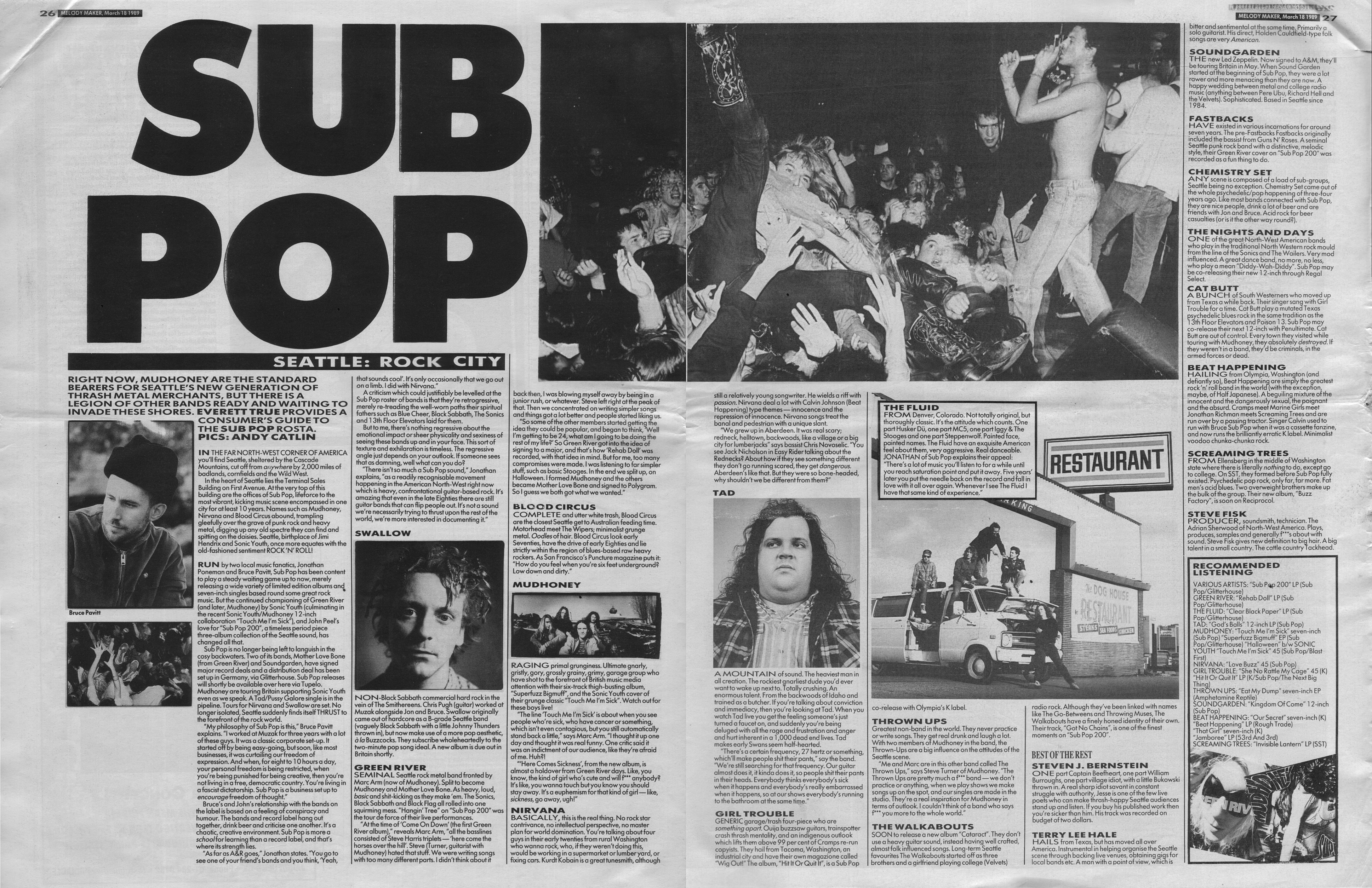
This taxonomy of face fuzz has gotten out of hand - as any good beard does, I suppose. But it's balancing the equation from the wrong side: what do we learn of any recognizable subset by, first, isolating them, second, cherry-picking a shared stylistic flourish, and, third, coming to the conclusion that they're a recognizable subset? This is like scanning promo shots of the '89 Sub Pop roster and feigning surprise that the musicians share a fondness for flannel and ripped denim.

If anything, we should seize upon a certain type of facial topiary, find who sports it across various genres, and then ruminate about what the common thread may be. For instance...

THE WILD MAN

Name: Warren Ellis of the Bad Seeds and the Dirty Three
Genre: Dark Americana; roots rock

Name: Pharaoh Sanders
Genre: Avant-garde jazz

Name: Joe Preston of Thrones and Harvey Milk
Genre: Stoner rock; doom; drone

THE ABE LINCOLN

Name: Mos Def
Genre: Conscious/backpacker hip-hop

Name: Thijs van Leer of Focus
Genre: Prog ne plus ultra

Name: Rjyan Kidwell, a.k.a. CEX
Genre: IDM; glitch-hop; noise

THE CHOPS

Name: Anton Newcombe of the Brian Jonestown Massacre
Genre: Psychedelic rock

Name: Sly Stone
Genre: Funk; soul

Name: Glenn Danzig
Genre: Heavy metal; horror punk

THE FU MANCHU

Name: Holger Czukay of Can
Genre: Krautrock; electronic; techno

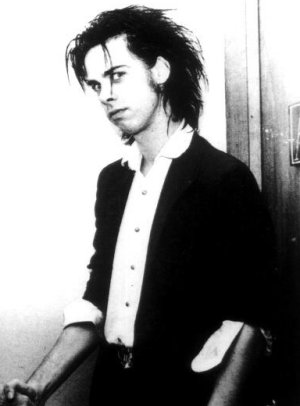
Name: Nick Cave
Genre: Dark Americana; post punk; gothic folk

Name: Glenn Hughes of The Village People
Genre: Disco

Not that facial hair should be interpreted as anything other than a snapshot of an artist, since it changes & evolves over time. I myself have sported all of the above (except the dreadful Abe Lincoln) at some point over the past year alone; Nick Cave was clean-shaven his whole career until Grinderman debuted three years ago; and Robert Fripp, who currently looks like your asshole Tory-supporting grandfather, once rocked the most righteous afro-and-sideburns combo this side of Sly Stone.

This quicksilver quality is, of course, also applicable to hairdos, as illustrated by both David Bowie's career and the Black Flag Haircut Continuum.

Sunday, July 26, 2009

Calling For the Head of John Anthony Gillis

Who is John Anthony Gillis exactly? Well, I'd say he's the one above with the studied pout and vacant stare, but that wouldn't really help, would it?

Anyone who's paid even vague attention to this webpage knows that I am not a fan of Jack White - not of the White Stripes, nor of the Raconteurs, nor of that hammy underwritten track where he & Alicia Keys stand around and shout a lot. Now, bitching about mainstream music is tilting at windmills: no matter how shitty, it ain't gonna change for some crank with an obscure vinyl collection, so sit back and let the harmattan of history sand the chrome off the latest novelty until it's as rusted & useless as all that went before. But Jack White is cannier than your average pop mouthpiece and displays both a stylistic percipience and business acuity to rival that of career(ist) icons Bowie and Reznor. The White Stripes may have reached both the platinum & gold sales thresholds but once in America, yet consider that since "Fell In Love With a Girl" first gatecrashed MTV in 2002, we've been subjected to saturation airplay of Avril Lavigne, Linkin Park, 50 Cent, Norah Jones, Usher, Maroon 5, Kelly Clarkson, the Killers, the Black Eyed Peas, the High School Musical soundtracks, Amy "My Last Name Is an Easy Punchline" Winehouse, and Katy Perry... and through it all, Jack White has remained more consistently credible and popular than any of those acts.

To give credit where it's due, Jack White is a hell of a businessman.

White knows pop begins with (and doesn't go much further than) its facade, and so painstakingly sculpts his acts to look how they sound: the peppermint insouciance of the bratty White Stripes (“the most powerful color combination of all time, from a Coca-Cola can to a Nazi banner”); the tweeds-'n'-jeans bar-band antiglam of the Raconteurs; and most recently, the sallow black leather rebel peacocking of the Dead Weather (as seen above and a million times before).

White has also learned a lesson from the Catholic Church and the Grateful Dead: what good is an image without accompanying merchandise? As far back as the Stripes' major-label debut, White's been keen to go beyond trad T-shirt-and-sticker stock by releasing limited-run collectibles bearing his trichromatic cordon. He may not have gotten his own Lego set, but he did get everything from USB sticks to sewing kits and a signature-edition Lomo camera set.

Perhaps heeding Lego's lost opportunity, the Coca-Cola company came a-knockin' in 2006 to commission an update of their epochal grouphug. The Nagi Noda video accompanying White's sub-Sesame Street singalong was an immaculately executed rip-off of Michel Gondry's fast-fatiguing repeat-o-rama trick (including, of course, the "Hardest Button To Button" video).

But while the fool multitude may be content with wacky-looking guitars and a head-nodding beat, tastemakers, critics, and hipsters are quick to call "foul" on a musician palling around with corporate sponsors. White set about defending his cred even before any worse-than-typical-knee-jerk blacklash kicked up, cranking his Analog-Man-In-A-Digital-World affectation to 11 by slagging off "kids today" and the internet in every interview. Also, when his Bond theme was debuted via another Coca-Cola commercial, he rushed out a press release disavowing any involvement in the marketing scheme, claiming to be "disappointed that you first heard the song in a co-promotion for Coke Zero, rather than in its entirety."

But who other than the densest, most irony-deficient dolt would accept this blatant cant? (Though such blatant about-faces often seem to work for scandalised evangelicals...) Clearly White's not shy about shilling for a megacorp of questionable scruples - he just wants total control over his product. After all, he 86'd that collaboration with Lego because, in his words, "You had your chance." True, White could avoid tangling with tie-ins and licensing altogether by forsaking merchandise a la Fugazi, but then Ian MacKaye ain't got a net worth $37 million, does he?

White's technophobia & analog asceticism also rings false. The band does in fact use digital trickery to enhance their sound, and White's label's much-vaunted subscription service is - surprise! - built upon the online platform. It's this false piousness and deliberate luddism regarding the internet that is most maddening. "Do I really need a MySpace page for this fucking music?" White recently asked, and obviously no, he doesn't - but only because the Stripes (and thus all his subsequent endeavors) were one of the last acts truly to benefit from the full support of the now-shuddering machinery of the music industry. Shit, if I had V2 funding music videos and paying for airplay, I wouldn't need a MySpace page either!

If there is any other contemporary icon I consider a kindred spirit of Jack White, it's Beyoncé Knowles - which isn't to say I'll sit through a Raconteurs video just for the hip-shaking. There are other musicians who parlayed their "pop outsider" status into a self-sustained cottage industry, with numerous side-projects and forays into other mediums: Frank Zappa, Ani DiFranco, Mike Patton, and fellow Americana afficionado Nick Cave have all done this. But whereas they all regard(ed) the industry at large with enormous contempt & suspicion, White seems unnaturally at ease navigating the corporate landscape - as graceful a glad-hander as Beyoncé. Additionally, both White and Beyoncé's extra-curricular excursions seem less like creative exploration than a rapacious quest for ubiquity, that we should all die with their frizzy hair and unblinking stares seared onto our retinas, the last incandescent image we should ever see as we slump lifeless in our Laz-E-Boys in front of MTV's analgesic strobe.

But, in the end, it's all about the music, right? So yes, let's make it about the fucking music: Jack White enjoys the obscene fortune of being the most widely-admired musical half-wit in history, with a three-chord vocabulary and as great a gift for nuance as Michael Bay. As refreshingly raw as White Blood Cells may have been after a half-decade of ProTool-lacquered pop & nu-metal, White's musical aesthetic is stuck solidly forty years in the past. He's contributed as much to music's progress as these shuck-'n'-jiving charlatans.

What baffles me is that I'm far from alone in acknowledging how starkly unoriginal White's work has been, yet I am desperately alone in not forgiving his shopworn adequation. Clippings from recent Dead Weather reviews include:
See that? These days, "dead-horse devices" reminiscent of records from almost 50 years ago can still somehow be "exciting", while "done to death" merits a solid B; that's some No Child Left Behind grade-curving shit. How, how, how can such under-achieving retro-conservatism still be so gleefully consumed? Where is the otherwise-inescapable post-post-post-ironic backlash? Is everyone too scared to admit that this pallid caveman, once a compelling herald from leftfield, is actually not the fuzzbox messiah we wished? Or is everyone just THAT FUCKING BORING?

Non-Sequitorial Postscript: Separated at birth?

Son of Non-Sequitorial Postscript: Ah, Buddyhead... it's good to have you back, lads!