Showing posts with label Records. Show all posts

Tuesday, February 21, 2012

Objects Collecting Subjects

Over ye Impostume way, Carl poses a small, concrete question which very quickly balloons into a mammoth, existential one. At the outset, I thought we were basically talking about storage media and instead we may as well be asking ourselves, why listen to music? Or even more broadly, why art?

Those questions are impossible to answer, so Carl does us the service of scaling it down:
...what is the impulse to keep hold of all that non-essential stuff, stuff you are not invested enough in to listen to more than once, yet alone pay for?
Which is still a damned difficult question, if only because I've no idea by what standard we're measuring - how much stuff? Is it non-essential by my own standards, or society's? What about the stuff we have paid for? To understand my trouble in establishing a workable baseline, let's take a look at some of my closest friends and their respective music-consumption habits.
  • One is an amateur noise-maker with a steadfast belief in the shamanic power of music - yet, as a digital Maoist, he listens to music primarily via YouTube. He occasionally buys vinyl records, but he doesn't own a turntable. (The son of an investment banker, he treats records much as speculators treat real estate.)
  • Another is a collector par excellence, who's plowed unfathomable amounts of time & money into every passing storage medium - yes, even MiniDisc - on the off-chance that this format will become the historical default. Consequent to his unyielding compulsion for accumulation, he possesses both an embarrassing assortment of obsolete petroleum-derived media and an unimpeachable record collection.
  • My band's drummer spends his waking life behind either the kit or the wheel. In Japan, every car still comes stocked with yer standard CD player, thus he listens almost exclusively to CDs.
  • Our singer approximates what I imagine is today's average music consumer: functionally computer-literate, he knows a couple of file-sharing sites that he infrequently downloads illicit MP3s from, but he relies by-and-large upon the iTunes store. He came of age during the CD boom, purchased hundreds of the damned things, and is thus uncomfortable with either going digital - divesting himself of physical musical objects - or fully embracing the frail, impermanent, totemic atavism of vinyl.
Of the above, I most closely resemble the collector, but with two heavy caveats: that I could never match his mania, and that I discard or neglect a far greater swath of music. If I may call myself, like him, a collector, I certainly can't call myself an archivist. I don't accumulate for posterity: sure, I love Ghostface, but I'm not going to buy The Pretty Toney Album just to complete the discography.

I'm actually quite vicious in my musical discrimination, to the point that I'm one of those so-called "music nerds" who is somehow ignorant of even the most popular music on the planet. (Lady Gaga? Still haven't heard a full song start-to-finish.) By now, I know my own tastes well enough to know when something isn't even worth investigating; or if an artist, though unimpressive at first, could become a slow-blooming favourite. Of course, over the past forty years, artists have become ever more self-aware and adept at deploying their particular potpourri of signifiers to establish themselves as more brand than band. The sole benefit of music's infection by the marketing brain parasite is that, simply by paying attention, one becomes well-versed in the signs, symbols, satorial choices, tonsorial maneuvers, promotional stratagems, and subcultural propaganda necessary to decide if something may be worth a listen.

The upshot is that the more I know about music, the less I listen to (a paradox I've addressed before). By the time I download a given album, I've pretty well decided that I'll enjoy it - all that remains is the question of how much. This could point to a key difference between me and Carl: whereas he's fairly certain he "could happily live without 80 percent of what I have downloaded over the years," I'm not so sure I could, because everything on my hard drive arrived there as the result of research & deliberation. There's only so much copper in the ground, there's only so much storage on my computer, and I've only so much time to waste upon whimsy & poor consideration.

But even then, is all my digital music essential? Because I own almost all of it on vinyl too. Granted, the acrimony of the collector's market has kept certain albums off my shelf (I'll be damned if I can afford a copy of Rid of Me) but such exceptions are relatively few. Just about every album that's ever "meant" anything to me, I have in physical format - which helps assure that these albums will continue to mean something to me.

Though this carries the stink of the Sunk Cost Fallacy, of course I don't mean my copy of Man Overboard is merely worth the hours spent crate-digging before plucking it out of a bargain bin, plus the ¥500 I paid for it. Records imbue the music they contain with import precisely because of the format's Achilles' heel: its physical fragility. Taking proper care of vinyl can be boring and expensive; handling & playing them so as not to do damage is precarious and prudish. So if I go to the trouble of putting a record on, I damn well want to listen to it, and the act of listening itself becomes center of my attention. The palaver of playing a record also insures that it's unlikely I'll overplay any given album and prostitute whatever mystique it once held.

Music is literally nothing if we don't afford it our time and attention; the ritual around playing a record is a gesture of respect to the music - the sacrifice of our time and attention.
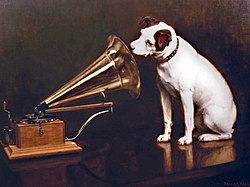
The difficulty is that collecting always takes place in the shadow of the Big Other. At worst, this leads to the establishment-of-self-via-consumption that Carl finds troubling:
...the weight of all that accumulated culture reassures us that we are ourselves substantial, a kind of prosthesis, we must be smart, we must be committed, we must be artistic, or intellectual because the sheer range and diversity of our hard drive, as a kind of concretization of our restless seeking and searching memorializes us to ourselves.
Now, as I explained above, I've no idea how far out of step I am with the general music listening populace, but as a collector I too consider how my collection presents itself - its depth, its diversity, its material condition. But I'm not counting on my collection to buttress my reputation or enhance my cachet: I'm counting on the fact that these records are the only possible means of sharing my own aesthetic epiphanies with another person. I'm well aware of how counterproductive a distraction analog fetishism can be, but at least the lingering spectre of a record's totemic power is far more commanding of attention than an MP3 e-mail attachment or YouTube link.

More importantly, we human are subjects only to ourselves and mere objects to everyone else - noisy, unpredictable, combatative, delightful objects, but objects nonetheless. Some of us are gifted enough to translate our feelings somewhat effectively to other people by some form of vibration: physical, aural, oral, or corporeal. But most of us aren't. Most of us are bloody useless at making ourselves understood. The best hope we have is to find meaning inscribed upon some other, nonhuman object that we can pass to another human, who luckily will read the inscription with the same surprise and passion that we did.

Tuesday, December 20, 2011

A Half-Hearted Attempt at Genuine Enjoyment

As the recently-late, formerly great Christopher Hitchens once said, travel - contrary to popular belief - narrows the mind, in that it diminishes difference & spotlights repetition. So it is with the touring musician: the more gigs you play, the more other bands you see, the more other bands you talk about and listen to... the more everything starts to sound the same. This is why so many stalwart musicians are crusty chauvinists guarding the carved-in-stone conventions of their respective genre: they've had to retreat to only the most elemental, primordial iteration of what they love(d) about music to feed whatever flagging enthusiasm they have left for the art form.

The point is that I'm a very tough motherfucker to impress. In the past, this was largely thanks to arrogance (and still is to no small degree), though by now I've logged enough hours as a listener, enough miles as a working musician, and enough hearing damage as an audio engineer that I'm rarely - if ever - surprised. Of course, I still want to be surprised, and seek it like a fiend. On the odd occasion I am surprised, it's not the shock of the new, but the unexpected re-appearance of some estranged sonic friend. No wonder all the contemporary bands that push all my buttons are older dudes who've been stubbornly strumming away since my formative, sponge-brained adolescence in the mid-'90s. Vaz produced one of the gnarliest rock records of the year, Chartreuse Bull, but they're veterans of the hallowed, harrowing Amphetamine Reptile roster. The Psychic Paramount are the most instrumentally enthralling band on the planet, but that is certainly because guitarist Drew St. Ivany and bassist Ben Armstrong have spent almost twenty years in the art-rock trenches. Meanwhile, the inimitable Metatron from Maryland, Daniel Higgs, might as well be one of my parents' old art-school buddies.

The good news, though, is that excellent music continues to be made, and in greater volume that I have time to attend. Some of this year's more experimental releases (e.g. Roly Porter's Aftertime and The Haxan Cloak's gorgeously glacial eponymous debut) were gripping textural explorations that demonstrated an intense, detail-oriented approach to composition - though I still prefer artists whose focus is wide enough to encompass the whole forest, not just the peeling bark of a single birch.

Another Year, Another Holler

1. The Skull Defekts feat. Daniel Higgs - "Peer Amid"
2. Young Widows - "In and Out of Lightness"
3. Action Bronson & Statik Selektah - "Silk White"
4. Tom Waits - "Talking At the Same Time"
5. Obake - "The Omega Point"
6. The Haxan Cloak - "Burning Torches of Despair"
7. The Psychic Paramount - "DDB"
8. Roly Porter - "Corrin"
9. Vaz - "The 2nd"
10. YAMANTAKA//SONIC TITAN - "Reverse Crystal//Murder of a Spider"

Then, of course, there is the record collection. Now that my wife is as avid a crate-digger as I am, we've fast run out of shelf space and now our floor is disappearing almost as quickly. A great many (if not most) of our acquisitions this year have been '60s and '70s Italian soundtracks and funk bibelots, since it's a musical area we enjoy equally. Sure, most of it is breezy & cosmopolitan, much to my wife's pleasure, but there's plenty of strange sound-mass strings & free-jazz bass spazzery to keep an avant-gardiste prick like myself happy. Anyway, here's a few of the tunes that earned the heaviest rotation on our turntable this year...

Fine Vinyl

1. Piero Umiliani - "Le Raggaze Dell'Arcipelago"
2. Ennio Morricone - "Trafelato"
3. Nick Cave & the Bad Seeds - "She Fell Away"
4. Scott Walker - "Rosemary"
5. Buck 65 - "Up the Middle"
6. Roots Manuva - "Witness (One Hope)"
7. I Marc 4 - "Hyde Park"
8. Googoosh - "Shekayat"
9. Piero Piccioni - "Traffic Boom"
10. Main - "Flametracer"

Wednesday, August 25, 2010

My Father Will Guide Me Up Nick Cave's Back Catalogue

So the new Swans album sounds like The Bad Seeds circa '93 fronted by Pete Seeger's evil twin. Given that The Bad Seeds themselves are evermore merely pub-rock for English lit majors, this is very very nice. Slightly disappointing that it ain't Filth Deux: The Rebludgeoning, though we all knew it wouldn't be.

Wednesday, July 07, 2010

Behind the Counter

There are multifarious venues in which men pursue their ostensibly macho yet embarrassingly geeky hobbies: paintball courses, model shops, video game arcades, automobile showrooms, firing ranges, sports stadiums, and record stores. Each arena has its own unspoken protocols & faux pas, and fraternal jocularity barely veils competitive contempt.

After many years of compressing my music collection to suit my itinerant lifestyle, I finally got back into the record-collecting game - coincidentally just as several friends were doing the same. Our rationales for doing so were myriad: the archival character of a good LP collection; the concerted listening the format forces; our disdain for the contentless stockpiling that digital culture encourages; the likelihood that analog media will be the only ones that survive the imminent collapse of civilization. (Okay, maybe that's just my concern.) But we all grudgingly confess that a chief motivation is that golden smugness of watching jaws drop in jealously at a particular gem in your collection.

The great lie of record collecting is that you can find anything if you just look hard enough. That's like saying you can be a rock star if you just try hard enough. It overlooks the primacy of location & luck in achieving success. I was reminded of this (not that I needed to be) while doing some crate-digging along Oldham Street in Manchester: some speedy-fingered bastard beat me to the last copy of The Fall's tenth single by a couple of hours. Right place, wrong time. But while my leisurely breakfast cost me "Kicker Conspiracy", I was able to score a couple of records well below what I'd have to pay either online or back home in Tokyo.

It only took me about two hours to scour every record store in Manchester's north quarter (at least the stores that weren't dedicated wholly to techno). Mancunian bin-divers obviously rely far more on luck than location to unearth microgroove jewels. It's quite a different story in Tokyo - but of course it is. The megalopolis has 28-times as many people as Manchester, packed into 19-times the space. There are more record stores within a 10-minute radius of my apartment than there are in all of City Centre. Why shouldn't it be easier to find damn near any LP in Tokyo than in Manchester?

The peculiar thing about record-hunting in Tokyo is the method of vinyl's valorization. As opposed to a straightforward expression of supply-V-demand, records are priced according to their cultural cachet - regardless of their physical scarcity. For example: between post-rock's place as a dominant idiom in Japanese rock, and their 2008 reunion tour, My Bloody Valentine are currently enjoying unprecedented popularity among the Japanese hipoisie. This means that it's almost impossible to find a copy of the Glider EP for under ¥3500, even though there are sometimes several copies in the same store. Conversely, Nick Cave doesn't carry much currency in Japan, which means I can scoop up a copy of From Her To Eternity for pocket change (as opposed to the extortive $45 for which it's currently listed on eBay).

In such instances, it's very tempting to feel superior to the shop stewards, as though I've robbed them while staring eye-to-eye. The truth, though, is that pricing records according to their social value is probably another expression of Japan's collectivist tendencies. The record market isn't built around speculation & scarcity; if I'm lucky enough to find an album I adore for a bargain-bin price, it actually impoverishes my social standing, marking me as an outsider instead of ahead of the curve. An unloved copy of an obscure album is the sound of Japanese society shooing me away: "No one cares about your weirdo musical proclivities, nerd!"

Sunday, June 06, 2010

Two Hundred and Fifty Yen, Bitches!

In case you don't know how much that is.

And in case you don't know what this is.

More conversation on record collecting in Tokyo a bit later... now's the time for a celebratory spin!