Showing posts with label Tech. Show all posts

Tuesday, February 21, 2012

Objects Collecting Subjects

Over ye Impostume way, Carl poses a small, concrete question which very quickly balloons into a mammoth, existential one. At the outset, I thought we were basically talking about storage media and instead we may as well be asking ourselves, why listen to music? Or even more broadly, why art?

Those questions are impossible to answer, so Carl does us the service of scaling it down:
...what is the impulse to keep hold of all that non-essential stuff, stuff you are not invested enough in to listen to more than once, yet alone pay for?
Which is still a damned difficult question, if only because I've no idea by what standard we're measuring - how much stuff? Is it non-essential by my own standards, or society's? What about the stuff we have paid for? To understand my trouble in establishing a workable baseline, let's take a look at some of my closest friends and their respective music-consumption habits.
  • One is an amateur noise-maker with a steadfast belief in the shamanic power of music - yet, as a digital Maoist, he listens to music primarily via YouTube. He occasionally buys vinyl records, but he doesn't own a turntable. (The son of an investment banker, he treats records much as speculators treat real estate.)
  • Another is a collector par excellence, who's plowed unfathomable amounts of time & money into every passing storage medium - yes, even MiniDisc - on the off-chance that this format will become the historical default. Consequent to his unyielding compulsion for accumulation, he possesses both an embarrassing assortment of obsolete petroleum-derived media and an unimpeachable record collection.
  • My band's drummer spends his waking life behind either the kit or the wheel. In Japan, every car still comes stocked with yer standard CD player, thus he listens almost exclusively to CDs.
  • Our singer approximates what I imagine is today's average music consumer: functionally computer-literate, he knows a couple of file-sharing sites that he infrequently downloads illicit MP3s from, but he relies by-and-large upon the iTunes store. He came of age during the CD boom, purchased hundreds of the damned things, and is thus uncomfortable with either going digital - divesting himself of physical musical objects - or fully embracing the frail, impermanent, totemic atavism of vinyl.
Of the above, I most closely resemble the collector, but with two heavy caveats: that I could never match his mania, and that I discard or neglect a far greater swath of music. If I may call myself, like him, a collector, I certainly can't call myself an archivist. I don't accumulate for posterity: sure, I love Ghostface, but I'm not going to buy The Pretty Toney Album just to complete the discography.

I'm actually quite vicious in my musical discrimination, to the point that I'm one of those so-called "music nerds" who is somehow ignorant of even the most popular music on the planet. (Lady Gaga? Still haven't heard a full song start-to-finish.) By now, I know my own tastes well enough to know when something isn't even worth investigating; or if an artist, though unimpressive at first, could become a slow-blooming favourite. Of course, over the past forty years, artists have become ever more self-aware and adept at deploying their particular potpourri of signifiers to establish themselves as more brand than band. The sole benefit of music's infection by the marketing brain parasite is that, simply by paying attention, one becomes well-versed in the signs, symbols, satorial choices, tonsorial maneuvers, promotional stratagems, and subcultural propaganda necessary to decide if something may be worth a listen.

The upshot is that the more I know about music, the less I listen to (a paradox I've addressed before). By the time I download a given album, I've pretty well decided that I'll enjoy it - all that remains is the question of how much. This could point to a key difference between me and Carl: whereas he's fairly certain he "could happily live without 80 percent of what I have downloaded over the years," I'm not so sure I could, because everything on my hard drive arrived there as the result of research & deliberation. There's only so much copper in the ground, there's only so much storage on my computer, and I've only so much time to waste upon whimsy & poor consideration.

But even then, is all my digital music essential? Because I own almost all of it on vinyl too. Granted, the acrimony of the collector's market has kept certain albums off my shelf (I'll be damned if I can afford a copy of Rid of Me) but such exceptions are relatively few. Just about every album that's ever "meant" anything to me, I have in physical format - which helps assure that these albums will continue to mean something to me.

Though this carries the stink of the Sunk Cost Fallacy, of course I don't mean my copy of Man Overboard is merely worth the hours spent crate-digging before plucking it out of a bargain bin, plus the ¥500 I paid for it. Records imbue the music they contain with import precisely because of the format's Achilles' heel: its physical fragility. Taking proper care of vinyl can be boring and expensive; handling & playing them so as not to do damage is precarious and prudish. So if I go to the trouble of putting a record on, I damn well want to listen to it, and the act of listening itself becomes center of my attention. The palaver of playing a record also insures that it's unlikely I'll overplay any given album and prostitute whatever mystique it once held.

Music is literally nothing if we don't afford it our time and attention; the ritual around playing a record is a gesture of respect to the music - the sacrifice of our time and attention.
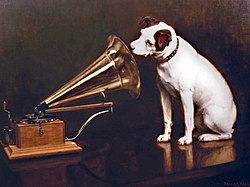
The difficulty is that collecting always takes place in the shadow of the Big Other. At worst, this leads to the establishment-of-self-via-consumption that Carl finds troubling:
...the weight of all that accumulated culture reassures us that we are ourselves substantial, a kind of prosthesis, we must be smart, we must be committed, we must be artistic, or intellectual because the sheer range and diversity of our hard drive, as a kind of concretization of our restless seeking and searching memorializes us to ourselves.
Now, as I explained above, I've no idea how far out of step I am with the general music listening populace, but as a collector I too consider how my collection presents itself - its depth, its diversity, its material condition. But I'm not counting on my collection to buttress my reputation or enhance my cachet: I'm counting on the fact that these records are the only possible means of sharing my own aesthetic epiphanies with another person. I'm well aware of how counterproductive a distraction analog fetishism can be, but at least the lingering spectre of a record's totemic power is far more commanding of attention than an MP3 e-mail attachment or YouTube link.

More importantly, we human are subjects only to ourselves and mere objects to everyone else - noisy, unpredictable, combatative, delightful objects, but objects nonetheless. Some of us are gifted enough to translate our feelings somewhat effectively to other people by some form of vibration: physical, aural, oral, or corporeal. But most of us aren't. Most of us are bloody useless at making ourselves understood. The best hope we have is to find meaning inscribed upon some other, nonhuman object that we can pass to another human, who luckily will read the inscription with the same surprise and passion that we did.


Friday, January 20, 2012

Threshold of the Lift Hill

The presumptive, lumpen fantasm of the internet - typically referred to as "we" - did it, folks: SOPA and PIPA are D.O.A. Following the massive online blackout that terrorized digital natives and the late majority alike, the legislative tide has swung overwhelmingly against the inoperable & draconian bills. Let the celebratory fist-pumping & occasionally smug self-congratulation begin!

But hang on a moment. For such a media-savvy throng, the triumphal netizens appear to be totally ignorant of the classic horror movie narrative dynamic. Want to know what happens next? The moment that the protagonist relaxes, having apparently dispatched the villain, said incarnation of evil is hideously resurrected, more powerful than ever before, and attacks anew!

Thus it was that the FBI shut down Megaupload yesterday and has arrested four of seven people (including the site's founder) indicted for copyright infringement and conspiracy. Almost immediately, Anonymous went beserk with retaliatory shut-downs of just about any website operated by an acronym: the DOJ, the FBI, the MPAA, RIAA, UMG, EMI, WMG, and both the American & French copyright authorities. It appears to have been Anonymous' largest online attack ever.

But believe it or not, Anonymous are late to the party. The Megaupload raid is actually the second major development regarding a copyright-related international incursion by an American agency within the past week. Last Friday, a British court decided that British undergrad Richard O'Dwyer may be extradited to the U.S. where he faces a potential 10-year prison sentence:
US customs agents are seeking his prosecution over a website O'Dwyer set up when he was 19 called TVShack, and ran until his arrest last year. This provided links to other sites hosting pirated versions of TV shows and film. It was so popular that the student earned £15,000 per month in advertising revenue, US prosecutors claim.

O'Dwyer's lawyers said the site was little different from a search engine like Google and was thus most likely not illegal under UK law.

However, Purdy noted that visitors to the site had to register, and could post their own links. He ruled that the case met the test of so-called dual liability, also dismissing arguments that extradition would be a breach of O'Dwyer's human rights.
The real story, however, comes at the tail end of the article:
Separately, the US Immigration and Customs Enforcement (ICE) agency has faced criticism for perceived over-reach, targeting websites which, like TVShack – which had servers in the Netherlands – have no direct link to America.

In July the agency's assistant deputy director told the Guardian that ICE would now actively pursue websites similar to TVShack even if their only connection to the US was a website address ending in .com or .net. Such suffixes are routed through Verisign, an internet infrastructure company based in Virginia, which the agency believes is sufficient to seek a US prosecution.
Read that last paragraph again: any website registered as either .com or .net is subject to the full extent of American copyright law because those suffixes are routed through Virginia. A website's administrators, staff, servers, even users & advertisers can all be outside of America and it doesn't matter because the suffix alone is sufficient ground for prosecution. Hell, compared to the O'Dwyer case, shutting down Megaupload must have been a slam-dunk since Megaupload actually maintains servers on American soil.

By the above legal logic, the government has the authority to shutter any file host, any private web host, any website to which material can be uploaded of which users claim ownership - in other words, everything from YouTube to Flickr, from Facebook to 4chan, from Wordpress to BoingBoing to Blogger to Twitter. This is strictly according to current law regarding copyright & intellectual property. It doesn't matter that neither SOPA nor PIPA will pass, because clearly the government doesn't need them.

Also noteworthy is that, on Wednesday, the U.S. Supreme Court ruled that Congress had the authority to remove works from the public domain. The real shocker of the 6-2 decision is that the dissenting justices, who felt the ruling was against the public interest as it discouraged the spread of knowledge, were Stephen Breyer and Samuel Alito. Yeah, Alito - appointed by Bush, condemned by the ACLU, guardian of Guantanamo and concurrent of Citizens United. Since when does Alito make decisions that would prohibit further bloating of corporate power & profit?

Anyway, the Golan V. Holder ruling allows U.S. policy to comport with the Berne Convention, a European copyright treaty first introduced way back in 1886. It can hardly be argued that the Berne Convention has been legal strangulation depriving the French, Germans, Italians, or Swedes of easy access to each other's cultural wealth. This has much to do with how liberal the Convention's language is, especially within Article 2.3:
Translations, adaptations, arrangements of music and other alterations of a literary or artistic work shall be protected as original works without prejudice to the copyright in the original work.
However, the main factor at work is the massive discrepancy between how Europe and America value the arts. Despite how fundamental art is to cultural identity, America has evermore lost sight of art's symbolic value and assigns it exchange value accordingly only to its sign value. This means that all art is subject to the whims of the market: the only art that deserves to survive is that which excites the market. This cultural Darwinism blends with a libertarian phobia of propaganda ("You know who else favoured public funding for the arts?") to ensure that the government does little, if anything, to support the arts.

This is why public-domain material is indispensable to the livelihood of orchestras, performers, publishers, and repertoire cinemas in America. Over half of the average nonprofit arts organization's income is contributed - 13% publicly and a whopping 43% privately. Art, therefore, is less a common good than a private investment, and its investors obviously want a handsome return. This means artists have to make a hit to reward their investors' faith; but creating something new is dangerous & uncharted territory, and few artists have the cash to license performances of established favourites. Therefore, it's back to scavenging the public domain for tried-and-true yet free-to-use materials. The public domain is what gives permission for orchestras to perform Stravinsky's Petruschka, for arthouse cinemas to screen Fritz Lang's Metropolis, and for publishers to print new editions of Dracula, Ulysses, or Pride and Prejudice.

So how can European artists continue to perform, screen, and publish if all the material is still protected under the Berne Convention? Public funding. European governments understand the immaterial worth of art in daily life, and so there are subsidies and grants to ensure the public's easy access & steady engagement with their and others' culture. Were similar funding available in America, then orchestras could afford to license Prokofiev's Peter and the Wolf if its copyright were renewed. But as it stands, the social dimension of art is a communist conspiracy and art is only worth something if it's for sale.

Finally, on a more prosaic note, now that Megaupload's been deep-six'd, all the various MP3 mixes I've uploaded over that past few years have been likewise erased. Would anyone like them back up? Are there any special requests for a particular mix that's missing? Does anyone give a toss?

Friday, October 07, 2011

iCame, iSaw, iConquered

Come December, I'll be curious to see whose death ends up earning more year-in-review ink: that of Osama Bin Laden or Steve Jobs. For now, I just feel bad that Bert Jansch was robbed of his last moment in the spotlight.

The only thing I feel about Jobs' sudden passing is surprise at how quickly it followed his resignation as Apple's CEO. Perhaps this is another instance of how intimately entwined are sense of purpose and will to live. Jack Layton, for example, took the New Democratic Party of Canada from a marginal parliamentary presence to the official opposition in a single election and was dead within a couple of months. Even T.E. Lawrence - a man whose feats of endurance & military daring read like pulp fantasy - was scarcely two months into his retirement when he met an ignominious end in a minor traffic accident.

Beyond that pseudo-philosophical chinstroke... so what? Can't say I particularly care. But judged by the online tsunami of farcical grief, I am starkly in the minority. So maudlin & wracked is the tenor of the bereaved I'd have thought that all these people were personal friends of Steve Jobs, that he'd brought them chicken soup on a cold November night, that he'd awarded their kids college scholarships, that he'd given sight to their blinded-by-moonshine great aunt.

But no, they are not a one his friend. They aren't Steve Jobs' acquaintances, they're his customers, his consumers.

Lest we forget that Apple is a corporate behemoth whose liquidity exceeds that of even the world's largest national economy. Lest we forget that Apple is a technocratic Goliath which dodges corporate taxes and whose idea of "healthcare coverage" extends to suicide-prevention nets but barely any further. Unlike his oft-maligned doppleganger, Steve Jobs is not a philanthropist - he's a corporate padrino whose brilliance lies less in innovation than elaboration & refinement - making borrowed ideas better. Apple's very first personal computers (the Lisa and the Macintosh) were little more than liberal imitations of the Xerox Alto. Similarly, Jobs did not invent a GUI platform to (re-)distribute digitized music, but he did figure out how to monetize one.

The true genius of Jobs was his aestheticization of appliances. He transformed utilitarian machines into the fully syntactic symbols of a lifestyle; his public-relations alchemy made technological amenities into elite totems. Between his products & his customers, Jobs fostered not just a relation but a relationship - a transubstantiation presented literally in those anthropomorphic "I'm a Mac" TV ads.

At least the UK got to watch the guys from Peep Show make smug pricks of themselves.

Anyway, this explains why Jobs' death is a big deal beyond the business section. A man like Philo T. Farnsworth arguably had a more revolutionary effect on daily life, but Steve Jobs was a man with whom people felt they had a personal relationship, a friend who had enriched their lives & enabled them to unleash their expressive potential. It's no exaggeration to say Jobs' death has elicited a despair whose scale and substance are equivalent to - perhaps even greater than - the passing of the Pope. Within a mere hour of the news, floral tributes were piling up outside Apple stores the world over. Social media was more choked with endless inspirational quotes than a Deepak Chopra book. The grief was so sensational it would've been considered too stagy for a Broadway musical.

Against this backdrop, the latest essay on Adam Curtis' blog made for some serendipitous reading: in his endless trawl of audio-visual archives, Curtis has managed to trace the evolution of demonstrative emotion on TV. Within barely a generation between the '50s and '70s, spilling one's guts on air went from being anathema - "shameful agony" - to the necessary signifier of human authenticity. This sentimental overflow has become a carved-in-stone commandment not only of broadcast media, but of western social relations in general. However, Curtis warns that this hysterical style of emotional "authenticity" may actually be anything but:
There is a creeping sense of someone pretending to have the emotions that are expected of them. And in this way hiding their true feelings even further below the surface. Or maybe the truth is even more disturbing - that there are lots of things that people live through and experience that they just don't have emotions about.
As irrational psychic ephemera, emotions are difficult to understand and even harder to reproduce convincingly - particularly positive, sympathetic emotions. This is why tearful confessions & expectorating fist-fights became mainstays of daytime television far earlier than the joyful hug-orgies & triumphal backslapping of more recent shows like The Amazing Race or American Idol. So how did gushing exuberance become part of the public's expressive mode? Curtis points to the rise of "self-help" and collaborative craft shows like Trading Spaces and its British counterpart, Changing Rooms:
I think the man that really brought the hug into British television in a big way was the producer Peter Bazalgette. His genius was to spot that the idea of transforming yourself as a person could be intimately linked to transforming the things around you - starting with the rooms in your house.

I think the first real hugs of these kind began in the series Changing Rooms in the mid 90s.

The original revolutionary idea had been that by changing yourself emotionally as a person you would then change society. Bazalgette created an easier and quicker variation. By simply changing the physical things around you - you could then change your inner feelings and became a better and more expressive human being.

Wallpaper as redemption.
Steve Jobs understood this perfectly. By emphasizing his products' artful design, and by casting them as tools of creative composition, Jobs enabled his consumers to feel they were more fully-realized, expressive individuals thanks to him.

What I find disturbing is that, by surrounding themselves with beautiful expensive objects that encourage a melodramatic solipsism, people are encouraged to construct & occupy their own private fantasy wherein the crueler aspects of reality are not allowed. No one wants to feel bad. No one wants to struggle with criticism, dissent, violence, or acrimony. This relentlessly positive self-regard creates the illusion of a cozy but false consensus: by engaging only with the familiar & agreeable, we diminish our ability to cope with difference. Think different, but not so different that it unsettles you.

This is why there is no such thing as a "Dislike" button.

Tuesday, May 31, 2011

Not All Thoughts Turn To Words

Curious seekers that they are, musicians' creative intentions often bleed into other idioms, and then the trouble starts. Even backed by the full might of the publicity machine, few musicians are admired for their literary prowess, thespian skill, or political acumen. For every Leonard Cohen, Kris Kristofferson, or Peter Garrett, there's a thousand Nikki Sixxes, Mariah Careys, or Bonos. The sense of entitlement that follows massive success in a specific field is the most obvious motivation for these multimedia misadventures, but it's also partially a problem of genre: rock & pop are deliberately simplistic & populist forms that often discourage experimentation or analysis. The purposeful, studious effort required to excel in any art form is likely onerous to anyone who just wants to rock.

Sometimes it works the other way: skills cultivated within a certain musical style translate well into other milieus. It's no surprise that as skilled a lyricist as Jay-Z is a decent author & thoughtful commentator; similarly, since hip-hop is all about embodying a persona, MCs often make far more convincing actors (e.g. Ice Cube, Mos Def) than musicians of other genres (e.g. Jack White, Jon Bon Jovi, Sting, etc) - though I imagine anyone who saw Get Rich Or Die Trying or How High would beg to differ.

It may be expecting too much for successful musicians to be skilled in other artistic forms. It's a reasonable assumption that someone chooses a specific mode of communication because it comes the most naturally to them. As the art most directly related to pure sensation, music is an expression of the inarticulable. Perhaps that's why the majority of musicians flex all the verbal dexterity & rapier wit of Koko the gorilla after chugging a handle of cheap Vodka.

I'd prefer artists were at least as lucid as their audience in discussing their art. Unfortunately, there's little in a musician's quotidian routine that would necessarily encourage aesthetic, philosophical, or political inquiry. The internet is an infinitely resonant echo chamber, packed with pop-cultural detritus, from which any musician can hand-pick a grab-bag of references & aesthetic allusions without having to confront said references' original context. Consequently, Lady Gaga can name-drop Andy Warhol & Nietzsche all she likes, but her "smartest" song is barely equivalent to forebear David Bowie's dumbest.

More importantly, the current means of recording have placed an undue emphasis upon the production - as opposed to the composition - of music. As digital technology has made world-class recording tools accessible to the masses, professional recording studios with veteran engineers have become frivolous luxury. So musicians must now craft their own sound-worlds from scratch, unaided, even if they've never so much as plugged in a microphone before. The fashion in which their music is captured & represented is arguably of greater concern than even songwriting.

This, unfortunately, leads to amateurish & underachieving performances of amateurish & underachieving tunes, because it's the only music that withstands amateurish & underachieving recordings. The post-JAMC lo-fi rock 'n' roll revival has been fueled by the fact that it's the only full-band sub-genre that doesn't sound like shit recorded one track at a time using only an SM57. I'd also argue the availability & ease of sequencing & sampling software like Fruity Loops has inculcated the moronic anti-lyricism so prevalent in contemporary hip-hop. Lo-fi, once an obstacle to be surmounted, has become a nostalgic aesthetic retreat for the musically unambitious.

This isn't to say that seasoned engineers make excellent musical directors. Gear-heads are notoriously coarse in their appreciation of aesthetics, since they can find something equally praise-worthy in either Pet Sounds (nice doubling of the piano & accordian!) or Linkin Park (excellent gating on the guitars!). But the musician-engineer relationship provided a valuable & effective division of labour: the musicians were left to focus on their artistic vision, unperturbed by technical considerations, and engineers employed their scientific savvy to faithfully capture & frame the musicians' sound-world.

Obviously, much of the best music is a synthesis songwriting and production, but it's almost never the result of vague intuition or ham-fisted fuckin' around. Those leading lights equally famed for their musical and technical prowess - Quincy Jones, Brian Eno, Steve Albini - began as musicians and gradually developed their own production styles by being inquisitive, assimilating experience, and spending a lot of time in studios. It's precisely because of their intellectual curiosity that polymaths not only craft some of the most interesting music, but are more engaging in discussion. Intellectual laziness breeds artistic laziness, which in turn spawns boring albums and bad interviews.

Monday, April 25, 2011

Nothing From Nothing

Deep in the dunes of time, when the first caveman bashed two sticks together in a rhythmic fashion, music was born. When a second caveman bashed two sticks together in a rhythmic fashion, I imagine his tribesmen scoffed derisively, "Eh, that's fine, Grom, but it's just a rehash of Grog's stick-noise, innit?"

Complaining that music has become derivative is as old as music itself - and why not? To one extent or another, all music concedes the influence of its antecedents. But new frontiers of frustration over secondhand sounds have unfolded, thanks to the omnivorous archive of the internet and what Tony Herrington calls "pop culture’s own acquiescence to the illusion of neo-liberal ‘end of history’ propaganda." The latest entry in the derivation debate comes thanks to Simon Reynolds' less-than-flattering profile of L.A.-based content-generators Not Not Fun. There's a lot to unpack in NNF's cherry-picked pastiche, and so several different conversations have developed. Marc Hogan, Mike Barthel, and Eric Harvey have all toyed with the idea of "underground music" as consumer niche (with Harvey in particular refusing the very notion that music can exist external to capitalism). Herrington's blog posts for The Wire have dissected NNF's libidinal affectations. Elsewhere, The Impostume's Carl has pulled back to the broader question of aesthetic mutability, which to me is where the rubber meets the road:
The problem with hybridization of this kind (ie affirmative hybridization: this cool thing plus this cool thing equals new cool thing) is that it misunderstands much of the original hybridizing impulse which was to “correct” the racist or sexist or regressive elements of traditional rock and its representations...
In characterizing progressive hybridization as "corrective," Carl rightly recognizes that musical evolution - like biological evolution - is fundamentally subtractive. Even when music was embellished structurally or timbrally, the motivation was to liberate the art from some hindrance or reactionary element.

Following centuries of parochial tunings plagued by wolves, the establishment of "well temperament" excised tonal anarchy & miscommunication from European music, providing a universal language for composition & performance. Only later, when this system became ossified dogma, did composers begin ridding themselves of its restrictions. And yet in the 1970s, some experimental composers, such as Krzystof Penderecki and Cornelius Cardew, abandoned the avant-garde, suggesting that it "gave one an illusion of universalism" which, as such, could arguably serve imperialism.

Over the twentieth century, music has repeated this adoption-then-abandonment of pedantry in ever-accelerating cycles, yet each oscillation has been an effort to shed the perceived misapplications of the previous generation of music. Bebop, an elitist reaction against the populist sloth of big band, was in turn countered by more meditative & minimalist styles like cool & modal. Meanwhile, rock spent the first thirty years of its life vacillating wildly between extremes of simplicity (e.g. rhythm 'n' blues, punk à la Ramones) and ostentation (e.g. acid rock, progressive rock).

Since the early '80s, the central conversation within anti-authoritarian styles of music (in contradistinction to Pop) has been about "authenticity": is punk better defined stylistically or by D.I.Y. business practices? Has an artist "sold out," regardless of how unconventional their music is, once they sign to a major label? Are music videos an extension or a perversion of an artist's expression? What's real hip-hop? Underlying all of these questions is the subtractive impulse: artistic purity has less to do with aesthetic specifics than with erasing the corruptions inflicted by the culture industry. This is why a debut album is so often considered a given artist's pinnacle, or why so many musicians speak of getting back to a genre's "roots": their sense is that the time elapsed between inception and present has served only to distort or deteriorate.

The subtractive impulse is immaterial because it is just that - an impulse, a motive, an intent. However, the physical means of composing, performing, and reproducing music have multiplied over the years because technology is almost (but not quite) exclusively additive. The toolbox only gets bigger; implements are never discarded, only updated & improved. One generation plows a dirt road across hostile & uncharted terrain; the next speeds effortlessly along an asphalt-paved highway.

Technology has been the engine of every major aesthetic shift, every stylistic warp, every timbral weft. The temporal limits of physical formats first dictated, then liberated conventional song structure. Amplification allowed small ensembles of amateur musicians to become icons. Voltage-controlled oscillators and tape-based effects modules produced physically-impossible sounds. Turntables and samplers turned compositions into instruments, folding music Moebius-style back upon itself. Without barely an exception, any time a new noise has been born, it's been midwifed by machine.

But stop to consider the most recent technological developments: have any of them been appropriate to producing sound, or merely reproducing it? The last great leap forward in music production was non-destructive and non-linear editing, and the shine was already off by the 2001 release of N*Sync's "Pop" single. Most new tools for composers & producers are meant only to emulate older analog equipment minus any of their mechanical failings (or character, for that matter) and with greater ease of use. It seems sadly appropriate to me that the best-selling effects units are looping pedals: contemporary musicians seem more than happy to shackle themselves to endless, high-resolution reiterations of the same.

Meanwhile, the technology with the single greatest impact upon music as an art-form, the internet, offers no new means of crafting sound, no new compositional methods. Its sole capabilities are storage and transmission - not unlike handing a megaphone to everyone inside the world's biggest library.

This presents a real problem to those whose primary exposure to music happens online. In ye olden days, even if you were distant from an artist's immediate context, you could infer something about the artist's politics, class, and sociogeography from the medium via which you were exposed to the band. You'd make radically different assumptions about a band profiled in Touch And Go if they'd instead received a write-up in Rolling Stone. An artist getting airplay on Hot 97 occupies a very different frame than anyone being broadcast by WFMU. But the internet fails to offer even this referential silhouette. Between the infinite interchangeability of blogs and the pandemic speed with which hype feeding-frenzies spread, you often only find a artist after they've become ubiquitous and, thus, utterly divorced of context. All that is visible is the aesthetic surface, delicately draped over a void. Artists like NNF's Amanda Brown, who hybridize other artists' eggshell personae, are building their artistic identities like Russian dolls, each layer a pretty mask atop nullity.

As I said at the open, derivation is a necessary factor in making music. But borrowing another artist's ideas, their politics, their motives, their frustrations & passions at least provides the possibility articulating the same inspiration in a different way. Borrowing another artist's style, their pose, their inflections, their gestures isn't making music - it's acting. And only the most gullible & stupid among the audience ever confuse the actor for the character they're playing.

Friday, January 28, 2011

Slight Return

I realize it's slightly worrisome to write a post about suicide and then all but vanish from the online landscape for two weeks. The fact is that, one week ago, my video logic board shat itself most spectacularly and I'm in the midst of catching up on the various tasks I was unable to perform without my machine. On the bright side, brief banishment to meatspace reminds me of the multifarious & wonderful things I should be doing every day instead of wasting hours on end skulking around FARK or Wikipedia or VBS or, uh, Gawker.

Anyway, I've got some immediate obligations to attend before offering any trenchant cultural dissection around here, though I offer the following morsel in the meantime...

Undoubtedly the funniest bit of online flotsam I've found this month was this scholarly history of Van Halen's "Hot For Teacher". However, one friend was more than a little aghast at the realization that a great many academics do discuss the most frivolous & frothy of junk culture with such chin-stroking seriousness. Determined to see just how far this po-faced cultural deconstruction could extend, he issued me a challenge.

"Go on," he wrote. "Explain this in 500 words or less!"

I don't like to disappoint, and so I offered him (and now you): the seductive power of Kajagoogoo's "Too Shy" in precisely 300 words!

Despite their laughable moniker & ludicrous coiffures, Kajagoogoo’s single chart success, 1983’s “Too Shy”, was neither accident nor aberration. Two years after Depeche Mode’s smash “I Just Can’t Get Enough”, synthpop was a commercially-ascendant genre that had yet to lose its novelty, attracting scores of late-coming opportunists – including Kajagoogoo – exploiting synthpop’s instrumental arrangements & sartorial sense. This strategy let Kajagoogoo & their peers ride the genre’s commercial crest yet anchored them irrevocably to what was obviously a transitional pop-cultural moment, dooming their prospects for long-term success. This echoes the limp career arc of many one-hit wonders, before & after the New Wave.
 
Of course, a hit doesn’t simply happen. Guided by veteran producer Colin Thurston, Kajagoogoo began by expertly mimicking au current musical tropes: mid-tempo disco beats underneath minor-mode counterpoint played upon chirpy synthesizers and slapped bass. But the key to the success of “Too Shy” is in the very nonsensical nature of its earworm chorus:
Too shy shy

Hush hush, eye to eye
Too shy shy

Hush hush, eye to eye
(x2)
The entire chorus consists of two lines, repeated four times. Chanting and repetition is known to have a detrimental effect on critical subjectivity, immersing the listener/participant into a non-critical hive-mind. Indeed, this attack on the listener’s consciousness is amplified by the further repetition of the word “shy” in the first line, inculcating greater passivity. Then “hush hush” forbids reactive expression outright, refusing the autonomy or agency of the listener. Meanwhile, the word’s sonorous sibilance suggests romantic intimacy; the song is literally seducing the listener, emphasized by the sexually-predatory description of the Singer-Other & Listener-Subject as being “eye to eye.”
 
Though these words appear vague as directives, their impact is heightened as the listener becomes disoriented by the aggressively non-grammatical construction of the chorus.

Tuesday, October 12, 2010

Shigeru Miyamoto's Sleeper Cells

Hey, remember "math rock"? That gallingly clinical tag, inescapable in the late-'90s, used to describe any band that studiously avoided regular time signatures? Bands like Don Caballero and Oxes who camouflaged their geeky adoration of finger-sports athletics (e.g. King Crimson, Rush) by wreathing it in spasmic fury?

I don't know if it's just the particular idiom that my band finds itself in, but there seems to be an irrational number of math rock bands in Japan. Now, we're not math rock: all of our songs are in 4/4 or 3/4 and there's not any instrumental breaks that could possibly be confused for a Magma homage. But most of the bands we play with are math rock bands - abrupt tempo shifts, asymmetrical time signatures, technically-demanding guitar runs, etc. This is only odd because math rock's heyday in the west came to a close almost a decade ago, as technical puissance was reclaimed by metal-derived genres and indie kids became more concerned with texture & danceability. Why has math rock refused to fade in Japan?

There are several things that make math rock particularly appealing to guitar-oriented acts in their early-to-mid twenties. The first is its emphasis on technique; unless the intention is keeping it simple-stoopid, there's a genuine satisfaction in mastery of an instrument. The second is that there was significant crossover between math rock and emo; the semi-hysteric emotional mode of many late-teenagers and college kids is attracted to garment-rending catharsis (especially in a country as emotionally muted as Japan). Finally, when bucking musical convention is as easy as dropping an extra beat into a measure, math rock affords the easy illusion of doing something different - even if the genre's decades-old touchstones have become canonical.

Still, something about Japanese math rock doesn't sit well with me. It's a little too crisp in its execution and too rigorously diatonic. The western push towards deconstruction is being countered by some exacting pull from another source - but what? I couldn't tell from whence came this Will To Order until this weekend, when I noticed something curious on another band's merch table: a toy bank in the shape of a Nintendo Famicon.

I've a friend who's the kind of geek that hunts down audio rips of old video game music. The past several times I've been over to his apartment, he's had the Mega Man soundtrack bumping in the background. Given the poxy sonic palette of 8-bit FM synthesis, old-school video game composers such as Koji Kondo used every compositional trick available to create dynamic scores: chromatic counterpoint, syncopation, abrupt tempo shifts, asymmetrical time signatures... hey, wait a minute.

So that's where all these bands picked up their proclivity for epic melodies, Dorian arpeggios, and unnecessary 3-over-2 rhythmic juxtaposition! For every hour spent listening to The Dismemberment Plan, these kids probably spent two sat in front of a video game console. This is the kind of organic synthesis that so many western bands strive for and fail at miserably, coming off instead as so much embarrassing po-mo pastiche. And to think I was dismissing the Japanese bands as stiff, studenty knock-offs of Sunny Day Real Estate - which isn't to say that I like this music any more than I did last week, but at least I'm not baffled by its very existence.

I'll leave you with a couple of concrete examples. Exhibit A is the band we played with in Nagoya on Friday night, the incomprehensibly-named Mudy On The 昨晩.


Exhibit B, the "energy zone" theme from the Nintendo Entertainment System game Contra.


Non-sequitorial postscript: Corporate apologist Eric Harvey takes his "pragmatism" to the big leagues.

Thursday, June 03, 2010

Syncretism As Ponzi Scheme

Plagiarism, while nothing new, can still be damnably annoying. But given that every new technology of the past 20 years is about reproduction, re-representation, and relay of information, artistic theft has swollen to comical dimensions. So The XX ripped off a second song at the same time - yeah? Only two uncited sources? Fucking amateurs. These days, you've either gotta monopolise a single inspiration like a timber wolf standing over a fresh kill, or steal from so many simultaneously that Bernie Madoff looks butterfingered by comparison. I'm talking Bomb Squad, El-P, Disco Volante-era Mr. Bungle, not the sloppy smash-'n'-grab of Girl Talk or some post-Koyaanisqatsi day-glo bullshit.

Friday, November 27, 2009

Bandwidth Bandit Sub-Rosa Broadcast

I just moved from one side of the ward to the other, and consequently am again without internet access. (This seems an excessively recurrent condition for someone who lives in a developed nation...) Luckily, we've an indiscreet neighbour who doesn't password-protect their wireless signal, so tenuous & temperamental as it is, we've some means of being online in the meantime. The signal disappears between noon and sometime late in the evening (presumably when unseen neighbour departs to & returns from toil) so I'm having to occupy myself with matters of substance instead of blog-trolling all day.

But my god being off the intergrid relieves the mind of so much clutter. Yesterday, someone tossed me a sentence that included the nouns "American Music Awards", "gay dude", and "shitstorm" and I had no fucking idea he was talking about, yet felt effervescently unburdened for not knowing.

There are a several blog-pieces I'm cooking up behind the curtain for your pre-holiday hivernal entertainment, but they'll obviously be lighter on the links and probably considerably less au current than usual. For now, I offer you a piece of brain-tickling entertainment of a quality I can only hope to one day match: Cory McAbee's 2001 masterwork, The American Astronaut.

Monday, November 16, 2009

Sojourns in Meatspace

I always wince with a bit of guilt when I look back at this blog and see a scant couple of posts over as many weeks, like some expensive piece of exercise equipment gathering a visible layer of dust in the corner. That is more or less how I treat this site: as a means of streamlining my communicative M.O., of flexing my linguistic muscles, and of occasionally stretching my trains of thought. And just like everyone else's various exercise routines, it's neglected far too often in favour of more "pressing" and "immediate" concerns.

Such excuses are more often than not authentic (though they're excuses nonetheless). Outside of cyberspace, the end of the calendar year is such a Gordian knot of loose ends to be tied before singing "Auld Lang Syne", you'd think I had a legitimate job. Even the friends with whom I spend my cherished downtime ceaselessly needle me about how much I have on my plate:
Are you finished moving? When will the record be done? Have those friends come through town yet? Don't you have practice that day? How much more editing? Do you have an outline yet?
The good news is that it's by & large under control and I predict more-than-satisfactory results, so I'll be able to survey the past year with some satisfaction (in spite of my initial prognosis).

But I'm not entirely sure I can say the same of this blog. Sure, I've contributed a couple of interesting ideas, and I'd like to think I haven't let genuinely shit writing escape into the public sphere, but this site has been relegated to backburner status since I returned to Tokyo. I still enjoy sparring with anonymous antagonists half a world away, and I'll exploit as many outlets for my various projects as possible, but spewing invective online has been at most the third-most-important thing I've done any given day this year.

My banner year in blogging was 2008, when I lived in Hamburg and during which I was the least engaged with my real-world surroundings that I've ever been. This was as much my fault as anything, though that famous Nordische hospitality didn't fucking help. The point is, though, that the number of words I'd type per month exceeded the number of words I'd speak by a factor of perhaps dozens; I'd interact with as many online personas in a single day as flesh-&-blood humans in a week. I was communicating as often, efficiently, and prolifically as ever - the only difference was that I'd moved from meatspace to the electronic aether.

Sorry, did I say "the only difference"? Not quite: I was a goddamn wreck. The further I retreated into my online simulacrum, the more corroded my general mental state became. No matter how extensive the e-mails I'd write or receive, it was no substitute for the sizzle & synchronicity of a good conversation. What I needed was some sustained, resonant harmony among fellow human beings. But my contrary attitude towards my environment made it that much more difficult to engage in the kind of casual conviviality I needed. The horrid Catch-22 of any deleterious, addictive behaviour: the greater the need to be healthy, the harder it is to be so on even a minimal level.

The irony is that, now that I'm back amongst the living, everyone seems to be sinking deeper into the quicksand of cyberspace that I had at my most estranged from reality. Had Twitter been described to me a year ago, I'd have said it was destined to be the Pet Rock or Tamagotchi of Web 2.0, the most self-indulgent of attention-sapping trifles - not the fastest growing social tool on the net, and certainly not Time Magazine's "Person of the Year". Similarly, perhaps the greatest indignation I suffered in Germany was that almost none of my friends bothered to maintain even the most cursory contact. But barely a year later, I take for granted that the most meaningful relay of information I can expect from anyone outside of Tokyo is a Facebook status update. Of course, that I accept the new norm doesn't mean I must do so without bitterness.

I was mulling this over with a friend the other day; he just recently reconnected with the internet after eight-years of online abstinence. Having been without even the slimmest online existence while everyone else expanded their personal brand via MySpace, flickr, Twitter, Blogger, and Facebook, my friend has had to adjust to current cyber-conditions at whiplash pace. Understandably, he's fascinated with how ornate* a "life" somehow external to "reality" can be, and invoked the prophetic words of William S. Burroughs:
Man is an artifact designed for space travel. He is not designed to remain in his present biologic state any more than a tadpole is designed to remain a tadpole.
Obviously, Burroughs was thinking more specifically of inner space (of which he considered himself a "cosmonaut"). I doubt ol' Willy B. had enough interest in the objectives of the Apollo missions to have meant outer space, nor do I think he cared enough about computer engineering to have specifcally predicted a communicative network of autonomously-manned machines. But in terms of man's future lying in some ethereal non-space, some subjectively-construed fog free of any realist metrics, Burroughs was absolutely right.

Regrettably, continuing the trend since the first neanderthal spurred sparks from between stones, our technology exceeds our understanding of its potential & power. As thrilled as we are that we can globally broadcast our most menial brainfarts, or watch every imaginable congress of naked people, we don't fully appreciate the danger the internet presents by allowing the from-scratch construction of our own bubble realities. Specifically, we don't appreciate that our online "lives" are pseudorealities predicated upon & filtered by our personal biases, and yet we profess shock, shock! when the bulk of online communication is profane headbutting between bullheaded fusspots who'll never see the other side. We bring our real-world certainty, our empirical surety into the scramble-suited paramnesia of the online "world", in denial that our realist epistemology is inapplicable in such a shape-shifting hallucinoscape.

Reality has always been a hard sell & an even harder purchase, far before the fluidity of the online "world" entered the picture. Most disconcerting is that the internet is the first "netherworld", the first extradimensional space (supplemental to the traditional four dimensions) of which we have direct experience & evidence. For all the talk of tooth fairies & deities, of heaven & hell, of grandparents staring benevolently down from some cloudy resort, no one has even been able proffer a single scrap of evidence thereof. But I know, without doubt or hesitation, that friends with whom I only communicate online exist, since I experience their presence in what can reasonably called a "real" way. Yet, in contemplating these "virtual" friends from my place in the world of bone & blood, I regard them as I regard other friends or family who no longer exist in meatspace: with sadness, with some sense of loss & lack, as "departed" and no longer corporeal. They are phantasmic in a way not dissimilar to the deceased, because their intrusions upon my quotidian existence are equivalently vague, intimated, and memorial. They are not "real" enough.

Or, in the unacademic candor of Mr. Patton Oswalt, "You can replace the Internet with five really smart friends."

(*) - He hesitates, as I do, to use the word "rich".

Thursday, July 16, 2009

Après le deluge, moi...

Recently, a good friend and I were arguing about producers. We'd long since settled our differences over notorious opinion-splitter Steve Albini; the current contention hinged on why I have overwhelming respect for Mark Ellis - nom de production Flood - and kinda none for William Orbit. After all, both are brand-name British knob-twiddlers who've put their fingerprints on albums by some of the biggest names in mainstream music over the past twenty years, particularly dance-friendly pop acts with an electronic edge. What's the rub?

Well, in a nutshell, Flood specializes in manipulating sound from a physical source, whereas Orbit typically generates them synthetically. Even if the end results sound markedly similar, the difference is fundamental. Remember what Kevin Shields said when asked why he manually cranked a parametric EQ on the guitar during the mixdown of "I Only Said" as opposed to just using a wah-wah pedal: "It's as much about the approach as the sound."

Orbit started by playing in a dance act, Bassomatic. As you can see, he worked a full raft of electronics, samplers, drum machines, and the like, but nowhere in frame is there a "real" instrument, save the human voice. In fact, the only band (in the conventional sense) that Orbit ever produced was Blur; I'll grant that 13 is probably my favourite record of theirs, but I'd chalk that more up to the wannabe-Pavement songwriting & shambolic performances than the handful of twists in the production.

Flood, on the other hand, cut his teeth capturing the sound of wood & steel reverberating in a room. For me, the ne plus ultra of Flood's discography is his work on the first six Nick Cave & the Bad Seeds records, in particular the skeletal, claustrophobic cacophony of From Her To Eternity. On this debut album (both the band's and Flood's as titled producer), there is so little post-production cluttering the mix that the whole record highlights Flood's skill at capturing ambiance & sculpting a space purely through microphone placement.

Over the course of his work with the Bad Seeds, Flood honed what would become his signature techniques. "Deanna" (from the Bad Seeds' fifth, Tender Prey) is a perfect example of that super-compressed drum sound smacked with gated reverb that's now one of his signets. Also, several guitars worth of feedback are woven with various vocal hoots & hollers to create a layered, vaguely disorienting backdrop for Cave's murder barnburner. True, Orbit does very much the same thing, in terms of lush mixes carefully constituted of zipper-locked tonal strata. But doing that with sinewave-generators & softsynths - slavishly obedient digital Lego blocks of sound - is fuckin' nothing compared to doing that with a roomful of drunks & junkies armed with instruments.

When he began working with Depeche Mode, Flood started supplementing these painstakingly frequency-stacked textures with synthetic & artificial sources, including samplers, keyboards, and especially reverb & delay effects. Despite the icy, inhuman edge this gave the music, Flood still trafficked heavily in the manipulation of sounds from a physical source. To raise the obvious example, "Personal Jesus" featured processed percussion, human breath gated & run through a vocoder, and different reverbs applied to different tracks of a doubled vocal line.

Then came the crash course in high-gloss megastar pop when Flood began engineering U2 records, beginning with The Joshua Tree. Working with sound sculptors supreme Lanois & Eno was a brilliant pairing (as far as production was concerned; let it be said I can't fuckin' stand U2) that delivered the band their biggest albums to date. Despite the bumper crop of new sounds & sonic gags that peppered Achtung Baby in particular, virtually no digital instruments were used, apparently in keeping with the band's desire to be able to faithfully reproduce the album live. The lazery sting at the beginning of "Even Better Than The Real Thing", for example, is just a guitar running through a Digitech Whammy pedal.

Flood finally took on production duties for what many consider, quite rightfully, to be a trainwreck of an album, Zooropa. Part of the mess has to do with the deliberately curtailed period that U2 gave themselves to both write & record the album (three months between legs of the Zoo TV Tour). Part of it has to do with someone with as coarse a sense of irony as Bono going through an identity crisis while desperately trying to straddle the end-of-history zeitgeist of the early '90s. "Lemon" even sounds like something that molted off of an Orbit remix of Madonna's "Justify My Love" or some such bullshit. And yet again, the difference is that Larry Mullen's really playing those drums (as opposed to using those same fuckin' "Hot Pants" and "Think" loops everyone fuckin' used) and the tremolo wash is, once more, heavily processed & effected guitar, not some canned Kurzweil organ patch.

As his oeuvre expanded to include albums with Nine Inch Nails and the Smashing Pumpkins, Flood was armed with a much broader pallette. He could apply his decade behind the boards and uncanny ear for constructing aural environments to projects that would otherwise be bare-bones and straightforward, like PJ Harvey. To many, especially in the infancy of her career, Harvey recalled Patti Smith impersonating Nick Cave (or perhaps vice versa) so it made sense for Flood to recycle a few tricks from his days with the Bad Seeds: brooding organs, stripped-down arrangements, and capturing a powerful (as opposed to technically perfect) performance. Whether it was thanks to the rising stock of the producer's imprint or because of a synergy between performer and production, lead single "Down By The Water" became PJ Harvey's biggest hit ever.

But on a handful of tracks, like "Long Snake Moan", Flood was a little too eager to keep pursuing the experiments he'd begun with NIN and the Pumpkins - unsubtle treatments such as overdubbing an identical guitar riff five times, each with a different tone of distortion; staticky drum triggers; SansAmp on everything. These songs have dated the hardest in perhaps the whole Harvey catalogue, given that Flood's signature sounds had reached saturation levels of radioplay by the mid-'90s thanks to, well, NIN and the Pumpkins. The more spartan songs (e.g. "Down By the Water", "Working For the Man", "Come On Billy") hold up well because they're well-written songs, delivered honestly, captured faithfully.

...Though perhaps not as honestly, faithfully, nor ferally as the album history has decided is PJ Harvey's unimpeachable classic, the Steve Albini-produced Rid of Me.

From there, Flood seems to have suffered from the same wanton self-referentiality that afflicted everyone who wasn't a fratboy date-rapist in the late '90s. To wit, "The Perfect Drug" (while it may actually be my favourite NIN song ever) sounds less like a single than an abstract encapsulation of everything Trent Reznor has ever done in four minutes. That Flood didn't even work on the track is a testament to how pervasive his influence had become upon big-money-backed music. Hell, check out the tone of those live drums - that's the same sound from "Deanna" back in '88!

Now a 25-year veteran of the recording industry, Flood's engineering has gained a certain transparency, his imprimatur on the records he makes less obvious (something that cannot, for better or worse, be said of either Albini or Orbit). Take the latest Sigur Ros release - I'd never have guessed this was a Flood record. All I'd have recognized is that these twee Icelanders are clearly on some kinda saccharine Animal Collective new-primitivist bullshit, and I've got no fucking time for that.

But shit, Flood didn't write that garbage, and he's made almost 10 goddamn records that I listen to and wish I'd made. Respect is due.

(Not to mention Orbit's responsible for Madonna's somehow-worse-than-the-original rendition of "American Pie". That's burning your union card, pal. No forgiveness.)

Friday, September 05, 2008

Your Product Sucks

Offnotesnotes runs with my riff on the democratising/emancipatory effect of downwardly-mobile music tech, albeit with a few stumbles: I'd say the mystical patina of live performance began to flake much earlier, with the introduction of radio; and thanks to the magic of VST orchestras, note-perfect recreations of Beethoven symphonies are a few (thousand) mouse-clicks away, no session musicians required. But the real problems arise when someone named Benjamin joins the conversation:
With the emancipation of specific artistic practices from the service of ritual, the opportunities for exhibiting their products increase.
Italics included, by the way. Now, it's very telling that the word "product" is used in place of "art," or even "work." Do I detect the foul stench of commercial over artistic interests? Indeed, "the trend has been toward greater economy, portability, and accessibility," but none of that has anything to do with innovation, emotional resonance, intellectual stimulation, or any other quality of good art. Certainly, "a panel painting can be exhibited more easily than the mosaic or fresco which preceded it," but does its ease of transport & display necessarily make the panel painting better art than the mosaic or fresco? Obviously, that's a subjective judgment dependent on the pieces in question. But the implication seems to be that the piece with greater commercial potential is de facto "better." This is a vivid example of how capital poisons not only the public perception of art, but the creation thereof.

The machinery of the music industry has always been sufficiently difficult to navigate that restless effort was required of anyone serious about their career. Even novelty acts like The Fugs or Blowfly had to work and tour their asses off to get anywhere. This, ironically, meant that major labels were more willing to gamble on weird acts: as laziness threshed the wheat from the chaff, if an act came calling, Verve or A&M could safely bet that these cats took their music seriously - no matter how freakish they may have been.

Not only the blessing, but the curse of digital media's democratising effect is that now even the most hopeless layabouts and half-talented wannabes can foist their creations upon the public. Consider that there are currently 8 million-odd musical acts on MySpace. Now, let's say that your assessment of bands according to your particular aesthetic considerations assumes a normal distribution: a very few are solid-gold genius, a very few are unmitigated dogshit, and there's a whole lotta half-baked twaddle in the middle. So, if you hit 100 different shows in your hometown, 2 would be be a religious experience, 14 would be worth the cover charge, 68 would be forgettably pleasant, 14 more should have ended after the first song, and 2 bands ought to have their hands cut off and larynx removed.

Now move back onto MySpace and apply the empirical rule. Of those 8 million music sites, 160,000 are actually damned good (and are probably the "official" pages of already-established acts we know & love - including the dead ones like Raymond Scott). Another 160,000 are the kind of barrel-scraping excrement that occasionally goes viral for how stratospherically bad it is (see: Mickey Avalon). But waddling in the middle is a mountainous five million four hundred and forty thousand artist pages that are just kinda... there. Sure, Parts & Labour are unimportant fun, and Blaqstarr is at least better than Flo Rida, but how much of this cut-rate competent fluff do you have to wade through to get to some next-level shit?

Obviously, a lot.

Bitching about the abominable state of music probably began when the second caveman who started banging sticks together was dismissed as a pale imitation of the first. Rock is dead, hip-hop is dead, r'n'b sucks, country is horseshit - we've all heard it before, and the rejoinder remains the same: the good stuff is out there, the trick is finding it. The difference now is that we're so inundated by the deluge of digitally-peddled pop-crap that it requires a monk's patience and God's time to dig deep enough to hit diamonds.
"Evil is not in the extremes - it's in the middle mass."
There was a serendipity in the near-simultaneous 1998 release of two documentaries about two critically-canonised bands - Meeting People Is Easy, about Radiohead, and Instrument, about Fugazi. The former captured Radiohead touring the globe in support of their 8.4 million-selling masterpiece, OK Computer, and hating every second of it. The latter was a decade-spanning survey of an independent slash-and-churn post-hardcore band, who never charted higher than #126 on the Billboard charts, but by all appearances were diggin' the shit out of it. The contrast suggested most obviously that artists fare better (at least mentally) to struggle autonomously, rather than shake hands with a Mephistophelean corporate handler. But the Damascus moment comes in Instrument, when Guy Picciotto is waxing belligerent about Fugazi's anti-commercial M.O.:
It's more important that [our music] exists in a forum that people are comfortable with - and more importantly, that we're comfortable with - and people are invited to participate, but not forced, and not have it crammed down their throats with someone mouthing off every goddamn five minutes about how unbelievably great our new album is, or exactly what all our lyrics mean.
In other words, the primary purpose of art is not finding an audience, but existing on its own terms, to which the nature & size of the audience are subordinate. The great mistake made by all artists seduced by the possibilities offered by digital media is that the questions of distribution & presentation becomes a consideration within the creative process. No doubt, the constant connectivity of contemporary culture sands down idiosyncrasies, replaces grit with glam, tethers artists into a creative topiary, and leads to the kind of source-anonymity/nomadalgia that remodels individual artists into mere artistic archetypes - the middle mass.

Since the release of my last album, I've been asked innumerable times if I was going to tour to support it. As it stands, I don't have a band, and so would be forced to resort to backing tracks. (And since I don't do folk, it would be necessary to flesh out the sound.) Ignoring that I find laptop-oriented shows to be less a live experience than a sleeping aid, I refuse to do this because it's not how I intend the music to be presented. Is this the right choice? Perhaps not according to my bank account, but I'd prefer not have been dishonest with - or to - my art.

Update (12 hours later): Oh, that was Walter Benjamin, eh? Well then... that doesn't actually change anything. It's worth noting that, from the start, Offnotesnotes and I have been kind of talking past each other: he's been considering the sociopolitical ramifications of digitally-mediated communication, whereas I've been venting about the effect it has on the art itself. Yes, it'd obviously be silly to complain about the Frankfurt School as art critics. Yet at the same time, to focus on the media through which art is communicated (as I argued above) misses the fuckin' point of the art itself. I wouldn't look to political theorists to influence my creative philosophy for the same reason that people don't take Bono seriously on economics. As noble as Benjamin's fervor may be regarding the enhanced mobility of "de-ritualised" art, to consider capital at all (even as a purely corruptive Big Other) within the act of creation pollutes the process. Again, the use of the word "product" betrays a conception of art as little more than a commercial unit.

The necessary malevolence of capital's influence upon art clearly wasn't lost on the Frankfurt School. In Minima Moralia, Theodor Adorno suggested that a film that satisfied the plethora of moralist nitpicking enforced by the Hays Office could indeed be made - so long as the Hays Office didn't exist in the first place. This could be in line with what Benjamin was suggesting was beneficial about separating art from ritual, in that art could be created independent of whatever authority oversaw said ritual. The same potential exists in the portability & accessibility of digital media - that an artist can work with total autonomy - but the problem is that artists' behaviour has swung in the opposite direction: towards total self-subjugation to the frothing "marketplace of ideas," one eye on the canvas, the other on the hustle.